
Werner Bornheim gen. Schilling
German art historian and historical preservationist
About Werner Bornheim gen. Schilling
Lived 1915 – 1992 (aged 77). Werner Bornheim gen. Schilling was a German art historian.
Werner Franz Josef Wilhelm Detlev Bornheim gen. Schilling (6 February 1915 – 29 October 1992) was a German art historian and historic preservationist. From its establishment in 1946 until 1980, he headed the General Directorate for Cultural Heritage Rhineland-Palatinate and the administration of the state palaces of Rhineland-Palatinate or their predecessor institutions as .
Life Origin Born in Cologne, Bornheim (given name) Schilling was a descendant of a family that had been settled in on the right bank of the Rhine since the 17th century. His grandfather Mathias (1852-1899), together with his four siblings, sold the inherited land in Langel in 1888 and finally settled in Nippes north of Cologne's old town. From Bornheim's marriage to Anna Maria Lob (1857-1931), the Duisburg-born daughter of Mathias Lob, director of the municipal gas and waterworks there, produced, among others, their son Richard (born in Cologne in 1885). After studying at the universities of Paris (Sorbonne), Zurich and Cologne, he graduated as a social civil servant in 1915. Richard's marriage to Victoria Speckhan (born 1889 in Cologne-Nippes), the daughter of Franz Josef Speckhan and Katharina von Bornheim gen. Schilling produced their son Werner.
Career After attending the
quote|In all his speeches, one noticed the generation in which he had grown up: it was the time of those who had studied with Wilhelm Pinder, to whom Pinder had opened the eyes to beauty and loosened the tongue to its price and interpretation.|Franz Ronig in his remembrance of Bornheim von Schilling's last great speech in honour of Paul Clemen ) in Cologne employment. While Cologne continued to suffer from the heavy air raids and increasingly fell into rubble and ashes, but also threatened to sink into chaos, Bornheim gen. Schilling was busy with protective measures. His prudence in connection with the preservation and protection of threatened cultural assets found its first opportunity for practical proof in the removal of Cologne's museum holdings to Langenau. When the State Office for the Preservation of Monuments of the newly founded federal state of Rhineland-Palatinate was formed, he was then appointed the first State Conservator. He remained in this position until his retirement in 1980.
Schilling published extensively on the art history of the Rhineland, its artists but also cultural monuments in particular. His three-volume work Rheinische Höhenburgen, published in 1964, deserves special mention. According to Ronig, his very personal essay Rheinische Denkmalpflege - Rheinland-Pfalz 1945 bis 1980, published in 1981, represents "something like the intellectual testament" of him.
quote|Whoever has experienced, for example, his commitment to the canalisation of the Moselle, his involvement in the conversion of the Petersberg Hotel, his decisions in the preservation and design of the cathedrals, churches, castles and - countless - fortresses in Rhineland-Palatinate, or comprehends them today, will recognise the extent and depth of his achievements. in an obituary. Furthermore, the presidency of the , which was offered at its establishment in 1964, as well as membership of the Executive Council in Paris and the German Commission for UNESCO. In 1975, he hosted the 4th General Assembly of International Council on Monuments and Sites in this capacity in Rothenburg. Schilling actively maintained memberships in numerous other domestic and foreign commissions. For example, in the Head of the Expert Group on Monument Preservation and corresponding member of the Compagnie des Architects en Chef des Monuments Historique de la France.
He also held an honorary professorship at the Johannes Gutenberg University Mainz in Mainz.
Family Schilling, who spoke English, French and Italian in addition to his mother tongue, had been married to the doctor Godula Frosch since 1955. Their marriage produced a daughter and a son.
Bornheim died in Wiesbaden at the age of 77.
Publications Rheinische Höhenburgen. Publisher (Jahrbuch 1961–1963), Gesellschaft für Buchdruckerei, Neuss 1964, 3 volumes. Rheinische Denkmalpflege – Rheinland-Pfalz 1945 bis 1980. In Erhalten und gestalten. 75 Jahre Rheinischer Verein für Denkmalpflege und Landschaftsschutz. Publisher Rheinischer Verein für Denkmalpflege und Landschaftsschutz (Jahrbuch 1981), Gesellschaft für Buchdruckerei, Neuss 1981,.
Don’t just read it —
keep it.
Full-length biographies made to live with: read them, listen on the way to work, watch them tonight.
- E-book
- Audio
- Video
Instant download · yours to keep · every purchase keeps this site free
Important facts
People in Werner Bornheim gen. Schilling's life
Named in this biography and alive at the same time



Related people
Same field, nearest in time

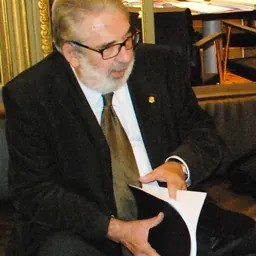
Contemporaries
People whose lives overlapped Werner Bornheim gen. Schilling's

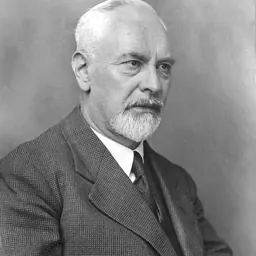



Frequently asked questions
Who was Werner Bornheim gen. Schilling?
German art historian and historical preservationist
When was Werner Bornheim gen. Schilling born?
Werner Bornheim gen. Schilling was born on 6 February 1915 in Cologne.
When did Werner Bornheim gen. Schilling die?
Werner Bornheim gen. Schilling died on 29 October 1992 in Wiesbaden.
What was Werner Bornheim gen. Schilling's occupation?
Werner Bornheim gen. Schilling was an art historian.
What nationality was Werner Bornheim gen. Schilling?
Werner Bornheim gen. Schilling was German.
Sources & further reading
· Wikipedia: Werner Bornheim gen. Schilling
· DBpedia: Werner Bornheim gen. Schilling
Cite this page
APA: Biography.guide. (2026). Werner Bornheim gen. Schilling. https://biography.guide/werner-bornheim-gen-schilling/
MLA: "Werner Bornheim gen. Schilling." Biography.guide, https://biography.guide/werner-bornheim-gen-schilling/.
Chicago: "Werner Bornheim gen. Schilling." Biography.guide. https://biography.guide/werner-bornheim-gen-schilling/.
Data last updated: 2026-09-20 · Spot an error? Report a correction.
Page generated 2026-09-27 05:33 UTC