
Wendy Maruyama
American educator and furniture designer (born 1952)
About Wendy Maruyama
Born 1952. Wendy Maruyama is an American furniture maker, artist and university teacher.
Wendy Maruyama (born 1952) is an American visual artist, furniture maker, and educator from California. She was born in La Junta, Colorado.
Maruyama was influential in the early period of post-modern artistic furniture. She challenges the masculine environments within the field of woodworking. Her work uses humor, social commentary, sculptural forms, and color to challenge the accepted notions of furniture. Conceptually her work deals with social practices such as her Japanese-American heritage, feminism, and wildlife endangerment in Africa.
Early life and education Maruyama is a third generation Japanese-American living in San Diego. She was born deaf in both ears and has worn a hearing aid since the age of nine. Maruyama felt restricted by this type of highly technical furniture, and set out to make more expressive works during her time studying at the Rochester Institute of Technology.
Maruyama has served as a member of the advisory of the Furniture Society. In 2009, she was inducted into the American Craft Council's College of Fellows for outstanding artistic achievement over her career.
Her work, Patterned Credenza, was acquired by the Smithsonian American Art Museum as part of the Renwick Gallery's 50th Anniversary Campaign.
WildLife Project
Maruyama's series titled "WildLife Project" was inspired by a trip to Kenya where she met with wildlife advocates to learn more about the dangers of poaching animals. This work draws attention to the wrongful slaughter of elephants and rhinoceroses for the harvest of their tusks for the $10 billion annual ivory industry. Maruyama places special interest on the unique social nature of elephants and their similarities to humans.
The series was started while Maruyama was a resident artist at the Pilchuck Glass School in Stanwood, Washington in 2013. During this time she created blown-glass tusks became part of the 2015 artwork Sarcophagus. WildLife consists of six life-sized elephant heads made from segments of painted wood stitched together. Each elephant reaches up to twelve feet tall, and resembles a hunting trophy. The show also includes a Buddhist-style Bell Shrine with burning incense and a bronze bell. The bell sounds every fifteen minutes to represent how often an elephant is killed for its tusks.
This work has been traveling the United States since 2015 and has been exhibited at The Chrysler Museum of Art, the San Francisco Museum of Craft and Design, the Museum for Art in Wood (formerly Center for Art in Wood), Penland School of Crafts, and the Oceanside Museum of Art. The exhibition is organized by the Houston Center for Contemporary Craft and is curated by Elizabeth Kozolowski. It was made possible through contributions from the Windgate Charitable Foundation.
Executive Order 9066 Minidoka (2011), named after the Minidoka War Relocation Center, is composed of thousands of tags worn by Japanese Americans during their internment. Wendy Maruyama: Executive Order 9066 is a series of works by Maruyama examining Franklin D. Roosevelt's 1942 Executive Order number 9066 which authorized the internment of 120,000 American citizens of Japanese ancestry. Maruyama's maternal relatives were among those imprisoned during this era. These works include Executive Order 9066, the Tag Project, and a selection of historical artifacts. They have been exhibited at the Museum of Craft and Design in San Francisco, The University Art Gallery at San Diego State University, and the Richard and Dolly Maas Gallery at SUNY Purchase. These works have been said to continue to be of importance during current times of political turmoil.
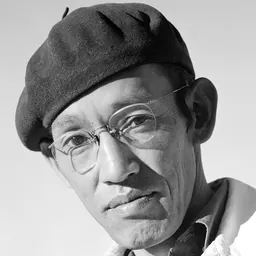
Executive Order 9066 is a series of wall-mounted cabinets alluding to themes common within these internment camps. These pieces include documentary photographs of Dorothy Lange and Tōyō Miyatake alongside barbed wire, tar paper, and domestic objects. These pieces also display actual objects owned or made by the internees in the camps, including suitcases used by families during their relocation and items made from materials available in the camps.
Exhibitions Wendy Maruyama has held solo exhibitions in New York City; San Francisco; Scottsdale, Arizona; Indianapolis, Indiana; Savannah Georgia; and Easthampton, New York. She has also exhibited in Tokyo, Seoul and London.
Her exhibitions include: 1984 "Material Evidence" 2016 - "Executive Order 9066 and The Tag Project", Boise Art Museum, Boise, ID 2016 - "Instructions to All Persons: Reflections on Executive Order 9066", Japanese American National Museum, Los Angeles, CA 2016 - "Wendy Maruyama: The WildLIFE Project", Penland School of Crafts Gallery, Penland, NC 2017 - "Wendy Maruyama: The WildLIFE Project", Oceanside Museum of Art, Oceanside, CA 2018 - "Wendy Maruyama: Executive Order 9066", Riverside Art Museum, Riverside, CA 2024 - "Wendy Maruyama: A Sculptural Survey in Wood; Craft, Material, Process 1972-2024", Fresno Art Museum, Fresno, CA
Don’t just read it —
keep it.
Full-length biographies made to live with: read them, listen on the way to work, watch them tonight.
- E-book
- Audio
- Video
Instant download · yours to keep · every purchase keeps this site free
Important facts
People in Wendy Maruyama's life
Named in this biography and alive at the same time

Related people
Same field, nearest in time




Contemporaries
People whose lives overlapped Wendy Maruyama's



Frequently asked questions
Who is Wendy Maruyama?
American educator and furniture designer (born 1952)
When was Wendy Maruyama born?
Wendy Maruyama was born in 1952 in La Junta.
What is Wendy Maruyama's occupation?
Wendy Maruyama is a furniture maker, artist and university teacher.
What nationality is Wendy Maruyama?
Wendy Maruyama is American.
Sources & further reading
Cite this page
APA: Biography.guide. (2026). Wendy Maruyama. https://biography.guide/wendy-maruyama/
MLA: "Wendy Maruyama." Biography.guide, https://biography.guide/wendy-maruyama/.
Chicago: "Wendy Maruyama." Biography.guide. https://biography.guide/wendy-maruyama/.
Data last updated: 2026-09-20 · Spot an error? Report a correction.
Page generated 2026-09-27 05:28 UTC