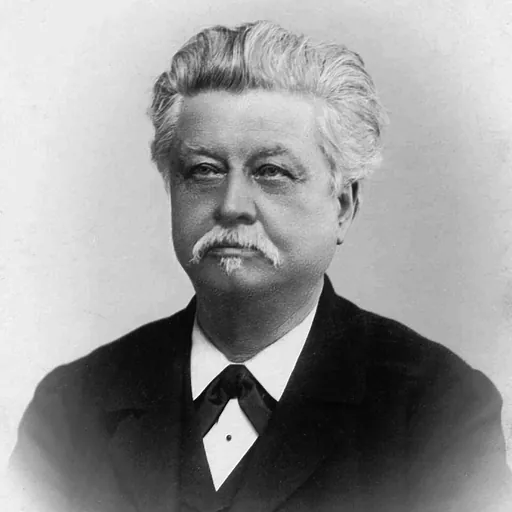
About Wendelin Weißheimer
Lived 1838 – 1910 (aged 72). Wendelin Weißheimer was a German composer, conductor, chapelmaster, musicologist, music critic and bandleader.
Wendelin Weißheimer (26 February 1838 – 16 June 1910) was a German composer, conductor, essayist, teacher, and writer on music. He studied with Franz Liszt and was in close contact with Richard Wagner, Hans von Bülow, Peter Cornelius, Louise Otto-Peters, Ferdinand Lassalle, August Bebel and many other notable musicians of his time.
He served as composer and conductor of choirs in Mainz, Darmstadt, Baden-Baden, Würzburg, Munich, Leipzig, Berlin, Düsseldorf, Szczecin, Strasbourg and at Milan's La Scala.
Early life Origin, family and childhood
The Weißheimer family resided in Westhofen in the 14th century. Wendelin's grandfather, Johann Weißheimer I, from Osthofen, inherited a stone mill from his mother's family at the end of the 18th century. Viticulture, agriculture, animal husbandry and mill grinding were already undertaken on the manor complex in the 19th century. The manor is still owned by the Weißheimer family. This complex was one of the most important in the former Grand Duchy of Hesse.
Wendelin Weißheimer was born at the Stone Mill Winery of Osthofen, the eighth and youngest child of Johann Weißheimer II and Ottilie, née Best der Welt. His parents were wealthy and his father, a highly respected and multi-talented man with a keen interest in history and politics, had already been mayor for several years and a member of the first Osthofen Hessian Ständekammer, which is why Wendelin met, at a young age, men of the March Revolution of 1848 at the Stone Mill. Despite his commitments as landowner and politician, Wendelin Weißheimer's father found time to deal with family and traditional, historical studies, the result of which was his multi-volume chronicle of the Osthofens recorded in handwritten diaries. He allowed Wendelin to study music, although this clearly contradicted his intentions of making Wendelin his estate's heir.
Music studies Wendelin Weißheimer attended the Leipzig Conservatory from May 1856. Both Leipzig and Weimar had a lively musical scene. While Leipzig was conservative and spurned the new music of Liszt and Wagner, the revolutionary youth in Weimar sought new forms of musical expression and embraced the so-called New German School and its genius, Franz Liszt. After completing his studies Wendelin took the post of second conductor at the city theatre in Mainz under Schindelmeisser. Before beginning, he traveled to Zurich to visit Richard Wagner, who was living there in exile. Wagner was working on his musical drama Tristan and Isolde and usually declined to see visitors. Wendelin was first rejected, but eventually spent one memorable afternoon with the master on 17 July 1858. Weißheimer writes of his encounter: "The pale expressive face of the then forty-five-year-old, accompanied me in town and everywhere else."
Musical career Conducting in Mainz Just 20 years old, Weißheimer took up his post as conductor in Mainz on 17 August 1858 and, among other things, visited publisher Franz Schott and his musical wife Betty. After a performance of Wagner's Faust overture, Weißheimer got to know his Rhine-Hessian compatriot, the poet-composer Peter Cornelius, who became a lifelong friend.
With Franz Liszt in Weimar
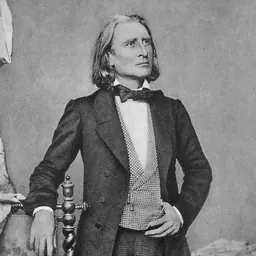
Weißheimer moved back to Weimar after the theatre season. He and Liszt were musically like-minded and so Weißheimer was accepted by Liszt as a student in composition. Lessons were held three to four times a week, for several hours at a time. Weißheimer soon became Liszt's favorite student. Here, in Altenburg, Weimar, home of Liszt's close friend Princess Carolyne zu Sayn-Wittgenstein of Sayn-Wittgenstein, Weißheimer was introduced to a new musical world. While here he met his friend, Peter Cornelius, who had also come to Weimar in 1860, and was introduced to Felix Draeseke, Hans von Bronsart, Carl Tausig, the Bohemian Smetana, Franz Bendel, Gruère and Hans von Bülow among other notables.
In Weimar, one of Weißheimer's compositions was first performed by an orchestra. Liszt included Weißheimer's symphony on Schiller's Ritter Toggenburg on the program for the court concerts that he conducted on 13 March 1860. To allow Weißheimer to take part in this concert at the Grand Ducal Palace, which was only accessible to the court and nobility, Liszt had him wear a tail coat and a white tie and placed him in the middle of the string orchestra, where he had to pretend to play the violin. At the end of the concert, the Grand Duke and Grand Duchess expressed approval of the composer. The next day on his visit to Liszt, Weißheimer met daughter Cosima, who was married for two years to von Bülow and who would later become Wagner's second wife.
Weißheimer's stay in Weimar climaxed in 1861. He presented a musical meeting starting with Liszt's Faust Symphony under Bülow's baton. Weißheimer achieved complete success with the presentation of his Grave in Busento by the court orchestra and the academic choir of Jena students. Wagner made an unexpected appearance at this event, after eleven years of exile in Switzerland.
Friendship with Richard Wagner
In the autumn of 1861 Weißheimer returned to the Mainz theatre as music director. During this period he befriended Wagner. After the Weimar meeting, Wagner tried unsuccessfully to reach Paris in late November where Prince Metternich had provided him with a garden apartment at the Austrian Embassy. On 1 December, he arrived unexpectedly in Mainz to negotiate his stage festival play Die Meistersinger von Nuernberg with the Schott publishing house. He already had the text and the poetic process was to take place in Paris. During the days in Mainz, Wagner attended the opera performances conducted by Weißheimer and Weißheimer also participated in his meetings with Mrs. Betty Schott.
After successfully completing his Meistersinger poetry in less than two months in Paris, Wagner returned to Mainz on 31 January 1862. That same evening, in the Schotts' house, before a selected circle of listeners, Wagner presented the Meistersinger'''s poetry. Peter Cornelius and Weißheimer were present. Weißheimer writes about this memorable night that "Wagner carried away with the audience and caused them to rally tumultuously. At the end of the play the audience was aware that they stood at the cradle of a mighty work of art."
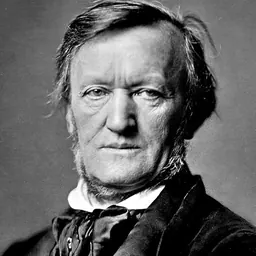
In order to be able to complete the composition without uninterruption, Wagner rented a small apartment in nearby Biebrich, just below the ducal castle on the Rhine. As a result, Weißheimer and Wagner were together almost every day. Weißheimer had become almost indispensable for Wagner, so, despite the 25-year difference in age, a warm friendship developed. Wagner's recurrent financial difficulties prompted Weißheimer to visit his father in order to request financial help for his friend. Johann complied. This was Wagner's first visit to the Stone Mill. He met Wendelin's parents, siblings, and last but not least, the "wine" on 1 June 1862. When he had to stay in bed a few weeks due to illness, Wagner paid a surprise visit to the Stone Mill to leave Wendelin the only copy of The Valkyrie for Wendelin's appreciation. In the garden pavilion by the lake shore, known as "Richard-Wagner-house," Wagner spent many hours boozing and proved to be a brilliant entertainer. That August, Wagner returned to the Stone Mill, this time accompanied by Hans and Cosima von Bülow. Despite the personal involvement of Wagner, von Bülow and other renowned artists and organizations with works by Wagner, Liszt and Weißheimer, the attendance at the concert was so low that not enough revenue was collected to cover the costs. This concert was the first time that Wagner had been allowed to perform in Germany after his exile.
Weißheimer writes: "Instead of Wagner filling up his pockets, I quickly had to call my father for help," and again and again latter provided financial support. Wagner no longer held events in Biebrich but moved to Vienna in November 1862. There he again tried to premiere "Tristan," but without success. Although Wagner had a lot of money from a concert tour in Russia in 1863, he was again in financial straits. Finally, he had to flee from Vienna to avoid being put in debtors' prison.
On 29 April 1864, Wendelin Weißheimer received a telegram from Stuttgart from Wagner, asking him for an immediate visit. Weißheimer went and Wagner reported his financial and psychological breakdown. Weißheimer thus decided to stay with Wagner. Since Wagner was in debt he was urged to disappear. They agreed on a secluded spot in Rauhe Alb, where Weißheimer would accompany him. There Weißheimer intended to finish the piano score of the first Meistersingers act as quickly as possible in order to persuade the publisher, Schott, to make additional payments. Their journey had been set for 3 May, as Wagner wanted to see a performance of Don Giovanni conducted by Karl Eckert. However, on 2 May, at the hotel Marquard, the Secretary of King Ludwig II of Bavaria, Council of State Franz Seraph von Pfistermeister, appeared with a mission to explore the residence of Richard Wagner and return with him to Munich. When crown Prince Ludwig II listened to Wagner's Lohengrin he said: "When I am crowned, I want to show the world how much I know of the genius of Wagner." He was seeking a way to maintain his self-given promise. As Wagner's most ardent admirer, he wanted to give him the opportunity to finish his Der Ring des Nibelungen. So, instead of the rough journey to the Alps, Wagner went on 3 May 1864 to Munich, and after the reception by the King, returned to Vienna to pay his debts before he moved into the Villa on Lake Starnberg provided to him by the King. donated to him by the king and where Cosima was a housewife who took care of Wagner's correspondence. Wagner soon became interested in Mrs. Bülow. His relationship with Weißheimer began to wane, and Weißheimer drew closer to Peter Cornelius at the premiere of the latter's 1865 opera Der Cid.
The friendship between Weißheimer and Richard Wagner ended in June 1868. This was after Cosima, without reviewing the music, wrote on 6 July to Weißheimer that the text of his "Theodor Körner" could not be performed in court theaters because its seditious tendency might provoke trouble in peaceful times. Wendelin, like his father, was stubborn and didn't support her views. His disagreement with Cosima came between him and Wagner. The situation was compounded when Wendelin Weißheimer recognised their love affair. He sided with the betrayed von Bülow. At the premiere of Die Meistersinger in Munich on 21 June 1868,
1856 The Grave in Busento (Text: August von Platen-Travemünde Haller), ballad for bass solo, male choir and orchestra, premiered in 1857 / Leipzig. 1858/1859 King Sigfrid (Text: Ludwig Uhland), ballad for baritone or bass and piano, Opus 1, dedicated to Franz Liszt. 1864–1866 The big company (Text: poem by Franz von Gaudy), obituary to Ferdinand Lassalle. 1864–1866 Five Spiritual Sonnets (texts: poems by Theodor Körner)Jesus and the Samaritan womanJesus and the sinnerThe last supperEpiphany in EmmausAscension of Christ1868/1869 German minstrel, song cycle, Debut book. Dietmar von Aist No. 1 The searchers (Soprano) No. 2 The separation (Soprano) No. 3 Spring (Soprano) Second book: Der von Kürenberg No. 1 The searchers (Soprano) No. 2 The evening star (Mezzo-soprano or baritone) No. 3 Love's sorrow (Mezzo-soprano) No. 4 The lover farewell (Mezzo-soprano and baritone) No. 5 Only one (Mezzo-soprano) No. 6 Separation (Mezzo-soprano and baritone) Third book: Spervogel No. 1 Virtue is the most beautiful dress (Mezzo-soprano or baritone) No. 2 Rule of Life (Alt or bass) No. 3 The Thor (Alto or bass) No. 4 The evil time (Mezzo-soprano or baritone) No. 5 The good host (Bass) Heinrich von Veldeke No. 6 Love song (Tenor) No. 7 Minnelied (baritone) No. 8 Power of love (Tenor) No. 9 Gray hair (baritone or bass) Wernher von Tegernsee No. 10 Love Reim (Soprano or tenor) Folk songs from the 12th century No. 11 Come, O come, my fellowNo. 12 I have pain in the heart (soprano) Fourth book: Christian von Hamle No. 1 The Anger (Baritone or mezzo-soprano) No. 2 Four eyes and two hearts (Baritone or mezzo-soprano) No. 3 Guard Song (Soprano and baritone) No. 4 Fidelity (Tenor) No. 5 Frauenlob (Tenor) John I, Duke of BrabantHerba lori fa (Soprano or tenor) 1869 Songs for voice and pianoforteWhenever it would remain (Text: after a poem by Friedrich von Bodenstedt)Do you ask with little eyes? (Text: after a poem by Peter Cornelius)Swept (Text: after a poem by Paul Flemming)
1892–1896 Songs and ballads for voice and piano accompaniment (on poems by Johann Wolfgang von Goethe). No. 1 First lossNo. 2 You!No. 3 MignonNo. 4 RescueNo. 5 FliegentodNo. 6 BeweggrudNo. 7 Girl wishesNo. 8 Die the fox, then the bellowsNo. 9 BlindekuhNo. 10 The ShepherdNo. 11 Different threatNo. 12 InsuperableNo. 13 Graceful presenceNo. 14 Over the worldNo. 15 Effect in the distance (Ballad) No. 16 The Dance of Death (Ballad) No. 17 The singerNo. 18 The Pied Piper1880 The lion's bride (after a poem by Adelbert von Chamisso); concert ballad for voice and orchestra (or piano). 1876 German National Anthem (Text: after a poem by F.W. Plath) for 4 male voices choir.
Other 1887–1891 An obligatory violin part to all preludes of Johann Sebastian Bach's Well-Tempered Clavier. 1895–1898 Epiphany (poem by Johann Wolfgang von Goethe) for male choir, tenor, baritone and bass solo. 1870–1899 Eight Songs for male chorus.The Queen of England (folk song from the 12th century)John Barleycorn (poem by Robert Burns)German philistinism (poem by August Heinrich Hoffmann von Fallersleben)Schneider Kourage (poem by Johann Wolfgang von Goethe)The golden calf (poem by Heinrich Heine)Just wait (poem by Heinrich Heine)Enlightenment (poem by Heinrich Heine)Promise (poem by Heinrich Heine)Tendency song (poem by Heinrich Heine)Bet 'and work' (song by Georg Herwegh) "Dedicated to the 25-year-old union of the Social Democracy of Germany and the Social-Democratic Party Congress of Mainz in 1900. 1900–1902 Kronzoll Strangler (poem by Robert Seidel for four-part male chorus. 1905 The free people, the free song Federal Parole from Wendelin Weißheimer. 1906 Three songs for male choir. Up to the light (poem by Emanuel Wurm) Deep in the earth's womb (poem by Robert Seidel) Despite all this ("A salute to the reaction of Ferdinand Freiligrath") German people and German freedom (poem by Robert Seidel); composition of the Social Democratic Party Congress in Mannheim 1906. 1906–1909 Three two-voice choir songsEgyptian folk song 2500 years agoFive Commandments of MosesDrinking song1909–1910 Two three-voice choir songsFrom the Christian doctrine: The early Christians and Jesus' siblings (after a poem by Max Maurenbrecher) From the nature lesson: Carrots, monkey, junker and gendarmes (poem by Ludwig Pfau)
Unpublished works OperasThe four-year post (after a libretto by Theodor Körner,) completed in 1867.Ingeborg of Denmark Opera in four acts by Wendelin Weißheimer, completed in 1884.The miraculous crucifix, Opera in three acts (according to a legend of C.F.D. Schubart), unfinished.
CantatasOh dear, as long as you can love (poem by Ferdinand Freiligrath) Cantata for soloists, chorus and orchestra, later working for women's choir.Does not dry the tears of eternal love (poem by Johann Wolfgang von Goethe) for chorus and orchestra, premiered at the Leipzig Gewandhaus 1862.Religioso (poem by Emanuel Geibel), Cantata for tenor solo, male chorus and large orchestra.Spring song (from Mirza Schaffy by Friedrich von Bodenstedt) for mixed chorus with soprano and tenor solo and piano or orchestra.The crickets and the poet or the worse visit (poem by Emanuel Geibel) for female choir, baritone solo and piano.The dance (poem by Paul Fleming) for mixed choir and piano.I want to cry (poem by Heinrich Heine) for tenor and orchestra, completed in 1859.To Fanny (ode by Friedrich Gottlieb Klopstock) for tenor and orchestra.
ChoirsChoral songs for male and female voices – First book:Sacred song (poem by Paul Flemming)On the death of a newborn little daughter (poem by Paul Flemming)Wedding song (poem by Johann Georg Jacobi)To nature (poem by Friedrich Leopold Stolberg)Faith, hope and loveBook II: Songs and poems by Johann Wolfgang von GoetheWho never ate his bread in tearsNew YearDelight of melancholySpring flower sorakelSchneider-CourageThirty-four part songs for male choirHymn (poem by Spervogel)Folk song from the 12 century Hunter song (poem by Ernst Schulze)Night song (poem by Johann Wolfgang von Goethe)Rhine song (poem by Emanuel Geibel)
Don’t just read it —
keep it.
Full-length biographies made to live with: read them, listen on the way to work, watch them tonight.
- E-book
- Audio
- Video
Instant download · yours to keep · every purchase keeps this site free
Important facts
People in Wendelin Weißheimer's life
Named in this biography and alive at the same time




Related people
Same field, nearest in time


Contemporaries
People whose lives overlapped Wendelin Weißheimer's


Frequently asked questions
Who was Wendelin Weißheimer?
composer (1838–1910)
When was Wendelin Weißheimer born?
Wendelin Weißheimer was born on 26 February 1838 in Osthofen.
When did Wendelin Weißheimer die?
Wendelin Weißheimer died on 16 June 1910 in Nuremberg.
What was Wendelin Weißheimer's occupation?
Wendelin Weißheimer was a composer, conductor, chapelmaster, musicologist, music critic and bandleader.
What nationality was Wendelin Weißheimer?
Wendelin Weißheimer was German.
Sources & further reading
· Wikipedia: Wendelin Weißheimer
· DBpedia: Wendelin Weißheimer
Cite this page
APA: Biography.guide. (2026). Wendelin Weißheimer. https://biography.guide/wendelin-weissheimer/
MLA: "Wendelin Weißheimer." Biography.guide, https://biography.guide/wendelin-weissheimer/.
Chicago: "Wendelin Weißheimer." Biography.guide. https://biography.guide/wendelin-weissheimer/.
Data last updated: 2026-09-20 · Spot an error? Report a correction.
Page generated 2026-09-27 05:10 UTC