
About Wei Wenbo
Lived 1905 – 1987 (aged 81–82). Wei Wenbo was a Chinese politician.
Wei Wenbo (; 1905–1987) was a Chinese Communist revolutionary and politician who played an extensive role in the building of China's legal system. He was also one of East China's most senior party leaders before being purged in the Cultural Revolution. After his rehabilitation in 1979, he continued to serve in governmental posts until his eventual retirement.
Biography Early life and activism Wei was born into a moderately rich peasant family in Xinzhou County (then part of Huanggang), Hubei, China on the 9th of March, 1905.
In 1927, Wei gave up his opportunity to study in the Soviet Union following the July 15 Incident, transferred his self defence team and farmers' union's arms and resources to He Long's army and proceeded to join the Nanchang Uprising as a company commander. After the uprising's failure, he escaped to Hubei and continued the underground struggle during the country's white terror in Yichang.
In 1940, Liu Shaoqi founded Central China's first-ever Anti-Japanese Democratic Government (抗日民主政府) in Communist-controlled Dingyuan county, and Wei took on the role as the head of its government, serving as the Director of the 'Dingyuan-Fengyang-Chuxian Joint Administrative Office', and actively worked towards strengthening CCP's foothold in Anhui. During his time in the county government, Wei organised mobilisation efforts, building the Communist Government's legitimacy and propagating anti-Japanese fervour.
In November 1952, Wei was appointed as Vice Minister of Justice as well as the Secretary of the Party Group of the Ministry of Justice. He was simultaneously made Secretary of the Supreme People's Court and Ministry of Justice's Joint Party Group. Wei was known to have written his own poem pertaining to the disease's prevention methods to boost the awareness of its prevention among the Chinese populace. The poem is known as 《送瘟神三字经》in Chinese (Lit. 'The Three-Character Classic for Sending Away the Plague God').
Wei's time in the Shanghai Municipal Government saw him serve as Secretary of the Secretariat of the CCP Shanghai Municipal Committee and Vice Chairman of the Shanghai CPPCC.
In 1967, Wei was completely ousted from power during the January Storm along with the rest of the Municipal Committee by the Gang of Four, leaving the East China Bureau defunct. Wei was subject to public humiliation in the form of struggle sessions, and was branded as a 'traitor' by the Gang. The Cultural Revolution also saw much of Wei's work to eliminate Schistosomiasis repudiated, describing his methods as 'poisoning the people similar to how the disease infected the people'. A 1970 edition of the People's Daily denounced Wei as a 'hanjian' and a 'labour traitor' in conjunction with President Liu Shaoqi, describing him as Liu's agent in spreading the 'expert line' in combatting the epidemic and deceiving the people. He spent much of the Cultural Revolution under house arrest as a result.
By 1979, Wei was thoroughly rehabilitated by the party and resumed work by joining Central Commission for Discipline Inspection, serving as its Deputy Secretary and Secretary-General starting from December 1978 before being appointed as the Minister of Justice in September 1979.
After retiring from his major posts in 1982, he was chosen to serve on the Central Advisory Commission (CAC) in October 1983, and was invited to the 13th National Congress of the CCP.
Personal life Wei was a widely respected Chinese calligrapher. Chinese calligraphy had been his hobby since childhood. He was chosen to serve twice as an Honorary Director of the Chinese Calligraphers Association. His works have been selected for major calligraphy exhibitions both in China and abroad (notably Japan) and have been published in newspapers and magazines many times. They are collected or engraved in many museums, memorial halls and scenic spots across China.
The former residence of Wei Wenbo in his hometown in Xinzhou was also the founding site of the Chinese Communist Party's first branch in Xinzhou, Wuhan. Wei founded it together with other local communist agitators in the mid 1920s and it has since been declared a protected site by the local government.
Wei had his name changed multiple times throughout his life, not unlike many other Chinese revolutionaries. Wei's birth name was Wei Qufei (魏去非). Wei changed his name to Wei Xinmin (魏新民) some time during his early revolutionary days, and it was in 1940 when Liu Shaoqi gave Wei the given name of Wenbo (文伯),
Don’t just read it —
keep it.
Full-length biographies made to live with: read them, listen on the way to work, watch them tonight.
- E-book
- Audio
- Video
Instant download · yours to keep · every purchase keeps this site free
Important facts
People in Wei Wenbo's life
Named in this biography and alive at the same time
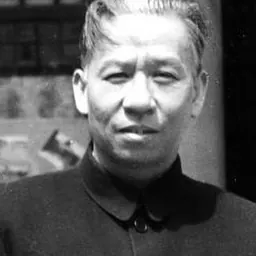

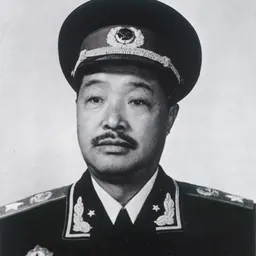
Related people
Same field, nearest in time






Contemporaries
People whose lives overlapped Wei Wenbo's
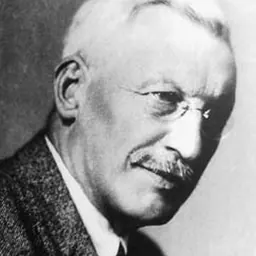


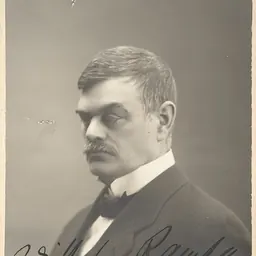

Frequently asked questions
Who was Wei Wenbo?
Chinese politician
When was Wei Wenbo born?
Wei Wenbo was born in 1905 in Huanggang.
When did Wei Wenbo die?
Wei Wenbo died in 1987.
What was Wei Wenbo's occupation?
Wei Wenbo was a politician.
What nationality was Wei Wenbo?
Wei Wenbo was Chinese.
Sources & further reading
Cite this page
APA: Biography.guide. (2026). Wei Wenbo. https://biography.guide/wei-wenbo/
MLA: "Wei Wenbo." Biography.guide, https://biography.guide/wei-wenbo/.
Chicago: "Wei Wenbo." Biography.guide. https://biography.guide/wei-wenbo/.
Data last updated: 2026-09-20 · Spot an error? Report a correction.
Page generated 2026-09-27 04:59 UTC