
About Watson Fothergill
Lived 1841 – 1928 (aged 86). Watson Fothergill was a British architect.
Watson Fothergill (12 July 1841 – 6 March 1928) was a British architect who designed over 100 unique buildings in Nottingham in the East Midlands of England. His influences were mainly from the Gothic Revival and Old English vernacular architecture styles.
His work dates from 1864 (when he set himself up in practice) to around 1912. His earliest surviving known building dates from 1866.
Early life
Born Fothergill Watson in Mansfield, Nottinghamshire in 1841, he was the son of wealthy Nottingham Lace merchant Robert Watson and Mary Ann Fothergill. He changed his name to Watson Fothergill in 1892 to continue his maternal family name.
Family He married Anne Hage in 1867 at St. John's Church, Mansfield. They had the following children: Marian Watson (1868–1955) Annie Forbes Watson (1869–1930) Edith Mary Watson (1871–1936) Eleanor Fothergill Watson (1872–1946) Samuel Fothergill Watson (1875–1915) Harold H Watson (1877-1905) Clarice Watson (1877–1955)
His father-in-law was Samuel Hage, He remained at Clinton Street until it was demolished by the works in connection with the arrival of the Great Central Railway in 1894. He moved to a new temporary office at 18 George Street and arranged to rebuild 15 George Street opposite which he completed the next year and moved in on 12 December 1895.
He is credited as having had a great impact on the architecture of the major British industrial city of Nottingham, and designed over a hundred buildings in the city, from offices, banks and warehouses, to churches and private dwelling houses. His easily recognisable style includes the use of contrasting horizontal bands of red and blue brick, dark timber eaves and balconies, and elaborate turrets and stone carvings.
On his death in 1928, he left an estate valued at £73,908 5s 11d .
List of major works
1870s
Dwelling House, Mapperley Road, Nottingham (Fothergill's own house) – 1870 Two Villas, 5 & 7 Lenton Road, The Park, Nottingham – 1873 Temperance Hall (later Albert Hall), North Circus Street, Nottingham – 1873–1876 Nottingham and Nottinghamshire Bank, Church Street, Mansfield – 1874–1875 Nottingham Daily Express Offices, Printing Works and Shops, Parliament Street, Nottingham – 1875 King's Arms, Ratcliffe Gate and Newgate Lane, Mansfield – 1875–1877 Cattle Market, Nottingham Road, Mansfield – 1876–1878 Congregational Church (later United Reformed), Westgate, Mansfield – 1876–1878 Nottingham and Nottinghamshire Bank and Residence, Thurland Street, Nottingham – 1877–1882
1880s
Villa, Crow Hill Drive, Mansfield – 1880 Six Dwelling Houses, Shops and Carriage House, Castle Road and Houndsgate, Nottingham – 1882–1883 Five Houses and Shops, Derby Road, Nottingham – 1884 Institute and Coffee Tavern, High Street, Hucknall – 1884 Nottingham and Nottinghamshire Bank, Cattle Market, Loughborough, Leicestershire – 1885 Villa, Loscoe Hill (Clawson Lodge), 405 Mansfield Road, Nottingham – 1885 Institute and Coffee Tavern (Budworth Hall), High Street, Ongar, Epping Forest, Essex – 1885–1887 Villa (Walton House), 39 Newcastle Drive, The Park, Nottingham – 1886 St. Nicholas' Church Rectory, Castle Gate, Nottingham – 1886–1887 Pair of Villas, Loscoe Hill, 409 and 411 Mansfield Road, Nottingham – 1886–1887 Nottingham and Nottinghamshire Bank, Kirk Gate, Newark on Trent 1885–1887 Rebuilding Black Boy Hotel (first major rebuild / extension), Long Row, Nottingham – 1886–1888 Pair of Villas, 62 and 64 Castle Boulevard, Nottingham – C1888 Pair of Villas, 3 and 4 Huntingdon Drive, Nottingham – C1888 Samuel Smith & Co's Bank, 24 Market Place, Long Eaton, Derbyshire – 1889 Warehouse (Milbie House), 33 Pilcher Gate, Nottingham – 1889
1890s
Villa, (Elberton House), Cavendish Hill, 9 Hardwick Road, Nottingham – 1890 Eight Ladies' Homes – Norris Almhouses, Berridge Road, Nottingham – 1892–1893 Emmanuel Church, Woodborough Road (1883–1893 ) – demolished 1972 Woodborough Road Baptist Church, Woodborough Road and Alfred Street North, Nottingham – 1893–1895 Simons and Pickard Paper Warehouse, Lenton (Castle) Boulevard, Nottingham – 1893–1894 House, Kingswood, Bulcote – 1893 Two Semi-Detached Villas (Cleave House), 1 and 3 Sherwood Rise, Nottingham – 1894–1895 Rebuilding of Nos 15 & 17 George Street, Nottingham (Watson Fothergill's offices) – 1894–1895 Jessops' Shop and Workrooms, 14–30 King Street, Nottingham – 1894–1897 Four Shops and Offices (Queen's Chambers), Long Row and King Street, Nottingham – 1896–1899 Shop and Office (Furley and Co) (now Lloyds Bank), Parliament Street and Clinton Street, Nottingham – 1896–1897 Ellenborough House, 3 South Road, The Park, Nottingham – extended 1896–1897 Cuckson, Hazeldine and Manderfield Warehouses, Stoney Street and Barker Gate, Nottingham – 1897–1898 Black Boy Hotel Additions and Two Shops (second major rebuild/extension), Long Row, Nottingham – 1897–1900 Rebuilding of the Rose of England Inn, Mansfield Road, Nottingham – 1898–1900 Brewery, Mar Hill, Carlton – 1899 Nottingham and Nottinghamshire Bank and House, 111 Carrington Street, Nottingham – 1899
1900s
Nottingham and Nottinghamshire Branch Bank, St Ann's Well Road, Nottingham – 1900–1901 Sixteen Houses, Foxhall Road, Nottingham – 1901–1902 Union of London and Smith's Bank, Market Place, Bulwell – 1904 Villa, Mapperley Road, Nottingham (Joint Architect with Lawrence George Summers) – 1905 Four Houses, Mansfield Road and Bingham Road, Nottingham – 1906–1907
Gallery
Don’t just read it —
keep it.
Full-length biographies made to live with: read them, listen on the way to work, watch them tonight.
- E-book
- Audio
- Video
Instant download · yours to keep · every purchase keeps this site free
Important facts
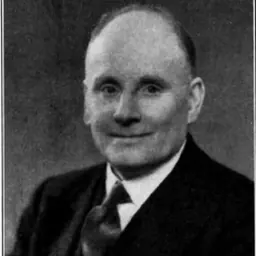
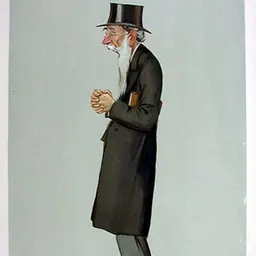
People in Watson Fothergill's life
Named in this biography and alive at the same time






Related people
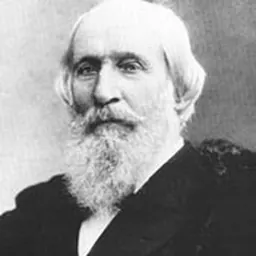
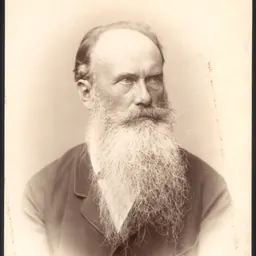
Same field, nearest in time


Contemporaries
People whose lives overlapped Watson Fothergill's
Frequently asked questions
Who was Watson Fothergill?
English architect (1841-1928)
When was Watson Fothergill born?
Watson Fothergill was born on 12 July 1841 in Mansfield.
When did Watson Fothergill die?
Watson Fothergill died on 6 March 1928 in Nottingham.
What was Watson Fothergill's occupation?
Watson Fothergill was an architect.
What nationality was Watson Fothergill?
Watson Fothergill was British.
Sources & further reading
· Wikipedia: Watson Fothergill
Cite this page
APA: Biography.guide. (2026). Watson Fothergill. https://biography.guide/watson-fothergill/
MLA: "Watson Fothergill." Biography.guide, https://biography.guide/watson-fothergill/.
Chicago: "Watson Fothergill." Biography.guide. https://biography.guide/watson-fothergill/.
Data last updated: 2026-09-20 · Spot an error? Report a correction.
Page generated 2026-09-27 05:30 UTC