
Warner Mifflin
American abolitionist
About Warner Mifflin
Lived 1745 – 1798 (aged 52–53).
Warner Mifflin (August 21, 1745 – October 16, 1798) was an American abolitionist and an early advocate of reparations for slavery. Born and raised in Virginia, Mifflin established himself as a planter in Delaware in 1769. As a member of the Society of Friends, he was strongly opposed to slavery and became dedicated to assisting slaves who tried to free themselves, to defending free blacks from abuse, as well as encouraging Quakers and others to free their slaves.
Early life and family Mifflin was born in Accomack County, Virginia on the Eastern Shore in 1745, into a slave-holding family descended from Quaker immigrants who arrived in New Jersey in 1677, one of the pioneering families of William Penn's "Holy Experiment". Although often sickly, he grew to be nearly seven feet tall, with a confident, charismatic personality. He was a second cousin of the more famous Thomas Mifflin of Pennsylvania. The several dozen slaves on the family's plantation produced cereals, flax, fruit, and livestock. The young Mifflin's conscience was troubled as he came to understand that the children he had played with growing up on his father's plantation were slaves.
His father, Daniel Mifflin, was one of the largest slaveholders in the county. Mifflin wrote that he became an abolitionist at the age of fourteen, after a conversation with a young man who was one of his father's slaves. He "determined never to be a slave-holder," but in 1767, he married Elizabeth Johns (c. 1749–1786), and her family provided them with a plantation in Kent County, Delaware and several slaves as a dowry. Mifflin began freeing his own slaves in 1774, and convinced his father to do the same. Thomas Clarkson, an English abolitionist, wrote that Mifflin "was the first man in America to unconditionally emancipate his slaves." By the time his father Daniel liberated one hundred slaves in 1775, Mifflin was in the process of freeing twenty-two slaves and repurchasing five others he had previously sold in order to free them too. He entered into free labor contracts with them to keep his work force intact, and he provided schooling for their children. Beginning in 1775, Delaware Quakers inspired by Mifflin freed their slaves. As Quaker Meetings began requiring disowning of members for slave-keeping after 1776, Mifflin traveled extensively to encourage compliance, and to encourage non-Quakers like John Dickinson to liberate their slaves too.
During the American Revolutionary War, Warner Mifflin also became a leading Quaker peace activist, despite the danger of being associated with loyalism for doing so. He traveled several thousand miles on horseback through most of the Mid-Atlantic states and New England to promote his anti-war message on behalf of his fellow Quakers. In 1777, he passed through British lines to meet with General George Washington during the Battle of Germantown. As a result of his efforts among others, 74% of the black population in Kent County, Delaware was free by 1800.
His second wife, Ann, became an indefatigable itinerant reformer like him, traveling to the western states on various missions. She was the first woman to advocate the project for African colonization of former slaves, and one of the earliest proponents of the cultural assimilation, rather than removal, of Native Americans.
Warner Mifflin's numerous sisters and daughters also carried on his legacy of social reform, and Philadelphia's African Americans formed the African Warner Mifflin Society in the nineteenth century. Nevertheless, Mifflin declined into obscurity in the twentieth century. Gary B. Nash, a historian, published Warner Mifflin: Unflinching Quaker Abolitionist in an effort to revitalize interest and illustrate that he "was the key figure connecting the abolitionist movements before and after the American Revolution".
Don’t just read it —
keep it.
Full-length biographies made to live with: read them, listen on the way to work, watch them tonight.
- E-book
- Audio
- Video
Instant download · yours to keep · every purchase keeps this site free
Important facts
People in Warner Mifflin's life
Named in this biography and alive at the same time
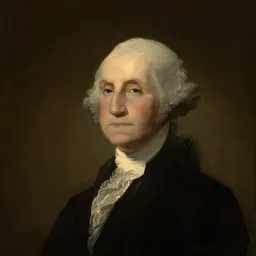
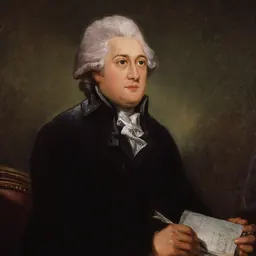
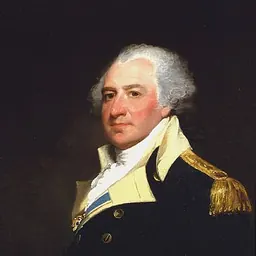
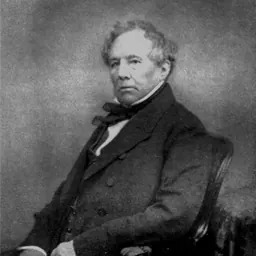
Contemporaries
People whose lives overlapped Warner Mifflin's






Frequently asked questions
Who was Warner Mifflin?
American abolitionist
When was Warner Mifflin born?
Warner Mifflin was born in 1745.
When did Warner Mifflin die?
Warner Mifflin died on 16 October 1798.
Sources & further reading
Cite this page
APA: Biography.guide. (2026). Warner Mifflin. https://biography.guide/warner-mifflin/
MLA: "Warner Mifflin." Biography.guide, https://biography.guide/warner-mifflin/.
Chicago: "Warner Mifflin." Biography.guide. https://biography.guide/warner-mifflin/.
Data last updated: 2026-09-20 · Spot an error? Report a correction.
Page generated 2026-09-27 05:32 UTC