
About Wang Zi-Ping
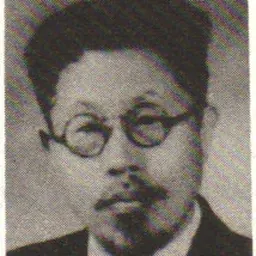
Lived 1881 – 1973 (aged 91–92). Wang Zi-Ping was a Chinese athlete.
Wang Ziping (1881–1973, Xiao'erjing: ) was a Chinese Muslim practitioner of Chinese Martial Arts and traditional medicine from Cangzhou, Cangxian county, Mengcun, Hebei Province. He served as the leader of the Shaolin kung fu division of the Martial Arts Institute in 1928 and was also the vice chairman of the Chinese Wushu Association. Wang was known for his mastery of Chaquan, Huaquan, Paoquan, Bajiquan, and tai chi. He was also a master of Wushu.
Biography Early in his life, Wang fought in the Boxer Rebellion against the foreign Western and Japanese imperialist Eight-Nation Alliance. This was believed to have resulted from the fact that Ziping had lived most of his life with China under imperialist pressure from major European powers. Some accounts say he was forced into exile from his home after the end of the Boxer Rebellion and suppression of the Boxers, and became a student of Yang Hongxiu, from whom he learned the art of Chaquan.
Wang won many fights against Russian, American, German, and Japanese martial artists.
Wang defeated a German officer's challenge in a weight lifting contest at Jiaoji. When the Germans wanted to take the antique doors of the Qinzhou mosque for themselves, Wang Ziping guarded the doors so the Germans challenged him to another weight lifting contest. When Wang triumphed over their challenge, the Germans left.
Wang and Zhu Guofu defended martial arts historian Tang Hao (Tang Fansheng) from opponents who were angered by his work "Shaolin-Wudang Kao" which refuted the story of Bodhidharma and Zhang Sanfeng as being the creators of Shaolin and tai chi.
Liu Jin Sheng, who authored "Chin Na Methods" along with Zhao Jiang, was a student of Wang.
He developed an exercise regime for long life. He published works on martial arts exercises.
At the sixth National Games, Wang served as a judge for martial arts and wrestling. When Zhou Enlai visited Burma, Wang, then 80 years old, went with his delegation, performing martial arts during the visit. He died when he was 93 years old.
Wang developed "Quan Shr Er Shr Fa" (Twenty Fist Method) as well as "Ching Long Jian" (Green Dragon Sword).
Family He was succeeded by his only daughter Wang Jurong, and his three granddaughters through her are Grace X. Wu, Helen Wu, and Wu Xiaoping.
Don’t just read it —
keep it.
Full-length biographies made to live with: read them, listen on the way to work, watch them tonight.
- E-book
- Audio
- Video
Instant download · yours to keep · every purchase keeps this site free
Important facts
People in Wang Zi-Ping's life
Named in this biography and alive at the same time




Related people
Same field, nearest in time




Contemporaries
People whose lives overlapped Wang Zi-Ping's



Frequently asked questions
Who was Wang Zi-Ping?
Chinese martial artist (1881–1973)
When was Wang Zi-Ping born?
Wang Zi-Ping was born in 1881 in Changzhou.
When did Wang Zi-Ping die?
Wang Zi-Ping died in 1973.
What was Wang Zi-Ping's occupation?
Wang Zi-Ping was an athlete.
What nationality was Wang Zi-Ping?
Wang Zi-Ping was Chinese.
Sources & further reading
Cite this page
APA: Biography.guide. (2026). Wang Zi-Ping. https://biography.guide/wang-zi-ping/
MLA: "Wang Zi-Ping." Biography.guide, https://biography.guide/wang-zi-ping/.
Chicago: "Wang Zi-Ping." Biography.guide. https://biography.guide/wang-zi-ping/.
Data last updated: 2026-09-20 · Spot an error? Report a correction.
Page generated 2026-09-27 05:26 UTC