
About Wang Nu
Lived 1926 – 2013 (aged 86–87). Wang Nu was a Taiwanese and Chinese artist.
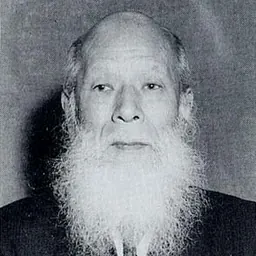
Wang Nong (1926–March 26, 2013) was a Chinese artist born in Fengtian (now Shenyang), Liaoning Province. His birth name was Litian, and he also went by the name "Guanwai Ren", or "Outsider." In 1949 he migrated to Taiwan, where he pursued a career in graphic design in textile factories as well as in comic creation. Eventually, he focused solely on his artistic pursuits, and received the first-place award in the Chinese painting category in the Zhongshan Literary and Art Creation Awards in 1978. After the lifting of martial law in Taiwan on July 15, 1987, Wang actively engaged in artistic exchanges between Taiwan and mainland China. Aside from ink paintings of horses, he also used characters from Chinese opera as a major creative theme. Biography Wang Nong's father, Wang Youwen, and his mother, Luo Shuwen, were both natives of Heishan County, Liaoning Province, with ancestral connections to Zhang Zuolin, the warlord of Northeast China in the early years of the Republic of China. Wang's mother was also childhood friends with Zhang Xueliang, the son of Zhang Zuolin, which resulted in Wang Youwen being appointed as the director of the Liaoning Provincial Public Security Bureau. In 1931, due to the Mukden Incident, Wang Nong and his parents relocated to North China, northern Suzhou, Shanghai, Jiangsu, Zhejiang, Jiangxi, and other locations. After completing elementary school, Wang briefly attended the 13th Middle School of Jiangxi, then transferred to the Agricultural Vocational School of Huizhou, Anhui Province, majoring in agriculture and forestry. In 1943, he began studying painting under the guidance of his school's art teacher, Meng Dazong. In 1944, he worked in the propaganda department of the Army's 52nd Division Youth Camp, where he became fascinated with Chinese opera after being introduced to theatrical performances. In 1945, following the end of the Second Sino-Japanese War, Wang returned home and enrolled in the Liaodong College of Fine Arts. In 1946, he attended the National Beiping Art School's Western Painting Department, studying under renowned painters such as Xu Beihong, Li Keran, Li Kuchan, Li Hua, and Wu Zuoren. Xu Beihong, the principal of the art school, once stated, "Wang Nong is a multitalented artist born with artistic talent." winning first place in the comic category under the pseudonym Wang Laosan. In 1952, he joined the Taipei Textile Factory of the Taiwan Mining and Manufacturing Company as a graphic designer. In 1954, he held a batik painting exhibition at the International House in Taipei. Between 1964 and 1967, he assisted Hong Kong film director Li Hanxiang (also a fellow alumnus of the Beiping Art School) in designing costumes, scenery, flags, and horse decorations for the costume film Hsi Shih: Beauty of Beauties, produced by Grand Motion Pictures Co., Ltd. In 1967 he started his own wallpaper factory, but the business failed, prompting him to return to art. In 1978, he received the first-place award in the Chinese painting category at the Zhongshan Literary and Art Creation Awards. In 1983, he was invited to hold his first solo exhibition at the National Museum of History. In 1983 and 1984, he held two solo exhibitions at the Hong Kong City Hall. In 1989, he was invited by the China Artists Association and Xu Beihong Memorial Museum to hold a special exhibition at the National Art Museum of China in Beijing, which led to him traveling and holding exhibitions across China. Wang died on March 28, 2013, in Taipei at the age of 88.
Artistry Art historian Liu Chuanming noted that Wang Nong incorporated Western painting techniques, such as chiaroscuro, light and shadow, and perspective, into his Chinese painting creations, based on his foundation in Western painting techniques. Xu Qingping analyzed that Wang first outlined the overall silhouette of the characters using large color blocks and then added details such as facial expressions, gestures, and props such as whips or sticks, completing the brushwork in one go. By unifying the brushwork, the artist brought vitality to the composition, which combined with vivid color contrasts created the artistic effect of the artwork.
Don’t just read it —
keep it.
Full-length biographies made to live with: read them, listen on the way to work, watch them tonight.
- E-book
- Audio
- Video
Instant download · yours to keep · every purchase keeps this site free
Important facts
People in Wang Nu's life
Named in this biography and alive at the same time



Related people
Same field, nearest in time





Contemporaries
People whose lives overlapped Wang Nu's


Frequently asked questions
Who was Wang Nu?
Chinese artist (1926–2013)
When was Wang Nu born?
Wang Nu was born in 1926 in Shenyang.
When did Wang Nu die?
Wang Nu died in 2013 in Taipei.
What was Wang Nu's occupation?
Wang Nu was an artist.
What nationality was Wang Nu?
Wang Nu was Taiwanese and Chinese.
Sources & further reading
Cite this page
APA: Biography.guide. (2026). Wang Nu. https://biography.guide/wang-nu/
MLA: "Wang Nu." Biography.guide, https://biography.guide/wang-nu/.
Chicago: "Wang Nu." Biography.guide. https://biography.guide/wang-nu/.
Data last updated: 2026-09-20 · Spot an error? Report a correction.
Page generated 2026-09-27 05:34 UTC