
About Wang Bingzhang
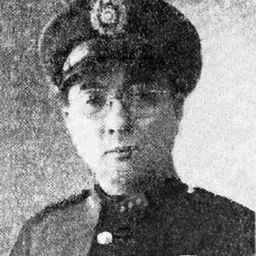
Lived 1914 – 2005 (aged 91). Wang Bingzhang was a Chinese military leader and politician.
Wang Bingzhang (; 14 January 1914 – 25 September 2005) was a Chinese Communist revolutionary and a founding lieutenant general of the People's Liberation Army (PLA). He joined the Northwest Army of the warlord Feng Yuxiang in 1929, before participating in the Ningdu uprising and defecting to the Communist Red Army in 1931. He fought in the Red Army's Long March, the Second Sino-Japanese War where he was credited with devising a trench warfare tactic that helped destroy enemy pillboxes, and the Chinese Civil War.
After the founding of the People's Republic of China in 1949, Wang served as the first chief of staff of the PLA Air Force and then the first Minister of the Seventh Ministry of Machine Building, in charge of China's ballistic missile program. During the Cultural Revolution, he replaced Marshall Nie Rongzhen as the acting director of the Science and Technology Commission of the National Defense Ministry, in charge of China's nuclear tests and the launch of its first satellite. However, in the aftermath of Marshall Lin Biao's alleged coup attempt and subsequent death in October 1971, Wang was purged and imprisoned for ten years. He was released in 1981 and discharged from the army without being prosecuted or convicted of a crime.
Early life and Guominjun Wang Bingzhang was born on 14 January 1914 into a peasant family in Anyang, Henan Province. Owing to poverty, he dropped out of school second year in junior high school and apprenticed at a blacksmith's shop. reorganized it as the 26th Route Army, and dispatched it to Jiangxi to participate in the third encirclement campaign against the Jiangxi Soviet. On 14 December 1931, the 26th Army rebelled against Chiang in the Ningdu uprising and defected to the Chinese Red Army. It became the Fifth Army Group of the Red Army, greatly strengthening the Communist forces. Wang joined the Communist Youth League in 1932 and the Communist Party in 1935. He served in the Fifth and later the First Army Group of the Red Army, and participated in the army's Long March to Northern Shaanxi. Wang devised the jiaotonghao tactic using a network of interconnected trenches from which to attack the enemies' pillbox system. In the "Anti-Pillbox Battle" in July 1943, Wang's brigade, by using his tactic, reportedly inflicted nearly 10,000 enemy casualties while losing around 100 men.
In 1955, Wang was among the first group of PLA commanders to be awarded the rank of lieutenant general. Under Wang's command, China successfully launched its first missile, the Dongfeng-1, in November 1960, and the Dongfeng-2 to Dongfeng-5 followed.
Wang avoided serious repercussions, likely due to the protection by the pro-establishment New 15 September Group and by Marshall Nie Rongzhen, director of the Science and Technology Commission of the National Defense Ministry (NDSTC). He was rescued after being held by various Red Guard factions for four months and suddenly disappeared, ostensibly being hospitalized for medical treatment. He did not re-emerge until October 1968.
After Nie himself was purged in 1968, Mao Zedong appointed Wang as the acting director of the NDSTC.
Later life and death Wang was held in the Qincheng Prison from 1971 until his release in 1981. In 1982, the Procuratorate of the People's Liberation Army announced that it would not press charges against him but discharged him from the PLA. He died on 25 September 2005 in Beijing, at the age of 91. Because of a dispute between his family and the Chinese government regarding the official treatment of his funeral, his body remained frozen in the hospital morgue for 12 years. His funeral was finally held on 31 May 2017 at the People's Liberation Army General Hospital (301 Hospital) in Beijing.
Honours In 1955, Wang was awarded the Second Class Medal of the Order of Bayi, the First Class Medal of the Order of Independence and Freedom, and the First Class Medal of the Order of Liberation.
Don’t just read it —
keep it.
Full-length biographies made to live with: read them, listen on the way to work, watch them tonight.
- E-book
- Audio
- Video
Instant download · yours to keep · every purchase keeps this site free
Important facts
People in Wang Bingzhang's life
Named in this biography and alive at the same time


Related people
Same field, nearest in time



Contemporaries
People whose lives overlapped Wang Bingzhang's




Frequently asked questions
Who was Wang Bingzhang?
Chinese general
When was Wang Bingzhang born?
Wang Bingzhang was born on 14 January 1914 in Anyang.
When did Wang Bingzhang die?
Wang Bingzhang died on 25 September 2005 in Beijing.
What was Wang Bingzhang's occupation?
Wang Bingzhang was a military leader and politician.
What nationality was Wang Bingzhang?
Wang Bingzhang was Chinese.
Sources & further reading
· DBpedia: Wang Bingzhang (general)
Cite this page
APA: Biography.guide. (2026). Wang Bingzhang. https://biography.guide/wang-bingzhang-military-leader/
MLA: "Wang Bingzhang." Biography.guide, https://biography.guide/wang-bingzhang-military-leader/.
Chicago: "Wang Bingzhang." Biography.guide. https://biography.guide/wang-bingzhang-military-leader/.
Data last updated: 2026-09-20 · Spot an error? Report a correction.
Page generated 2026-09-27 05:25 UTC