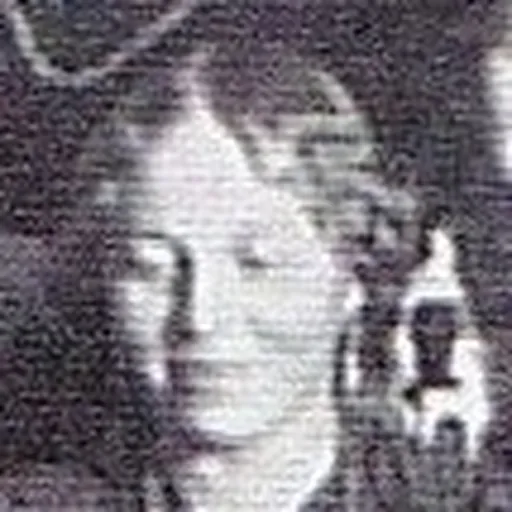
About Wanda Widigierowa
Lived 1899 – 1965 (aged 66). Wanda Widigierowa was a Polish painter.
Wanda Anna Gentil-Tippenhauer Widigierowa, aka Ruda Wanda (1899-1965) was a Polish painter, a passionate skier and a Tatra Mountains devotee.
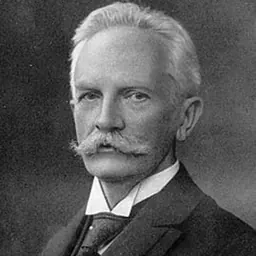
Life Early education in Haiti Wanda Gentil-Tippenhauer was born in Port-au-Prince, Haiti, where her father Louis (1867-1959), a German scientist had been living since 1897. There he worked as the city's chief engineer: he was responsible in particular for the construction of the first narrow-gauge railway in the country. Wanda's mother was Antonina Wiktoria née Rosicka. In Haiti she worked as a teacher. she began studies at the School of Fine Arts in Hamburg.
At the end of World War I, she moved to Warsaw where she obtained a Bachelor's Degree in Humanities.
The two following years (1921-1923), Wanda transferred back to Hamburg to study. In the years 1921–1923 she studied at the School of Fine Arts. She also travelled extensively around Europe (Italy, France, Switzerland and Germany) and to America.
On 13 June 1924, she married Wacław or Ludwik Widigier (1901-1939), an art collector in Warsaw. Tomasz Piskorski, a long-time friend of Wanda (who will be his daughter Katarzyna's godmother) was present at the ceremony.
She discovered Tatras and Zakopane in the mid-1920s, with which she remained connected all her life. There, she met Józef Oppenheim (1887-1946), a legendary man and one of the most important figures in Zakopane between the wars, who was a mountaineer, rescuer, skier and long-time head of the Tatra Volunteer Search and Rescue ( TOPR). Gentil-Tippenhauer became an experienced skier, criss-crossing the entire surrounding mountains and participating as well to TOPR expeditions.
Painting exhibitions, World War II From 1927 onwards, Wanda Gentil-Tippenhauer started exhibiting, mainly at the Warsaw Society for the Encouragement of Fine Arts. In 1932, she exhibited a series of Zakopane landscapes at the Jabłkowski Brothers' department store in Warsaw.
During these years, she also exhibited in Bydgoszcz (1927,1931,1938), Łódź (1932 to 1939), Zakopane and abroad: Lyon, Milan and Turin (1928). Afterwards, Wanda moved to Warsaw, giving drawing lessons during clandestine classes (1943–1944). At that time, she hid Oppenheim, who was at risk of arrest and death due to his Jewish origins. After fleeing a ruined Watsaw, Wanda and Józef stayed in Pruszków; at the end of March 1945, they moved together with her Wiktoria to Zakopane mother. kilim designs and was involved in interior design and painting conservation.
In the interwar period, she created, among other things, wall paintings in the Church of St. Catherine of Alexandria in Zgierz and in the chapel of a castle near Berezhany, Ukraine.
Moreover, Wanda illustrated a book collecting fairy tales from Haiti, written by her mother Wiktoria Gentil-Tippenhauer (Bajki murzyńskie z Haiti), published in 1931.
Gentil-Tippenhauer has also created 11 ski routes in the Tatras, as described by Józef Oppenheim in his book Szlaki narciarskie Tatr Polskich i główne przejścia na południową stronę .
Awards and collections In 1927, at her debuts, she received a distinction from the Warsaw Society for the Encouragement of Fine Arts for her batik Green shawl.
Many of her works are now in Zakopane (Muzeum Tatrzańskie), others can be found in Łodż (Muzeum Sztuki w Łodzi) and in Bydgoszcz (Regional Museum).
Writing works Wanda Tippenhauer's writing dealt mostly with art criticism. In 1925, she started penning reviews in Kurier Łódzki and in 1926–1929 in the Vilnius Przegląd Artystyczny (Artistic review).
She was interested in Podhale folk art, organizing competitions and exhibitions in Zakopane, writing books about folk artists, such as Andrzej Strug and Władysław Matlakowski, issued by Wierchy publishing house (1938–1961) and Polska Sztuka Ludowa publishing house (1954–1957).
Together with Józef Oppenheim, she wrote a memoir, Pamięci zmarłych schronisk published in 1948 after Oppenheim' death. With writer Stanisław Zieliński, she penned W stronę Pysznej in 1961, a book of tourist and skiing memories mainly related to Oppenheim.
Wanda Gentil-Tippenhauer's typescript SOS w Tatrach was never published. A copy is held in the archives of The Tatra Museum in Zakopane; it is dedicated to Oppenheim and the expeditions of the TOPR between 1914 and 1939. It relates, among other things, the April 1933 TOPR mission to recover the body of the mountaineer Wincenty Birkenmajer. The museum collections also include Wanda's letters to Oppenheim.
Family Wanda Gentil was Oppenheim's life companion. In 1945, she moved and lived with him in the Krzeptówki district of Zakopane. On February 28, 1946, she was present when Józef was murdered, she was shot as well in the head.
After her death on 12 August 1965, she was buried at the Pęksowy Brzyzek National Cemetery in Zakopane.
A monument was erected on her grave, realized by students working under the supervision of sculptor Antoni Rząsa in Władysław Hasior's studio of the Art Schools in Zakopane .
Grandfather (1814-1904) was Wanda's grandfather on her mother's side. He became the mayor of Sochaczew before moving in 1862 to Łódź. He was elected on 16 December 1862, the successor of Franciszek Traeger as the mayor of Łódź. He was however removed from this position on 15 February 1865 for having provided assistance to the participants of the January Uprising. He was a co-founder of the Municipal Credit Society in Łódź for which he served as a director from October 1872 until the end of his life.
Mother
Wanda's mother was (1863-1939 or 1946). Wiktoria was born in Łódź, the daughter of Andrzej Rosicki, once a city's mayor (1863-1865) and founder-director of a bank in Łódź. The girl studied in Zurich: it is where she met Louis Gentil-Tippenhauer, from a Marburg industrialist family. They married in 1897 and left to Haiti.
After separating from her husband, Antonina Wiktoria returned to Poland with her two daughters in 1921. They settled in Bydgoszcz for 18 years, at 15 Zamoyskiego Street where she was administrator of the tenement. Right after the end of World War II, she lived with her daughter Wanda in Zakopane (from mid-1945 to January 1946). She probably moved to Paris where her younger daughter Jadwiga was staying. Wiktoria probably died in the capital of France or in Warsaw where Wanda lived till 1946. Her exact place of death is not known.
Antonina Wiktoria Gentil-Tippenhauer was the only Polish translator of William Shakespeare's work in the 19th century: at the turn of the 19th and 20th centuries, a female translator was a rarity. In 1891, she translated Romeo and Juliet. In 1928, she also translated Charles Dickens’ novel The Life and Adventures of Martin Chuzzlewit to Polish.
In addition she wrote collections of short stories for children Wolę być sobie niż królem (1929) and Bajki murzyńskie z Haiti (1931).
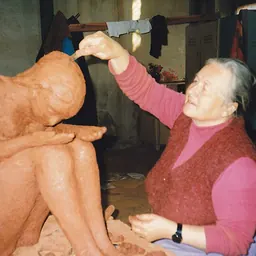
God-daughter Wanda Gentil-Tippenhauer was the godmother of Katarzyna Piskorska (1937-2010), a Polish sculptor and medalist. Pikorska died in the 2010 Smolensk air disaster.
Don’t just read it —
keep it.
Full-length biographies made to live with: read them, listen on the way to work, watch them tonight.
- E-book
- Audio
- Video
Instant download · yours to keep · every purchase keeps this site free
Important facts
People in Wanda Widigierowa's life
Named in this biography and alive at the same time



Related people
Same field, nearest in time

Contemporaries
People whose lives overlapped Wanda Widigierowa's

Frequently asked questions
Who was Wanda Widigierowa?
Polish painter (1899-1965)
When was Wanda Widigierowa born?
Wanda Widigierowa was born on 13 January 1899 in Port-au-Prince.
When did Wanda Widigierowa die?
Wanda Widigierowa died on 12 August 1965 in Zakopane.
What was Wanda Widigierowa's occupation?
Wanda Widigierowa was a painter.
What nationality was Wanda Widigierowa?
Wanda Widigierowa was Polish.
Sources & further reading
· Wikipedia: Wanda Widigierowa
· DBpedia: Wanda Gentil-Tippenhauer
Cite this page
APA: Biography.guide. (2026). Wanda Widigierowa. https://biography.guide/wanda-widigierowa/
MLA: "Wanda Widigierowa." Biography.guide, https://biography.guide/wanda-widigierowa/.
Chicago: "Wanda Widigierowa." Biography.guide. https://biography.guide/wanda-widigierowa/.
Data last updated: 2026-09-21 · Spot an error? Report a correction.
Portrait: Wikimedia Commons · author & licence
Page generated 2026-09-27 05:01 UTC