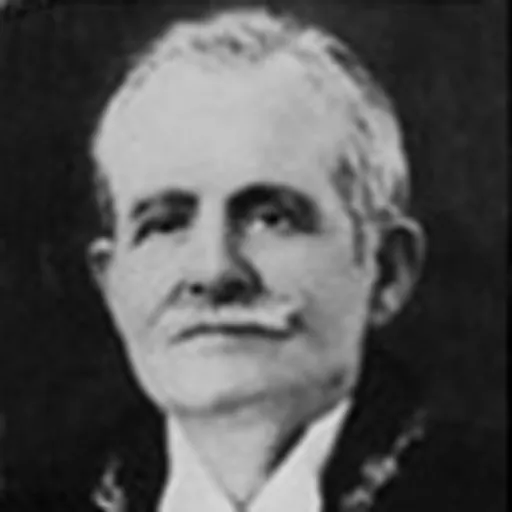
About Walter Willson Cobbett
Lived 1847 – 1937 (aged 89). Walter Willson Cobbett was a British musicologist, music journalist, musician and writer.
Walter Willson Cobbett (11 July 184722 January 1937) was an English businessman, amateur violinist and an influential patron of British chamber music from the decade before World War I until he died in 1937. He was an innovative and astute businessman with an enthusiasm for the composition and performance of chamber music. Cobbett's business successes enabled him to focus on his musical interests from about 1905.
Cobbett sponsored a series of competitions for the composition of new chamber music works by British composers and endowed the Cobbett Medal for services to chamber music. He devised and encouraged the adaptation of a short musical form called a 'phantasy'. He compiled and edited the two-volume Cobbett's Cyclopedic Survey of Chamber Music, published in 1929, a comprehensive review of the musical genre.
Biography
Early years
Walter Willson Cobbett was born on 11 July 1847 at Blackheath in south-east London. His father was a businessman "of literary and musical tastes".
Young Walter was sent to France and Germany "as a supplement to his education", where he received private tuition. Cobbett was overtaken by a "consuming enthusiasm" for the musical genre when he heard the Hungarian violinist Joseph Joachim lead a quartet performing Beethoven compositions at St. James's Hall in London.
Music and business
Cobbett began his business life as an underwriter employed by Lloyd's of London. He later worked in journalism, as a foreign correspondent.
Cobbett played chamber music regularly at home and was involved with several amateur orchestras including the Strolling Players' Orchestral Society, formed in about 1890.
Walter Willson Cobbett and Ada Florence Sells were married in 1889 at Lambeth in South London.
Scandinavia Belting
In August 1897 the businesses of the Fenton brothers and Cobbett were incorporated under the name of W. Willson Cobbett Ltd., with Cobbett as the chairman of directors. William Fenton died in 1898, after which W. Willson Cobbett Ltd. acquired his company (William Fenton & Co.). In 1901 the business moved both its production and sales facilities to Cleckheaton in West Yorkshire, which became known as the Scandinavia Mills.
The British Belting & Asbestos Ltd. (Scandinavia Belting Mill) at Cleckheaton in West Yorkshire, photographed in 1933.
From about 1907, having become independently wealthy, Cobbett began to focus less attention on his business in favour of his musical interests. Cobbett himself claimed that he retired "at the age of sixty" to "devote myself to what I consider to be my life's work" as a promoter and proponent of chamber music.
Music patronage
In 1904, Cobbett delivered a lecture titled 'The Violin Family and its Music' during the Music Loan Exhibition by the Worshipful Company of Musicians, a musicians' guild that originated in London in the medieval period. The exhibition of ancient musical instruments, rare books and manuscripts, scores and musical mementos, on loan from collectors, was held at the Fishmongers' Hall (adjacent to London Bridge) in June and July 1904.
In May 1905, Cobbett was elected a member of the Worshipful Company of Musicians. At the same meeting of his membership acceptance, he offered 50 guineas as first prize in a composition competition to be organised under the auspices of the Musicians' Company. The competition was named the Cobbett Musical Competition. It was open only to "British subjects" to submit for judging a musical composition called a 'phantasy', in the form of a string quartet for two violins, a viola and a violoncello. The 'phantasy' was Cobbett's modern conception of an older genre, short pieces for viols called 'fancies' or 'fantasies' from the 16th and 17th centuries by composers such as William Byrd and Orlando Gibbons. Under the terms of the competition a 'phantasy' was a piece up to 12 minutes long that "may consist of different sections varying in tempi and rhythms". Charles Stanford later defined a 'phantasy' as "a condensation of the three or four movements of a sonata into a single movement of moderate dimensions". The competition's stated object was "to popularise the String Quartet among general audiences, and to endeavour to bring into life a new Art Form providing fresh scope for the composers of Chamber Music".
A pencil sketch of Walter Willson Cobbett by Fred Roe (January 1924).
In 1905 the competition called for the composition of a phantasy for a string quartet. The panel of judges included the composer Alexander Mackenzie, Royal Academy of Music professor Alfred Gibson, and the Belgian violinist Hermann Sternberg. Sixty-seven manuscripts were received, and six prizes were awarded. The winner received 50 guineas. Other prizes awarded were ten pounds for second place, a special prize, and three consolation prizes of five guineas each. The second competition in 1907 required a phantasy composition for a piano trio (a piano, violin and cello). Sixty-seven manuscripts were received, and six prizes were awarded. The third competition in 1909 differed from the first two in several ways. The competition was international, attracting 134 entries, and called for a musical composition in sonata form. The competition in 1915 required a composition for a string quartet in a sonata, suite or phantasy form, with Cobbett specifying that the two violin parts be of equal importance. Forty-five works were submitted. The competition in 1917 required a musical composition for a string quartet or piano trio based on English, Welsh, Scottish or Irish folksongs. The 1919 competition called for a "Dance Phantasy" for a string quartet or piano trio, described as a work of moderate length that may be a "ballet in miniature" or music that "contains the soul of the dance and lends itself to dance interpretation".
During the period of his sponsorship of the chamber music competitions, Cobbett also directly commissioned several works from emerging and leading British composers. Eleven of his commissioned compositions, each in the phantasy form, were composed and published between 1910 and 1912. By 1915 another 13 new chamber works "could be credited to Cobbett's activities". One of the works commissioned in 1912 was Phantasy String Quintet with Two Violas by Ralph Vaughan Williams, which Cobbett later called "A piece of music which represents so exactly the phantasy as I conceived it that it may well serve as prototype to those who care to write in this form in the future".
Cobbett was a prolific writer and publicist for chamber music. He published articles in The Strad magazine and contributed 60 articles to Grove's Dictionary of Music and Musicians. From June 1913 to November 1916, Cobbett was responsible for the issue of a monthly series of 'Chamber Music' supplements, published with each issue of The Music Student, a newsletter produced by the Royal College of Music.
After the outbreak of World War I Cobbett served as a member of the Music in War-Time Committee, which sought to safeguard British musicians' interests during the conflict. The committee organised concerts at military camps and hospitals, providing paid engagements for musicians and entertainment for serving and wounded soldiers. Concerts were also given in social clubs for the wives of armed forces personnel. In 1916 the work of the committee was extended to factories, providing lunchtime concerts for munitions workers.
Cobbett playing with his amateur ensemble; a monochrome image of The Concert Party, a painting by Frank Owen Salisbury (1929).
In 1918 Cobbett established, at his own expense, a Free Library of Chamber Music in conjunction with the Society of Women Musicians. The library was a collection of chamber music, sonatas, trios, quartets and quintets that could be borrowed or purchased.
Cobbett was the owner of "a fine collection of Cremona violins".
In 1924, Cobbett established a medal through the Worshipful Company of Musicians, endowed by his initial £50 contribution: the Walter Willson Cobbett Medal. A silver gilt medal is presented annually to a distinguished recipient in recognition of their services to chamber music. In addition to his own extensive contributions, the survey includes articles by leading musicians and musicologists of the time, including Vincent d'Indy, Donald Tovey, and Ralph Vaughan Williams. One reviewer wrote that "some of the articles in the first volume are little masterpieces".
Last years
Cobbett's wife Ada died in 1932. She was buried on 5 September 1932 at Charlton Kings, near Cheltenham in Gloucestershire. In 1934 he founded the Chamber Music Association, with an initial gift of one thousand pounds, to foster chamber music activity. The beneficiary of Cobbett's interest in British Belting & Asbestos Ltd. was Arthur Anselm Pearson, who had been with the business since 1889 and a director of the company since 1912.
1907 Cobbett Competition for Phantasy Piano Trio
Prize awarded Composer Title of Work Prize amount First Frank Bridge Phantasie for Piano Trio in C minor £50 Second James Friskin Phantasie for Piano Trio in E minor £10 Third John Ireland Phantasie in A minor £10
1909 Cobbett Competition for a Sonata for Violin and Piano
Prize awarded Composer Title of Work Prize amount First John Ireland Violin Sonata No. 1 in D minor £40 Second Eric Gritton £30 Third Geoffrey O'Connor Morris £15
1915 Cobbett Competition for String Quartet (in Sonata, Suite, or Phantasy form)
Prize awarded Composer Title of Work Prize amount First (phantasy form) Albert Sammons Phantasy Quartet in B major £25 First (sonata form) Frank Bridge String Quartet No. 2 in G minor £25 Second (sonata form) William Henry Reed String Quartet No. 5 in A minor
1917 Cobbett Competition for a Folksong Phantasy
Prize awarded Composer Title of Work Prize amount First Cecil Armstrong Gibbs The Enchanted Wood £50 Second Cecil Hazlehurst The Red Plague £15 Supplementary Maud Emily Marshall Phantasy Piano Trio
Commissions (1910-1912)
Frank Bridge: Phantasy in F-sharp Minor for piano quartet (1910) James Friskin: Phantasy in F Minor for piano quintet (1910) Benjamin Dale: Phantasy for viola and piano (1911) Thomas Dunhill: Phantasy Trio for piano, violin, and viola (1911) James McEwen: Phantasy String Quintet with two cellos (1911) Ethel Barns: Phantasy Trio for two violins and piano (1911) Ralph Vaughan Williams: Phantasy String Quintet with two violas (1912) Richard Walthew: Phantasy Piano Quintet in E Minor (1912) Bertram Walton O’Donnell: Phantasy for cello and piano (1912) Donald Tovey: Phantasy for clarinet quintet (1912) York Bowen: Phantasy for violin and piano (1912)
Cobbett composition prizes at the Royal College of Music, 1923-50 (sources: The RCM Magazine, issues 24-46 (1928–50); Cobbett's Cyclopedic Survey, 1, pp. 288–9) 1923: A Davies Adams, Celtic Phantasy for string quartet; H. Strickland-Constable, Phantasy for string quartet 1928: Imogen Holst, Phantasy for string quartet; Grace Williams, Quintet for piano and strings 1930: Helen Perkin, Phantasy Quartet; Elizabeth Maconchy, Phantasy Quintet 1931: Helen Hunter, Phantasy Trio for strings; Brian Easdale, Phantasy Trio for strings 1932: Lilian Harris, Phantasy Trio; Benjamin Britten, Phantasy Quintet 1933: Stanley Bate, Phantasy String Quartet 1934: Mary Couper, Phantasy Quintet; Miriam Hyde, Phantasy Quartet 1935: Cedric Thorpe Davie, String Quartet; Roger Fiske, Piano Trio 1936: William Reed, String Quartet; Roger Fiske, Fantasia for string quartet 1937: Inglis Gundry, Fantasia for string quartet; Douglas Bridger, Fantasy Quintet for strings 1938: Dulcie Holland, Fantasia Trio; Archie J Potter, Fantasy for string trio 1939: Douglas Lilburn, Fantasia String Quartet; Wallace Ross, String Quartet 1940: Joan Trimble, Phantasy Trio; Ruth Gipps, Sabrina string quartet 1941: Ruth Gipps, Brocade piano quartet; Malcolm Arnold, Vita Abundans string quartet 1942: Leonard Salzedo, String Quartet; Raymond O'Connell, Phantasy String Quartet in E minor 1946: David Gow (first prize); Hugo Cole (second prize) 1947: William Blezard, Phantasy String Quartet; Maxwell Ward, Fantasie for string quartet 1948: John Buckland (first prize); Stephen Dodgson (second prize) 1950: David Barlow (first prize); Ronald Tremain (second prize)
Free Library of Chamber Music
The Free Library of Chamber Music, originally financed by Cobbett, was maintained by the Society of Women Musicians until the society disbanded in 1972.
The Cobbett Medal
The first recipient of the Cobbett Medal in 1924 was the composer Thomas Dunhill. The medal continues to be awarded annually by the Worshipful Company of Musicians (in more recent times known as the Musicians' Company).
The New Cobbett Prize
2015 to present.
The New Cobbett Prize for Chamber Music was instigated in 2014 by the Berkeley Ensemble to build upon Cobbett's legacy. The first winner was Sequenza for string quartet by Samuel Lewis.
Publications
Walter Willson Cobbett (1913–16), Chamber Music, a supplement to The Music Student (No. 1-22a June 1913 - November 1916), London: Home Music Study Union. Walter Willson Cobbett (editor) (1929), Cobbett's Cyclopedic Survey of Chamber Music (two volumes), London: Oxford University Press. Walter Willson Cobbett & Sidney Dark (editors) (1932), Fleet Street: An Anthology of Modern Journalism, London: Eyre & Spottiswoode.
Don’t just read it —
keep it.
Full-length biographies made to live with: read them, listen on the way to work, watch them tonight.
- E-book
- Audio
- Video
Instant download · yours to keep · every purchase keeps this site free
Important facts
People in Walter Willson Cobbett's life
Named in this biography and alive at the same time






Related people
Same field, nearest in time


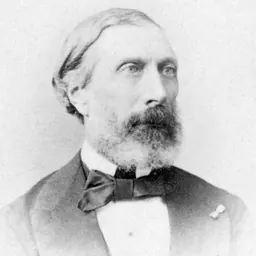

Contemporaries
People whose lives overlapped Walter Willson Cobbett's

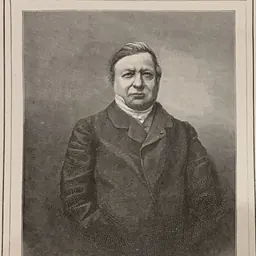
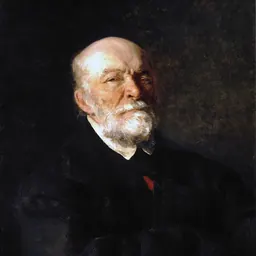



Frequently asked questions
Who was Walter Willson Cobbett?
British amateur musician (1847-1937)
When was Walter Willson Cobbett born?
Walter Willson Cobbett was born on 11 July 1847 in Blackheath.
When did Walter Willson Cobbett die?
Walter Willson Cobbett died on 22 January 1937 in London.
What was Walter Willson Cobbett's occupation?
Walter Willson Cobbett was a musicologist, music journalist, musician and writer.
What nationality was Walter Willson Cobbett?
Walter Willson Cobbett was British.
Sources & further reading
· Wikipedia: Walter Willson Cobbett
· DBpedia: Walter Willson Cobbett
Cite this page
APA: Biography.guide. (2026). Walter Willson Cobbett. https://biography.guide/walter-willson-cobbett/
MLA: "Walter Willson Cobbett." Biography.guide, https://biography.guide/walter-willson-cobbett/.
Chicago: "Walter Willson Cobbett." Biography.guide. https://biography.guide/walter-willson-cobbett/.
Data last updated: 2026-09-23 · Spot an error? Report a correction.
Portrait: Wikimedia Commons · author & licence
Page generated 2026-09-27 05:07 UTC