
About Walter von Reichenau
Lived 1884 – 1942 (aged 57). Walter von Reichenau was a German military officer and general field marshal.
Walter Karl Gustav August Ernst von Reichenau (8 October 1884 – 17 January 1942) was a German Generalfeldmarschall (Field Marshal) in the Heer (Army) of Nazi Germany during World War II. He was nicknamed "The Bull" . Reichenau commanded the 6th Army during the invasions of Belgium and France. During Operation Barbarossa, the invasion of the Soviet Union, he continued to command the 6th Army as part of Army Group South as it captured Ukraine and advanced deep into the USSR.
While in command of the 6th Army during Operation Barbarossa in 1941, he issued the notorious Severity Order which encouraged German soldiers to murder Jewish civilians on the Eastern Front. Reichenau's troops cooperated with the Schutzstaffel (SS) in the commission of the massacre of over 33,000 Jews at Babi Yar, and assisted with other crimes against humanity that occurred in areas under his command during the Holocaust.
Early life and service The son of Prussian Lieutenant General Ernst August von Reichenau (1841–1919), Walter von Reichenau was born in 1884 in Karlsruhe. One of his brothers was Ernst von Reichenau. Walter joined the Prussian Army as an artillery officer cadet on 14 March 1903. He then attended the Prussian War Academy, going on to serve as a staff officer to Max Hoffmann in the First World War. At the beginning of the war, Reichenau was Adjutant of the 1st Guards Field Artillery Regiment and in this position, he was promoted to Captain on 28 November 1914 and awarded the Iron Cross 2nd Class and 1st Class over the course of the year. The following year, he was transferred to the German General Staff and in the course of 1915 he served as Second Staff Officer (Ib) of the 47th Reserve Division and then as First Staff Officer (Ia) of the 7th Cavalry Division.
Reichenau's early years are described in conflicting terms, as both progressively minded but also brutal, with a history of executing soldiers who were AWOL, even in times of peace. Greatly unconventional, he was an avid outdoors man, spoke English at home and in contrast to his later activities in Russia, insisted on supporting World War I Jewish veterans' events in full military uniform, even after Hitler came to power. In April 1919, he married the Silesian aristocrat Alexandrine Gräfin Maltzan Freiin zu Wartenberg und Penzlin (1895–1984), whose sister, Maria von Maltzan, was later part of the German Resistance.
Interwar period After the war, he joined the Freikorps as a General Staff officer, serving in Silesia and Pomerania. In 1919, Reichenau joined the newly established of the Weimar Republic. The officer corps of the new armed forces was limited to 4,000, and there was to be no General Staff. Reichenau took a post in the , which was the "underground" equivalent of the General Staff formed by Hans von Seeckt. He was promoted to Major in 1924, to Lieutenant Colonel on 1 April 1929 and Colonel on 1 February 1932. In 1930, Reichenau was appointed Chief of Staff to the Inspector of Signals at the Ministry of the Reichswehr. He was later introduced to Hitler in April 1932 by his uncle, a diplomat. Extremely ambitious, he saw the Nazi Party as a revolutionary vessel in which he could propel his career and so broke with the pro-Monarchist politics of the Prussian military caste and became a devoted Nazi.
As an outspoken ally and advocate of Hitler and the Nazi Party, Reichenau soon ran afoul of cabinet member and eventual Chancellor Kurt von Schleicher, who used his authority to have him transferred out of his prestigious posting in Berlin to the headquarters of the military district of East Prussia, a relative backwater. In East Prussia, Reichenau served under General Werner von Blomberg, a fellow exile of Schleicher's. Reichenau and Blomberg became political allies within the army and it was Reichenau who introduced Blomberg to Hitler. Blomberg, who had a reputation for being manipulated by Reichenau, was captivated by Hitler and both men soon used their connections with the Nazi party to advance. When Hitler came to power in January 1933, Blomberg became Minister of War. One of his first acts was to promote Reichenau to head the powerful Ministerial Office, acting as liaison officer between the Army and the Nazi Party. He played a leading role in persuading Nazi leaders such as Göring and Himmler that the power of Ernst Röhm and the (SA) must be broken if the army was to support the Nazi-led government. This led directly to the "Night of the Long Knives" of 30 June 1934.
In 1935, Reichenau was promoted to lieutenant general and was also appointed to command the 7th Army Corps in Munich. Knights Cross with swords of the House Order of Hohenzollern , predecessor of the Knight's Cross of the Iron Cross on 30 September 1939 as General der Artillerie and Commander-in-Chief of the 10. Armee
Don’t just read it —
keep it.
Full-length biographies made to live with: read them, listen on the way to work, watch them tonight.
- E-book
- Audio
- Video
Instant download · yours to keep · every purchase keeps this site free
Important facts
People in Walter von Reichenau's life
Named in this biography and alive at the same time


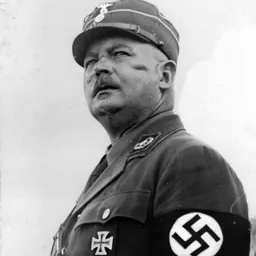

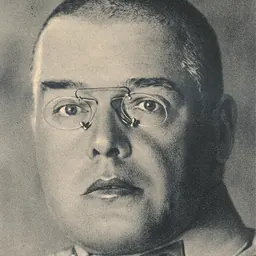

Related people
Same field, nearest in time
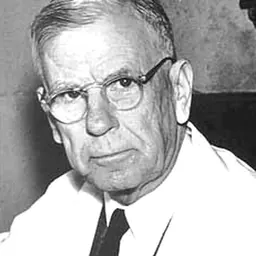


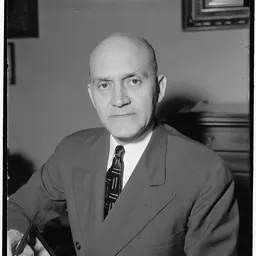

Contemporaries
People whose lives overlapped Walter von Reichenau's
Frequently asked questions
Who was Walter von Reichenau?
German field marshal (1884–1942)
When was Walter von Reichenau born?
Walter von Reichenau was born on 8 October 1884 in Karlsruhe.
When did Walter von Reichenau die?
Walter von Reichenau died on 17 January 1942 in Lviv.
What was Walter von Reichenau's occupation?
Walter von Reichenau was a military officer and general field marshal.
What nationality was Walter von Reichenau?
Walter von Reichenau was German.
Sources & further reading
· Wikipedia: Walter von Reichenau
· DBpedia: Walter von Reichenau
Cite this page
APA: Biography.guide. (2026). Walter von Reichenau. https://biography.guide/walter-von-reichenau/
MLA: "Walter von Reichenau." Biography.guide, https://biography.guide/walter-von-reichenau/.
Chicago: "Walter von Reichenau." Biography.guide. https://biography.guide/walter-von-reichenau/.
Data last updated: 2026-09-20 · Spot an error? Report a correction.
Page generated 2026-09-27 05:25 UTC