
About Walter Mehring
Lived 1896 – 1981 (aged 85). Walter Mehring was a German and American poet, writer, draftsperson and watercolorist.
Walter Mehring (29 April 1896 – 3 October 1981) was a German author and one of the most prominent satirical authors in the Weimar Republic. He was banned during the Third Reich and fled the country.
Early life Mehring was Jewish, the son of the translator and writer Sigmar Mehring and Hedwig Löwenstein, an opera singer from Prague who later was deported to Theresienstadt by the Nazis and perished there. His literary career began with the Sturm and Berliner Dada movements.
Early writings From the 1920s, he published lyric poetry and satirical prose in various magazines and newspapers such as the famous Weltbühne or . He fought against militarism and antisemitism and considered himself an anarchist. He also wrote songs for some of the best cabarets in Berlin: Max Reinhardt's , Rosa Valetti's Café Größenwahn and for Trude Hesterberg's . Artists like George Grosz became close friends. From 1921 to 1928, he lived and worked in Paris.
Persecution He was persecuted by the Nazis, particularly by Joseph Goebbels, and consequently fled the country. On 10 May 1933 his books were burnt during the Nazi book burnings.
Mehring emigrated to Vienna, where he met the actress and writer Hertha Pauli. She was his companion during his escape from the Nazis through France. He dedicated his "Briefe zur Mitternacht" ("Midnight Letters") to her. The period spent in France he also described in No Road Back. When the Nazis occupied France, he was briefly imprisoned in an internment camp. He managed to escape and, together with Hertha Pauli, he wandered around France, meeting many other people on the run from the Nazis: Franz Werfel, Alma Mahler-Werfel, Heinrich Mann, Leonhard Frank, Emil Gumbel. In Marseille they met Varian Fry (Emergency Rescue Committee), who helped them escape.
Exile He emigrated to the United States. With the aid of the European Film Fund he got employment with Metro-Goldwyn-Mayer. He also wrote articles for Aufbau and became a naturalized US citizen, but never really managed to settle in the United States and returned to Europe after the war.
In Europe, he was unable to replicate his earlier successes. In 1981 he died in Zurich.
Selected works The Lost Library: The Autobiography of a Culture. Secker & Warburg, 1951. Timoshenko: Marshal of the Red Army. A. Unger, 1942. No Road Back. S. Curl, 1944.
Don’t just read it —
keep it.
Full-length biographies made to live with: read them, listen on the way to work, watch them tonight.
- E-book
- Audio
- Video
Instant download · yours to keep · every purchase keeps this site free
Important facts
Family & relationships
People in Walter Mehring's life
Named in this biography and alive at the same time



Related people
Same field, nearest in time

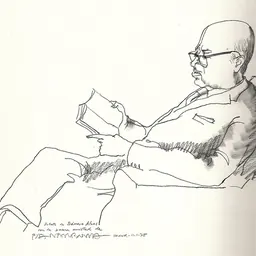
Contemporaries
People whose lives overlapped Walter Mehring's



Frequently asked questions
Who was Walter Mehring?
German writer (1896–1981)
When was Walter Mehring born?
Walter Mehring was born on 29 April 1896 in Berlin.
When did Walter Mehring die?
Walter Mehring died on 3 October 1981 in Zurich.
What was Walter Mehring's occupation?
Walter Mehring was a poet, writer, draftsperson and watercolorist.
What nationality was Walter Mehring?
Walter Mehring was German and American.
Sources & further reading
Cite this page
APA: Biography.guide. (2026). Walter Mehring. https://biography.guide/walter-mehring/
MLA: "Walter Mehring." Biography.guide, https://biography.guide/walter-mehring/.
Chicago: "Walter Mehring." Biography.guide. https://biography.guide/walter-mehring/.
Data last updated: 2026-09-20 · Spot an error? Report a correction.
Page generated 2026-09-27 05:25 UTC