
About Walter Lenck
Lived 1873 – 1952 (aged 78). Walter Lenck was a German sculptor, draftsperson, painter, architect, cellist and composer.
Walter Lenck (1873–1952) was a versatile German artist – sculptor, draftsman, painter, architect, cellist, composer and dramatist. Escaping Nazi persecution he emigrated in 1936 to Johannesburg, South Africa, where he lived until his death. Between 1911 and 1913 he changed his original surname, Lewy, to Lenck.
Life He was born in Berlin on September 2, 1873, son of banker Oscar Lewy and his wife Rosalie, née Samuelson, first cousin of her husband.
From a young age he was fond of drawing animals at the zoo and illustrating scenes from Greek mythology, with a special interest in the saga of the Argonauts. After completing his studies, he made a living painting portraits until he earned a reputation as a sculptor. Still as Walter Lewy the artist traveled from Hamburg, embarking on the steamer König Friedrich August on May 21. At the International Art Exhibition, held at San Martín Square, he presented three bronze sculptures. He would spend fourteen years in Vienna
In 1916 he organized an exhibition of his architectural and sculptural works in a room at the Musikverein, which he personally rented. The contract stipulated that the association would receive in payment the amount collected from the sale of tickets, once the installation and administrative expenses incurred by the artist had been covered. The show would open on May 2 and would extend, in principle, for a month; it received favorable reviews.
That same year, Lenck was one of the founders of the Collegium Musicum in Vienna, an organization dedicated to rescue and disseminate works of ancient music by German composers, performing frequent concerts in which he played the cello and viola da gamba. She was interested in contacting painters and sculptors for an exhibition of modern art planned by the newspaper, to be held the following season in Washington. She describes him in an article published on October 22 that included photos of two works by the artist, written under her pseudonym, Viktor Flambeau:
He lived in Berlin until his emigration to South Africa in 1936, He did not neglect his activity as a musical composer and dramatist,
Work
Sculpture The monumental Jason and the Bulls of Aeëtes at the artist's expense.
In 2015 it was fully restored by the Free State of Saxony at a cost of 33,000 euros and the hero's helmet recovered its original gilding. Small-scale versions appear occasionally at art auctions.
Throughout his career he made a large number of animal sculptures in bronze. Lion, and Buffalo and Lion, appear in the catalog but with no indication of dimensions. An almost life-size version of the third is installed at Memorial Boulevard, Johannesburg Zoo, South Africa, donated by the artist in 1936.
Two sources
He made portrait busts of personalities of his time such as King Edward VIII, the German president Friedrich Ebert, Chief Rabbi Juda L. Landau of South Africa, R. Wolff and H. Tietz,
Some years later, the Berlin City Council commissioned a work illustrating the Siegfried cycle, but when Hitler assumed power relations with the sculptor broke down and the work was never carried out. in the poster designed by the architect Otto Polak for the exhibition and in a charcoal perspective by Reinhold Völkel. The sinking, witnessed by ships of the Italian navy during the war, took place on August 7, 1915, at the Venice lagoon entrance, apparently when the submarine hit a mine. The design combined the figure of the submarine and the letter U into a plastic unit.
Another design was for a Bulgarian Monument, depicting the meeting in Serbia of three riders – one Austrian, one German and one Bulgarian.
Music and theater Numerous reviews of concerts in newspapers of the time highlight his successful professional career in Vienna as a performer of the cello and the then little-known viola da gamba. His works as a composer, in practically all forms but preferring the symphony, were well received in Germany. In 1936 he was working on a dramatic trilogy, Emmanuel, a play with musical interludes.
Don’t just read it —
keep it.
Full-length biographies made to live with: read them, listen on the way to work, watch them tonight.
- E-book
- Audio
- Video
Instant download · yours to keep · every purchase keeps this site free
Important facts
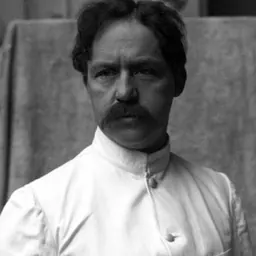
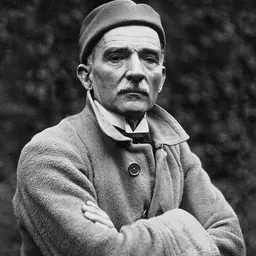
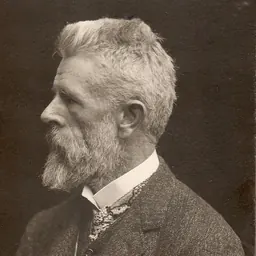
People in Walter Lenck's life
Named in this biography and alive at the same time

Related people
Same field, nearest in time



Contemporaries
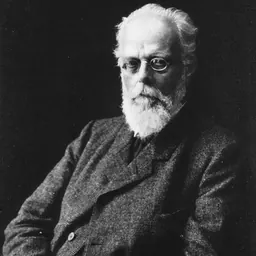
People whose lives overlapped Walter Lenck's


Frequently asked questions
Who was Walter Lenck?
German artist
When was Walter Lenck born?
Walter Lenck was born on 2 September 1873 in Berlin.
When did Walter Lenck die?
Walter Lenck died on 13 August 1952 in Johannesburg.
What was Walter Lenck's occupation?
Walter Lenck was a sculptor, draftsperson, painter, architect, cellist and composer.
What nationality was Walter Lenck?
Walter Lenck was German.
Sources & further reading
Cite this page
APA: Biography.guide. (2026). Walter Lenck. https://biography.guide/walter-lenck/
MLA: "Walter Lenck." Biography.guide, https://biography.guide/walter-lenck/.
Chicago: "Walter Lenck." Biography.guide. https://biography.guide/walter-lenck/.
Data last updated: 2026-09-25 · Spot an error? Report a correction.
Page generated 2026-09-27 05:12 UTC