
About Walter Goetz
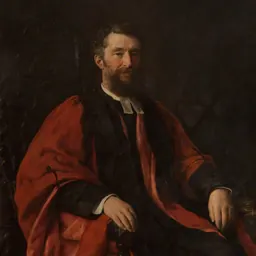
Lived 1867 – 1958 (aged 90). Walter Goetz was a German politician, medievalist, university teacher, orator, historian and reichstag (Weimar Republic).
Walter Goetz (11 November 1867 – 30 October 1958) was a German historian, primarily of Europe during the sixteenth century. During the years of the German republic, he embarked on a parallel career in politics, serving as a member of the Reichstag (parliament) between 1920 and 1928, and representing the centre-left DDP (party).
Life Provenance and early years Walter Wilhelm Goetz was born in Leipzig, where his father, Dr. Ferdinand Goetz (1826–1915), a veteran of the 1848/49 liberal uprisings, worked as a physician. His mother, born Minna Dornblüth (1828–1917), was the daughter of another physician. Until 1886, Goetz was a pupil at the city's prestigious "humanistische Thomasschule" (secondary school). ) He moved on to study Jurisprudence at the University of Freiburg, Art history at the Ludwig-Maximilians-Universität München and Applied economics at Leipzig University, where he was taught by Lujo Brentano. While at the Ludwig-Maximilians-Universität München, he followed his father's example in joining the "Turnerschaft Munichia", a venerable student fraternity, tracing its roots back to the university gymnastics clubs of former decades. He would team up, much later, with Konrad Bahr to produce "Munichengeschichte", a chronicle of the evolution of the "Turnerschaft Munichia" from its foundation to the twentieth century.
Post-graduate studies With his post-graduate education, Wilhelm Goetz concentrated on History. He received his doctorate in 1890 with a study on the election of Maximilian II as King of the Romans in 1562. In 1895, he received his Habilitation degree in "General History", based on a study of the first ten years of the rule of Duke Albrecht V in Bavaria, supervised this time by Karl Lamprecht. Having obtained a teaching post, he remained at Leipzig University for a time after receiving the degree in order to continue his work on Albrecht V and then, in or before 1901, transferred to the Ludwig-Maximilians-Universität München, having accepted a teaching post there as a "Privatdozent". It was also during these first years of the new century that Goetz developed a number of important professional alliances that became friendships, notably with the historian Karl Brandi and with Luise von Druffel, widow of August von Druffel, and the landlady of the two of them.
In 1913, slightly more than a decade after the early death of his first wife, Walter Goetz married Hedwig Pfister at Genoa. Hedwig, nearly twenty years younger than her husband, was daughter to the banker Carl Pfister (1851–1940). The marriage was followed, in due course, by the births of the couple's four sons.
Professorships: Tübingen, Straßburg, Leipzig Promotion followed in 1905, when he accepted his first full professorship, taking over from Georg von Below at the University of Tübingen. He also participated in university administration, serving as dean of faculty during 1929/1930.
Politics during the first part of the twentieth century Goetz became involved with the short-lived National-Social Association around Friedrich Naumann. The association saw itself as a political party able to combine liberalism, nationalism and (non-Marxist) socialism with Protestant Christian values, dedicated to the promotio9n of social reform in order to avert class conflict. It never gained significant traction with voters, but dis attract support a number of formidable intellectuals keen to reconcile its conflicting aspirations. Its influence with the liberal and socialist centre left in German politics was significant and long-lasting, due in part to the number of individuals in it who subsequently resurfaced in more successful political parties. Goetz became a contributor to the movement's political magazine "Die Hilfe". In the process he formed deep political and personal friendships with fellow contributors including, most significantly, Theodor Heuss and the archaeologist Ludwig Curtius. He became a member of a number of committees and was frequently on the road delivering political speeches: he made little impact as a parliamentarian, however, and through the 1920s the major focus of his career remained on his teaching duties at Leipzig University. When Goetz found himself persuaded to resign, he was obliged to accept a reduced pension entitlement. Six months later, however, a more conventional retirement was implemented which is believed to have included restoration of his full pension rights. The circumstances under which all this took place are less than clear, but there are references to "several months of negotiation", apparently undertaken by political colleagues such as Eduard Hamm on Goetz's behalf, during a brief period in the middle part of 1933 in which the National Socialist party leadership still felt the need, on occasion, to present a conciliatory face to (non-Communist) political opponents.
Post-war career By the time military defeat delivered an end to the twelve year Hitler nightmare in 1945, Walter Goetz was nearly 80. Nevertheless, in 1946, he accepted a professorial appointment at the Ludwig-Maximilians-Universität München, initially as an "adjunct professor" and later as an "honorary professor". He led an extensive re-organisation of the HiKo, which was badly needed. He played a decisive role in the reconfiguration of the long-running Monumenta Germaniae Historica publishing project which was transferred to Munich from Berlin during his incumbency. He took charge of Modern History at the university until a more permanent section head could be appointed. Goetz himself continued to lecture in history in his capacity as an honorary professor till 1951 when, aged 84, he again retired from his university career. He nevertheless remained active as a member of the HiKo till 1958.
Memberships, side projects and parallel careers Between 1927 and 1949, Goetz chaired Germany's Dante Society.
In 1930, he became a member of the Saxon Academy of Sciences and Humanities which afforded him significant supplementary opportunities for study of the Italian Renaissance and publications of his findings where appropriate. He resigned his ordinary (i.e. full) membership in 1933 when undergoing his first "retirement" from university work, but continued to be listed at a corresponding member of the Saxon academy till his death in 1958. Von Kühlmann himself, who in more normal times had been a career diplomat, probably needed no convincing, and indeed argued for such a resolution. But more powerful forces were in play, and von Kühlmann resigned in July 1918, shortly after a discussion with the emperor, which took place near the frontline, at Spa, where the emperor had installed himself with his advisors in an appropriately well-appointed railway train.
Research Goetz's most important research contributions concerned the early modern period and, more specifically, the history of the Counter-Reformation and the Italian Renaissance. His work is underpinned by his broader cultural-historical approach, influenced in particular by Jacob Burckhardt. Goetz also worked on the art history themes of the Italian Renaissance. On this he was influenced, in addition to Burckhardt, by his Leipzig tutor, Anton Springer. Goetz was very much aware of the work of Georg Voigt, even if he was less directly influenced by Voigt than by Burckhardt. He was influenced by Lamprecht even if the two differed conspicuously in respect of their ideas on art history. After Walter Goetz retired, during the 1950s, the close institutional connections between Leipzig University and Italian Renaissance humanism that had started with Georg Voigt and, in socio-economic terms, with Alfred Doren came to an end.
Don’t just read it —
keep it.
Full-length biographies made to live with: read them, listen on the way to work, watch them tonight.
- E-book
- Audio
- Video
Instant download · yours to keep · every purchase keeps this site free
Important facts
People in Walter Goetz's life
Named in this biography and alive at the same time





Related people
Same field, nearest in time





Contemporaries
People whose lives overlapped Walter Goetz's



Frequently asked questions
Who was Walter Goetz?
German politician and medievalist (1867–1958)
When was Walter Goetz born?
Walter Goetz was born on 11 November 1867 in Lindenau.
When did Walter Goetz die?
Walter Goetz died on 30 October 1958 in Bad Adelholzen.
What was Walter Goetz's occupation?
Walter Goetz was a politician, medievalist, university teacher, orator, historian and reichstag (Weimar Republic).
What nationality was Walter Goetz?
Walter Goetz was German.
Sources & further reading
Cite this page
APA: Biography.guide. (2026). Walter Goetz. https://biography.guide/walter-goetz/
MLA: "Walter Goetz." Biography.guide, https://biography.guide/walter-goetz/.
Chicago: "Walter Goetz." Biography.guide. https://biography.guide/walter-goetz/.
Data last updated: 2026-09-20 · Spot an error? Report a correction.
Page generated 2026-09-27 05:22 UTC