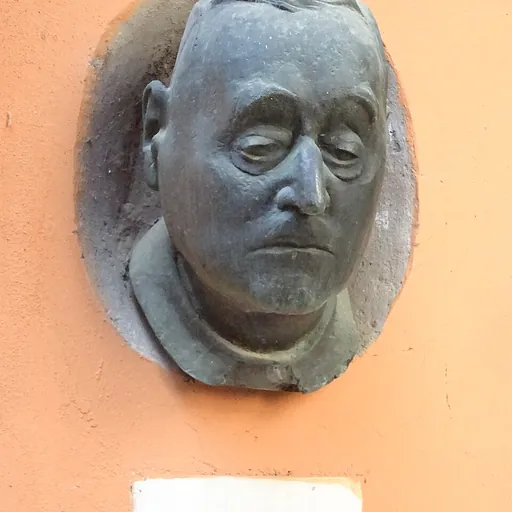
Ludwig Curtius
German classical archeologist
About Ludwig Curtius
Lived 1874 – 1954 (aged 79). Ludwig Curtius was a German classical archaeologist, university teacher and art historian.
Ludwig Curtius (December 13, 1874 – April 10, 1954) was a German archaeologist born in Augsburg. He is remembered for his investigations involving the development of ancient Greek and Roman art.
He studied classical archaeology in Munich under Adolf Furtwängler (1853–1907), of whom in 1899 he became tutor to Furtwängler's son, future famed conductor Wilhelm Furtwängler (1886–1954). From 1904 to 1907 Curtius participated in excavations at Aegina and Hattusa, afterwards becoming an associate professor at the University of Erlangen, where in 1913 he became professor ordinarius.
During World War I, he received the rank of lieutenant and served as a news officer in the Balkans. After the war, he taught classes at the University of Freiburg (from 1918) and later at the University of Heidelberg (from 1920). In 1928 he was appointed director at the Deutsches Archäologisches Institut (German Archaeological Institute, DAI) in Rome, a position he kept until his dismissal by the Nazis in 1938. After his release from the DAI, he remained in Rome until his death in 1954. He was buried in the Teutonic Cemetery.
Curtius was the author of a number of influential works on classical archaeology; among his better-written efforts are: Antike Kunst (Ancient Art), Das Antike Rom (Ancient Rome), and Die Wandmalerei Pompejis (The Wall Paintings of Pompeii).
Don’t just read it —
keep it.
Full-length biographies made to live with: read them, listen on the way to work, watch them tonight.
- E-book
- Audio
- Video
Instant download · yours to keep · every purchase keeps this site free
Important facts
People in Ludwig Curtius's life
Named in this biography and alive at the same time


Related people
Same field, nearest in time

Contemporaries
People whose lives overlapped Ludwig Curtius's

Frequently asked questions
Who was Ludwig Curtius?
German classical archeologist (1874-1954)
When was Ludwig Curtius born?
Ludwig Curtius was born on 13 December 1874 in Augsburg.
When did Ludwig Curtius die?
Ludwig Curtius died on 10 April 1954 in Rome.
What was Ludwig Curtius's occupation?
Ludwig Curtius was a classical archaeologist, university teacher and art historian.
What nationality was Ludwig Curtius?
Ludwig Curtius was German.
Sources & further reading
Cite this page
APA: Biography.guide. (2026). Ludwig Curtius. https://biography.guide/ludwig-curtius/
MLA: "Ludwig Curtius." Biography.guide, https://biography.guide/ludwig-curtius/.
Chicago: "Ludwig Curtius." Biography.guide. https://biography.guide/ludwig-curtius/.
Data last updated: 2026-09-21 · Spot an error? Report a correction.
Portrait: Wikimedia Commons · author & licence
Page generated 2026-09-27 05:01 UTC