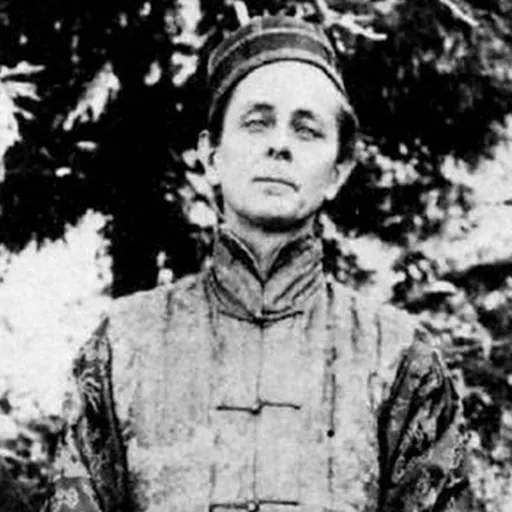
About Walter Evans-Wentz
Lived 1878 – 1965 (aged 87). Walter Evans-Wentz was an American anthropologist, folklorist and writer.
Walter Yeeling Evans-Wentz (February 2, 1878 – July 17, 1965) was an American anthropologist and writer who was a pioneer in the study of Tibetan Buddhism, and in transmission of Tibetan Buddhism to the Western world, most known for publishing an early English translation of The Tibetan Book of the Dead in 1927. He had three other texts translated from the Tibetan: Tibet's Great Yogi Milarepa, Tibetan Yoga and Secret Doctrines (1935), and The Tibetan Book of the Great Liberation (1954), and wrote the preface to Paramahansa Yogananda's famous spiritual book, Autobiography of a Yogi (1946).
Early life and background
Walter Yeeling Wentz was born in Trenton, New Jersey in 1878. His father Christopher Wentz (1836 - February 4, 1921) - born in Weissengen, Baden, Germany - had emigrated to America with his parents in 1846. At the turn of the 20th century, Christopher was a real estate developer in Pablo Beach, Florida. Walter's mother (and Christopher's 1st wife) - Mary Evans Cook (died 1898) - was of Irish heritage. Christopher and Mary were married on August 11, 1862 in Trenton, Mercer County, New Jersey. Christopher's 2nd wife (they were married on June 4, 1900 in Duval County, Florida) was Olivia F. Bradford (1863-1949). Walter had two brothers and two sisters. Though initially a Baptist, Walter's father had turned to spiritualism and Theosophy. Subsequently, Walter moved to San Diego, California to join his father's profession, but also because it was close to Lomaland, the American headquarters for the Theosophical Society, (1907). He performed ethnographic fieldwork collecting fairy folklore in Wales, Scotland, Ireland, Cornwall, Brittany, and the Isle of Man. In 1911 Evans-Wentz published his degree thesis as a book, The Fairy-Faith in Celtic Countries. While at Oxford, he added his mother's Welsh surname Evans to his name, being known henceforth as Evans-Wentz.
Career At Oxford, Evans-Wentz met archaeologist and British Army officer T. E. Lawrence, who advised him to travel to the Orient. there he encountered Tibetan religious texts firsthand, when he acquired a Tibetan manuscript of Karma Lingpa's Liberation through Hearing during the Intermediate State (or Bardo Thodol) from Major Campbell, a British officer who had just returned from Tibet. He next met Lama Kazi Dawa-Samdup (1868–1922), an English teacher and headmaster at Maharaja's Boys School, in Gangtok, Sikkim. Samdup had been with 13th Dalai Lama during the latter's exile years in India in 1910; more importantly for Evans-Wentz, he had already worked as a translator with Alexandra David-Néel, the Belgian-French explorer, travel writer, and Buddhist convert, and Sir John Woodroffe, noted British Orientalist.
In 1927, The Tibetan Book of the Dead was published by Oxford University Press. Evans-Wentz chose the title "Book of the Dead" because it reminded him of the Egyptian Book of the Dead. For Westerners, the book would become a principal reference on Tibetan Buddhism.
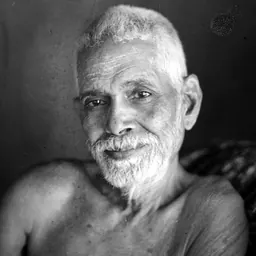
This book was followed by Tibet's Great Yogi Milarepa (1928), also based on Samdup's translations. Evans-Wentz was a practitioner of the religions he studied. He became Dawa-Samdup's "disciple" (E-W's term), wore robes, and ate a simple vegetarian diet. In 1935, he met Ramana Maharshi and went to Darjeeling, where he employed three translators, Sikkimese of Tibetan descent, to translate another text which was published as Tibetan Yoga and Secret Doctrines (1935).
Later years and death Evans-Wentz remained a Theosophist for the rest of his life, writing articles for Theosophical publications and provided financial support to the Maha Bodhi Society, Self-Realization Fellowship, and the Theosophical Society. He lived for 23 years at the Keystone Hotel in San Diego. Evans-Wentz spent his last months at Yogananda's Self-Realization Fellowship in Encinitas, California
Described as a puritanical loner, according to his biographer Ken Winkler, Evans-Wentz was a "lifelong bachelor (there is no evidence to the contrary)".
Legacy The Department of Religious Studies at Stanford University has hosted "The Evans-Wentz Lectureship in Asian Philosophy, Religion, and Ethics" since 1969, funded by a bequest from Evans-Wentz.
Partial bibliography The Fairy-Faith in Celtic Countries, London, New York, H. Frowde, 1911.
The Tibetan Book of the Dead; or, The After-Death Experiences on the Bardo Plane, According to Lāma Kazi Dawa-Samdup's English Rendering, with foreword by Sir John Woodroffe, London, Oxford University Press, H. Milford, 1927. Tibetan Yoga And Secret Doctrines; or, Seven Books of Wisdom of the Great Path, According to the Late Lāma Kazi Dawa-Samdup's English Rendering; Arranged and Edited with Introductions and Annotations to serve as a Commentary, London, Oxford University Press, H. Milford, 1935. Tibet's Great Yogi Milarepa: a Biography from the Tibetan; Being the Jetsün-Kahbum or Biographical History of Jetsün-Milarepa, According to the Late Lāma Kazi Dawa-Samdup's English Tendering (First edition, 1928); (2d ed.), edited with introd. and annotations by W. Y. Evans-Wentz, London, New York: Oxford University Press, 1951. The Tibetan Book of the Great Liberation; Or, The Method of Realizing Nirvana Through Knowing the Mind Preceded by an Epitome of Padma-Sambhava's Biography and Followed by Guru Phadampa Sangay's Teachings According to English renderings by Sardar Bahädur S. W. Laden La and by the Lāmas Karma Sumdhon Paul, Lobzang Mingyur Dorje, and Kazi Dawa-Samdup. Introductions, annotations, and editing by W. Y. Evans-Wentz. With psychological commentary by C. G. Jung. London, New York, Oxford University Press, 1954.
Don’t just read it —
keep it.
Full-length biographies made to live with: read them, listen on the way to work, watch them tonight.
- E-book
- Audio
- Video
Instant download · yours to keep · every purchase keeps this site free
Important facts
People in Walter Evans-Wentz's life
Named in this biography and alive at the same time


Related people
Same field, nearest in time


Contemporaries
People whose lives overlapped Walter Evans-Wentz's




Frequently asked questions
Who was Walter Evans-Wentz?
anthropologist, orientalist, writer (1878-1965)
When was Walter Evans-Wentz born?
Walter Evans-Wentz was born on 2 February 1878 in Trenton.
When did Walter Evans-Wentz die?
Walter Evans-Wentz died on 17 July 1965 in Encinitas.
What was Walter Evans-Wentz's occupation?
Walter Evans-Wentz was an anthropologist, folklorist and writer.
What nationality was Walter Evans-Wentz?
Walter Evans-Wentz was American.
Sources & further reading
· Wikipedia: Walter Evans-Wentz
Cite this page
APA: Biography.guide. (2026). Walter Evans-Wentz. https://biography.guide/walter-evans-wentz/
MLA: "Walter Evans-Wentz." Biography.guide, https://biography.guide/walter-evans-wentz/.
Chicago: "Walter Evans-Wentz." Biography.guide. https://biography.guide/walter-evans-wentz/.
Data last updated: 2026-09-21 · Spot an error? Report a correction.
Portrait: Wikimedia Commons · author & licence
Page generated 2026-09-27 04:59 UTC