
About Sir John Woodroffe
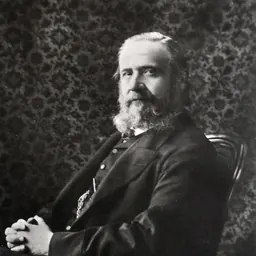
Lived 1865 – 1936 (aged 70). Sir John Woodroffe was a British judge, university teacher, writer, indologist and lawyer.
Early life Woodroffe was the eldest son of James Tisdall Woodroffe and his wife Florence, daughter of James Hume. James Woodroffe was Advocate-General of Bengal and Legal Member of the Government of India, a Justice of the Peace, and a Knight of St. Gregory. Young John was educated at Woburn Park School and the University College, Oxford, where he took second classes in jurisprudence and the Bachelor of Civil Law examinations.
Career He was called to the Bar by the Inner Temple in 1889, and in the following year was enrolled as an advocate of the Calcutta High Court. He was soon made a Fellow of the Calcutta University and appointed Tagore Law Professor. He collaborated with Ameer Ali in a widely used textbook, Civil Procedure in British India. He was appointed Standing Counsel to the Government of India in 1902, and in 1904 was raised to the High Court Bench. He served there for eighteen years, becoming Chief Justice in 1915. After retiring to England he served as Reader in Indian Law to the University of Oxford.
Sanskrit studies John Woodroffe's interest in tantra was sparked due to a court case in which he felt he suddenly could not focus on the facts of the case. After mentioning this to his assistant, he was informed that a "tantrik sadhu" had been hired to perform a mantra outside the courthouse to "cloud his mind" in favor of the defendant. A constable was dispatched who chased the sadhu away. John Woodroffe said that his mind instantly cleared when the sadhu was stopped.
This event ignited a lifelong interest in tantric and yoga studies.
Alongside his judicial duties he privately studied Sanskrit and Hindu philosophy and was especially interested in Hindu Tantra. According to author Kathleen Taylor's 2001 book, Sir John Woodroffe, Tantra and Bengal, he relied very heavily for his work on a group of mentors, especially his close friend A.B. Ghose. Woodroffe translated some 20 original Sanskrit texts and, under his pseudonym Arthur Avalon, published and lectured prolifically on Indian philosophy and a wide range of Yoga and Tantra topics. T.M.P. Mahadevan wrote:
"By editing the original Sanskrit texts, as also by publishing essays on the different aspects of Shaktism, he showed that the religion and worship had a profound philosophy behind it, and that there was nothing irrational or obscurantist about the technique of worship it recommends."
His Sanskrit tutor and guru who he retained in order to study tantra, first insisted that he sleep on the floor, or he would be unable to pronounce the Sanskrit properly, due to over-relaxing of the neck. He promptly had his bed removed, and replaced it with a thin mat. His guru believed him to be the reincarnation of two somewhat famous persons from Indian history, though there is no historical record or otherwise to show who the guru identified. His Sanskrit studies led him to become even more precise in his Sanskrit than most native speakers, leaving him in a position to translate the most difficult Sanskrit texts.
Woodroffe was initiated into a yoga lineage similar to that of guru and yogi Lahiri Mahasaya — now widely known as kriya yoga.
Mahānirvāṇatantraṃ Woodroffe translated the Mahānirvāṇatantraṃ from the original Sanskrit into English under his pen name, Arthur Avalon: a play on the magical realm of Avalon and the young later-to-be, King Arthur, within the story-cycle of tales known generally as King Arthur and the Knights of the Round Table; specifically according to Taylor (2001: p. 148), Woodroffe chose the name from the noted incomplete magnum opus, the painting Arthur's Sleep in Avalon by Burne-Jones. Moreover, Taylor (2001: p. 148) conveys the salience of this magical literary identity and contextualises by making reference to western esotericism, Holy Grail, quest, occult secrets, initiations and the Theosophists: "This is quite important to know, for here we have a writer on an Indian esoteric system taking a name imbued with western esotericism. The name at any rate seems to hint at initiations and the possession of occult secrets. The Arthurian legends are bound up with the story of the Holy Grail and its quest. This was a symbol of esoteric wisdom, especially to Theosophists who appropriated the legend. Anyone who named himself after King Arthur or the mystic isle of Avalon would be thought to be identifying himself with occultism, in Theosophists' eyes."
Death He died on 18 January 1936, aged 70. There is another family crest with further detail and motto verified on the archives at the National Library of Ireland. https://catalogue.nli.ie/Record/vtls000529194
Kali Mantra Yantra
Don’t just read it —
keep it.
Full-length biographies made to live with: read them, listen on the way to work, watch them tonight.
- E-book
- Audio
- Video
Instant download · yours to keep · every purchase keeps this site free
Important facts
People in Sir John Woodroffe's life
Named in this biography and alive at the same time


Related people
Same field, nearest in time
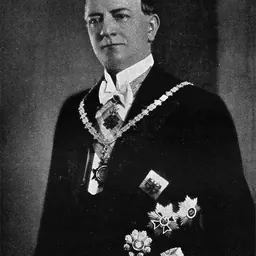

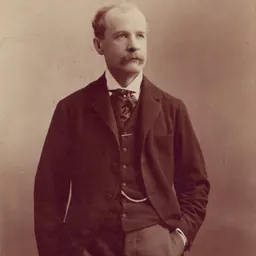
Contemporaries
People whose lives overlapped Sir John Woodroffe's
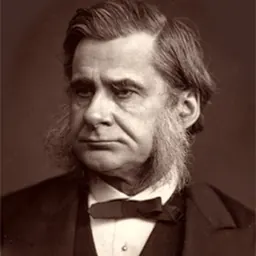

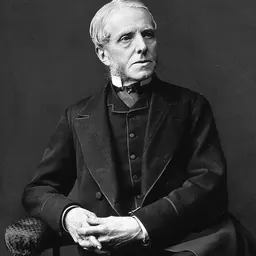


Frequently asked questions
Who was Sir John Woodroffe?
English orientalist (1865–1936)
When was Sir John Woodroffe born?
Sir John Woodroffe was born on 15 December 1865 in Kolkata.
When did Sir John Woodroffe die?
Sir John Woodroffe died on 16 January 1936 in Beausoleil.
What was Sir John Woodroffe's occupation?
Sir John Woodroffe was a judge, university teacher, writer, indologist and lawyer.
What nationality was Sir John Woodroffe?
Sir John Woodroffe was British.
Sources & further reading
· Wikipedia: Sir John Woodroffe
Cite this page
APA: Biography.guide. (2026). Sir John Woodroffe. https://biography.guide/sir-john-woodroffe/
MLA: "Sir John Woodroffe." Biography.guide, https://biography.guide/sir-john-woodroffe/.
Chicago: "Sir John Woodroffe." Biography.guide. https://biography.guide/sir-john-woodroffe/.
Data last updated: 2026-09-25 · Spot an error? Report a correction.
Page generated 2026-09-27 05:13 UTC