
About Walter Arnold Baker
Lived 1937 – 2010 (aged 73). Walter Arnold Baker was an American judge and politician.
Walter Arnold Baker (February 20, 1937 – May 24, 2010) was an American lawyer and politician who served in both houses of the Kentucky General Assembly, in the presidential administration of Ronald Reagan, and on the Kentucky Supreme Court. A graduate of Harvard Law School, Baker also served as a judge advocate general in the Kentucky Air National Guard for 20 years.
Baker's political career began with his election to the Kentucky House of Representatives in 1967, concurrent with the election of fellow Republican Louie B. Nunn as governor. Baker supported Nunn's efforts to raise the state sales tax to benefit education, the first of several education-related causes he would champion. In 1971, Baker was elected to the Kentucky Senate and was three times chosen as the Republican caucus chair. He resigned from the Senate in 1981 to take Reagan's appointment as assistant general counsel for International Affairs in the Department of Defense. He left that post in 1983 and was presented with the Department's Outstanding Public Service award. He narrowly lost a bid to return to his old Senate seat in 1983, but unseated the incumbent in 1988, spending the interim serving on the Prichard Committee for Academic Excellence and Kentucky Advocates for Higher Education. In his second stint in the Senate, his major accomplishment was helping to write the 1990 Kentucky Education Reform Act.
In 1996, Governor Paul E. Patton appointed Baker to fill a vacancy on the Kentucky Supreme Court occasioned by the death of Justice Charles H. Reynolds, but he served only a few months before losing a special election for the remainder of Reynolds' term. In 1997, Patton appointed Baker to the Kentucky Council on Postsecondary Education, a post he held until 2008. Baker died of cancer on May 24, 2010.
Early life Walter Arnold Baker was born February 20, 1937, to Herschell T. and Mattie (Barger) Baker in Columbia, Kentucky. His father, grandfather (Herschell Clay Baker), and great-grandfather were all legislators in the Kentucky General Assembly. At age 9, he met United States Senator John Sherman Cooper, who became one of his idols.
Growing up, Baker was friends with future Speaker of the Kentucky House of Representatives, Jody Richards. He earned a scholarship to attend Harvard College, where he was a member of Phi Beta Kappa and a friend and classmate of future Supreme Court Justice Anthony Kennedy. He then attended Harvard Law School, earning a juris doctor in 1961. As a legislator, he supported Governor Louie B. Nunn's campaign to increase the state sales tax from two percent to five percent, with the increased revenue going to fund education.
First tenure in the Kentucky Senate In 1971, Baker was elected to the Kentucky Senate. At the end of the legislative session, the Capitol Press Corps recognized him as its Outstanding Freshman Senator. In 1974, Baker was the lone vote against a Senate resolution honoring Martin Luther King Jr., explaining that he thought the Civil Rights Movement had pushed for too much too soon.
Baker received the Kentucky Council on Crime and Delinquency Outstanding Service Award in 1975. In 1976, he failed to unseat Congressman William H. Natcher, a popular Democratic incumbent, but by capturing 40% of the vote, he came as close as any candidate in the previous 20 years to defeating Natcher.
In 1976, 1978, and 1979, Baker was chair of the Senate's Republican caucus. He advocated a 1976 overhaul of the state judicial system proposed by Governor Julian Carroll. He was mentioned as a possible running mate for Jim Bunning in his 1983 gubernatorial campaign, but reportedly declined the offer. Instead, he challenged incumbent state senator Joe Lane Travis, who had won a special election to finish Baker's senate term, in the 1983 Republican primary election.
In August 1985, Baker was named to the Prichard Committee for Academic Excellence, and he was elected as the group's secretary in 1987. Baker was chosen secretary of the newly formed Kentucky Advocates for Higher Education in October 1985. He also considered running for lieutenant governor in 1987 on a ticket with Larry Forgy. After Forgy decided not to make the race for governor, Baker began to consider his own gubernatorial bid, but ultimately, he decided there was not enough time to mount a credible campaign and declined to run for any office in 1987. During the campaign, Baker complained that the Kentucky Republican Senatorial Committee gave $1,000 to Travis' campaign, saying the group's funds "should be used to support the Republican nominee and not used to favor one candidate over another in the Republican primary".
Freas touted his successful 11-year tenure as mayor, during which he saved the city over $300,000 by turning many services over to private companies, constructed a new city hall as well as new water- and sewage-treatment plants, and reduced unemployment. Following the 1989 legislative session, Baker's was one of three names recommended to President George H. W. Bush by Senator Wendell H. Ford as potential replacements for Sixth Circuit Court of Appeals Judge Pierce Lively, who assumed senior status.
After the Kentucky Supreme Court declared Kentucky's entire public education system unconstitutional due to inequalities in funding for local districts, Senate President John "Eck" Rose appointed Baker as the only Republican legislator on the committee charged with creating a system that would meet the court's definition of constitutionality. John Rogers, the Republican floor leader in the Senate, objected that he was not consulted about Baker's appointment, that Republicans were underrepresented on the committee, and that Baker – despite his previous legislative service – was considered a freshman legislator.
In 1990, Baker reversed an earlier position, joining Gerald Neal, the only African-American member of the Senate, in advocating for a bill to make Martin Luther King, Jr. Day a state holiday. A Lexington Herald-Leader columnist wrote of Baker's speech, in which he recounted that his family had owned slaves until his great-grandfather freed them in the 1820s, that it "set such a high moral tone for the Senate that no one else spoke – and no one voted against the King holiday." On April 8, 1996, Democratic Governor Paul E. Patton announced his appointment of Baker to the Kentucky Supreme Court, replacing Justice Charles H. Reynolds, who died in January. Baker's appointment left Democrat Jake Dickinson as the perceived favorite to defeat Sanders and win Baker's seat in the Senate.
Four men, including Baker, announced their candidacy for the November special election to fill the remainder of Reynolds' term. The other candidates included Kentucky Court of Appeals Justices John Miller and Joseph Huddleston and William Cooper. Each candidate won by a large margin in his home county, but Baker, from Barren County, cut into Huddleston's margin in neighboring Warren County, while low overall voter turnout in Daviess County hurt Miller. In 1998, he again challenged Cooper for his seat on the Kentucky Supreme Court but captured only about 40% of the vote.
Baker sat on the board of the Kentucky Historical Society and served one term as its president. In 2006, Pikeville College (now the University of Pikeville) honored Baker with an honorary Doctor of Humane Letters degree. He was elected vice-chancellor of the Protestant Episcopal Diocese of Kentucky later that year, serving until his death. The appointment was not confirmed by the Kentucky General Assembly, however, which cited a statute requiring the council's makeup of Democrats and Republicans to reflect the parties' proportion of voter registrations.
Baker died of cancer at his home in Glasgow on May 24, 2010. He was inurned at the Glasgow Municipal Cemetery. Baker left his personal library to Lindsey Wilson University.
Don’t just read it —
keep it.
Full-length biographies made to live with: read them, listen on the way to work, watch them tonight.
- E-book
- Audio
- Video
Instant download · yours to keep · every purchase keeps this site free
Important facts
People in Walter Arnold Baker's life
Named in this biography and alive at the same time



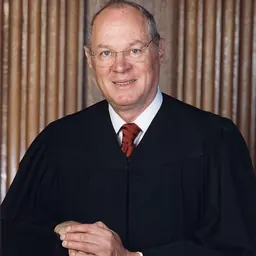


Related people
Same field, nearest in time
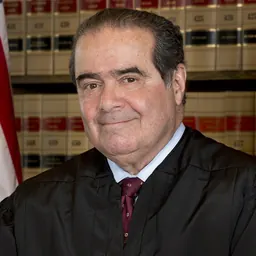

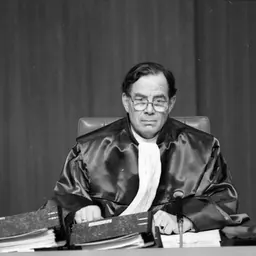

Contemporaries
People whose lives overlapped Walter Arnold Baker's

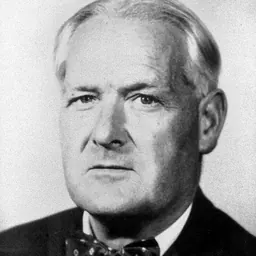


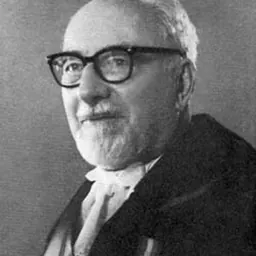
Frequently asked questions
Who was Walter Arnold Baker?
American judge
When was Walter Arnold Baker born?
Walter Arnold Baker was born on 20 February 1937 in Columbia.
When did Walter Arnold Baker die?
Walter Arnold Baker died on 24 May 2010 in Glasgow.
What was Walter Arnold Baker's occupation?
Walter Arnold Baker was a judge and politician.
What nationality was Walter Arnold Baker?
Walter Arnold Baker was American.
Sources & further reading
· Wikipedia: Walter Arnold Baker
· DBpedia: Walter Arnold Baker
Cite this page
APA: Biography.guide. (2026). Walter Arnold Baker. https://biography.guide/walter-arnold-baker/
MLA: "Walter Arnold Baker." Biography.guide, https://biography.guide/walter-arnold-baker/.
Chicago: "Walter Arnold Baker." Biography.guide. https://biography.guide/walter-arnold-baker/.
Data last updated: 2026-09-20 · Spot an error? Report a correction.
Page generated 2026-09-27 05:18 UTC