
About Wallingford Riegger
Lived 1885 – 1961 (aged 75). Wallingford Riegger was an American conductor, composer, musicologist, cellist and pianist.
Wallingford Constantine Riegger ( ; April 29, 1885 – April 2, 1961) was an American modernist composer and pianist, best known for his orchestral and modern dance music. He was born in Albany, Georgia, but spent most of his career in New York City, helping elevate the status of other American composers such as Charles Ives and Henry Cowell. Riegger is noted for being one of the first American composers to use a form of serialism and the twelve-tone technique.
Life Riegger was born in 1885 to Constantine Riegger and Ida Riegger (née Wallingford). After his father's lumber mill burned down in 1888, his family moved to Indianapolis, and later to Louisville, finally settling in New York in 1900. A gifted cellist, he was a member of the first graduating class of the Institute of Musical Art, later known as the Juilliard School, in 1907, after studying under Percy Goetschius. He continued his studies at the Hochschule für Musik in Berlin for three years. After returning in 1910, he married Rose Schramm in 1911, with whom he later had three daughters. He returned to Germany and served in various conducting positions until the United States entered World War I in 1917, after which he moved back to America. The following day, Drake University's president said "while Riegger will undoubtedly sever his connections with the institution there has been no action by the board of trustees in the case". Meanwhile, Riegger called newspaper accounts of his arrest "grossly false and fantastic" and denied the "nude maniac" label, calling the situation a "regrettable accident". Riegger's trial was delayed due to his stay in a sanitarium for several weeks. Many years later, a British scholar traveled to Des Moines to investigate, and found no record of a conviction and suggested Riegger left town in September.
During the greater part of the time from 1930 to 1956, he continued to compose and publish while he taught at various colleges in New York State, notably the Institute of Musical Art and Ithaca College. In 1957, he was called before the House Un-American Activities Committee, which was investigating communism in the musical world. In 1958, Leonard Bernstein honored him by conducting his Music for Orchestra with the New York Philharmonic Orchestra. He died in New York in 1961 when he tripped over the leashes of two fighting dogs, resulting in a fall and a head injury from which he did not recover despite treatment. Louise Spizizen, Alan Stout, Merton Brown, Leifur Þórarinsson and David Behrman.
Musical style
Riegger was known for his use of a twelve-tone system, related to that of Schoenberg. He became familiar with the technique through Schoenberg's American student Adolph Weiss. However, he did not use it in all of his compositions and his usage varied from that of Schoenberg, for example in not always using rows with twelve tones and not using transposed forms of the rows. Riegger's Dance Rhythms, for example, did not use these techniques. Aside from Schoenberg, Riegger was also significantly influenced by his friends Henry Cowell and Charles Ives.
Early period Early on in his career as a composer, the style of his compositions was markedly different from that of his later work, which mostly used the twelve-tone system. His compositions, following those of Goetschius, were somewhat romanticist.
Later period Starting in the mid-1930s, Riegger began to write contemporary dance music. Later, as his career progressed, he began to use Schoenberg's twelve-tone technique more and more often, though he did occasionally revert to his earlier styles.
Choral Dark Eyes, Russian Folksong, SSA, piano Veni Jesu (arrangement)
Don’t just read it —
keep it.
Full-length biographies made to live with: read them, listen on the way to work, watch them tonight.
- E-book
- Audio
- Video
Instant download · yours to keep · every purchase keeps this site free
Important facts
People in Wallingford Riegger's life
Named in this biography and alive at the same time




Related people
Same field, nearest in time
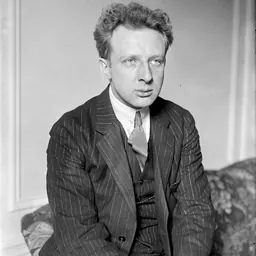


Contemporaries
People whose lives overlapped Wallingford Riegger's

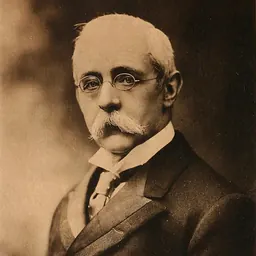
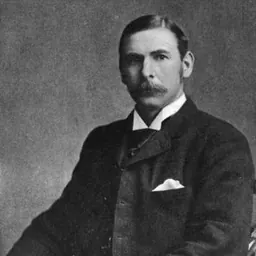


Frequently asked questions
Who was Wallingford Riegger?
American music composer (1885–1961)
When was Wallingford Riegger born?
Wallingford Riegger was born on 29 April 1885 in Albany.
When did Wallingford Riegger die?
Wallingford Riegger died on 2 April 1961 in New York City.
What was Wallingford Riegger's occupation?
Wallingford Riegger was a conductor, composer, musicologist, cellist and pianist.
What nationality was Wallingford Riegger?
Wallingford Riegger was American.
Sources & further reading
· Wikipedia: Wallingford Riegger
· DBpedia: Wallingford Riegger
Cite this page
APA: Biography.guide. (2026). Wallingford Riegger. https://biography.guide/wallingford-riegger/
MLA: "Wallingford Riegger." Biography.guide, https://biography.guide/wallingford-riegger/.
Chicago: "Wallingford Riegger." Biography.guide. https://biography.guide/wallingford-riegger/.
Data last updated: 2026-09-22 · Spot an error? Report a correction.
Page generated 2026-09-27 05:30 UTC