
About Percy Goetschius
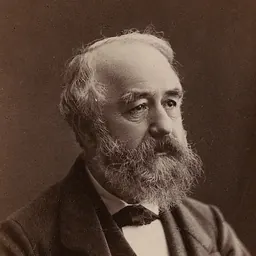
Lived 1853 – 1943 (aged 90). Percy Goetschius was a North Korean and American composer, musicologist and music educator.
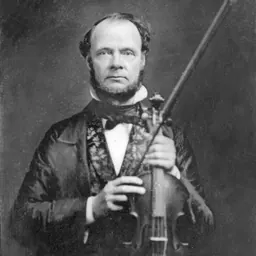
Percy Goetschius (August 10, 1853 – October 29, 1943) was an American composer, music theorist, and teacher who won international fame in the teaching of composition and music theory. As a youth, he was encouraged in his musical ambitions by Ureli Corelli Hill, a well-known conductor and violinist at the time, who was a friend of the Goetschius family. Young Goetschius held the positions of organist at Paterson's Second Presbyterian Church from 1868 to 1870 and at the same city's First Presbyterian Church from 1870 to 1873, as well as that of pianist to Mr. Benson's Paterson Choral Society. Although his family had intended him to become a surveyor's assistant, he went to Stuttgart, Württemberg (Germany), in 1873 to study composition and music theory at the Royal Conservatory with Immanuel Faisst, and soon advanced to become Faisst's teaching assistant and eventually a professor. In 1885, King Charles of Württemberg conferred upon him the title of Royal Professor. He composed much, and also reviewed musical performances for the Stuttgart and broader German press. Syracuse University conferred an Honorary Music Doctorate on Goetschius for the academic year 1892–1893.
Selected music theory textbooks Goetschius published several textbooks on theory, including:
The Material Used in Musical Composition (New York: G. Schirmer) 1st ed. (1882); 2nd ed. (alternate link) (1889) 4th ed. (1895) 8th ed. (1907); 14th ed. (1941 print) (1913, 1915, 1941); ,
The Theory and Practice of Tone-Relations (Boston: New England Conservatory, 1892); 11th ed. New York: G. Schirmer (1913); 15th ed. (1917) 24th ed., New York: G. Schirmer (1931);
Models of the Principal Musical Forms (Boston: New England Conservatory, 1892); Lessons in Music Form, Boston: Oliver Ditson (1904) Exercises in Melody Writing (New York: G. Schirmer) 1st ed. (1900); 2nd ed. (1903) ?? ed. (1905); 6th ed. (1908) 7th ed. (1910) 11th ed. (1923) ?? ed. (1928);
The Larger Forms of Musical Composition (New York: G. Schirmer) 5th ed. (1915); 7th ed. (1915);
The Homophonic Forms of Musical Composition (New York: G. Schirmer) 1st ed. (1898) ? ed. (1901); 3rd ed. (1905) 3rd ed. (1908) 4th ed. (1907); 7th ed. (1913) 8th ed. (1915); 9th ed. (1918); 10th ed. (1921) 11th ed. (1923)
Music Theory for Piano Students, co-authored with Clarence Grant Hamilton, John P. Marshall, Will Earhart (Boston: Oliver Ditson) (1924)?? (1930)
Exercises in Elementary Counterpoint (G. Schirmer) 5th ed. (1910);
Counterpoint (New York: G. Schirmer, 1930) The Structure of Music (Philadelphia: T. Presser, 1934)
As of the mid-20th century, use of Goetschius' books, as texts, is rare; albeit, the books contain original theoretical ideas and pedagogical approaches that endure today.
Goetschius' theory of harmonic progression Perhaps the most important theory put forth by Goetschius is that of natural harmonic progression, which first appeared in The Theory and Practice of Tone-Relations. According to Goetschius' theory, the triad V in a key resolves to the tonic triad I because of the acoustically perfect interval of the fifth between the root of V and that of I: center
Goetschius believed that, since the upper tone of the fifth is a harmonic of the lower, a chord rooted on the upper tone demands to be "resolved" by progressing to the chord rooted on the lower tone. Moreover, this theory is extended to other chords in a key, so that the normal tendency of a chord (triad or seventh chord) in a key is to progress to the chord rooted a fifth lower. center
Family My family name is (or should be) pronounced get'she-us. The family hails from Switzerland (1714), where the name was Götschi. One of my ancestors, middle of the 18th century, an earnest Latin scholar, affixed the Latin terminal us.
Don’t just read it —
keep it.
Full-length biographies made to live with: read them, listen on the way to work, watch them tonight.
- E-book
- Audio
- Video
Instant download · yours to keep · every purchase keeps this site free
Important facts
People in Percy Goetschius's life
Named in this biography and alive at the same time




Related people
Same field, nearest in time



Contemporaries
People whose lives overlapped Percy Goetschius's





Frequently asked questions
Who was Percy Goetschius?
American composer (1853–1943)
When was Percy Goetschius born?
Percy Goetschius was born on 30 August 1853 in Paterson.
When did Percy Goetschius die?
Percy Goetschius died on 29 October 1943 in Manchester.
What was Percy Goetschius's occupation?
Percy Goetschius was a composer, musicologist and music educator.
What nationality was Percy Goetschius?
Percy Goetschius was North Korean and American.
Sources & further reading
Cite this page
APA: Biography.guide. (2026). Percy Goetschius. https://biography.guide/percy-goetschius/
MLA: "Percy Goetschius." Biography.guide, https://biography.guide/percy-goetschius/.
Chicago: "Percy Goetschius." Biography.guide. https://biography.guide/percy-goetschius/.
Data last updated: 2026-09-25 · Spot an error? Report a correction.
Page generated 2026-09-27 05:10 UTC