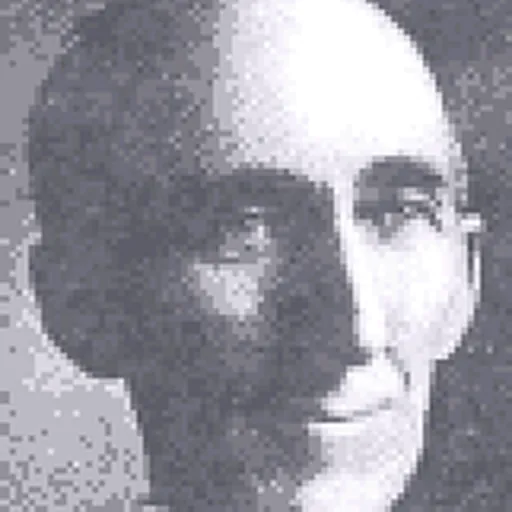
About Wallace Wattles
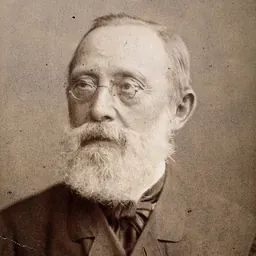
Lived 1860 – 1911 (aged 50–51). Wallace Wattles was an American writer, philosopher and author.
Wallace Delois Wattles (; 1860 – 7 February 1911) was an American New Thought writer. He remains personally somewhat obscure, but his writing has been widely quoted and remains in print in the New Thought and self-help movements.
Wattles' best known work is a 1910 book called The Science of Getting Rich, in which he explains his spiritual ideology on how to become wealthy.
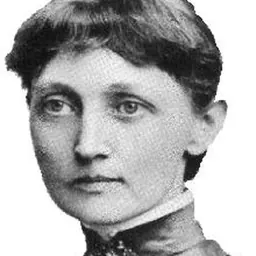
Life and career Wattles' daughter, Florence A. Wattles, described her father's life in a "Letter" that was published shortly after his death in the New Thought magazine Nautilus, edited by Elizabeth Towne. The Nautilus had previously carried articles by Wattles in almost every issue, and Towne was also his book publisher. Florence Wattles wrote that her father was born in the U.S. in 1860, received little formal education, and found himself excluded from the world of commerce and wealth.
According to the 1880 US Federal Census, Wallace lived with his parents on a farm in Nunda Township, McHenry County, Illinois, and worked as a farm laborer. His father is listed as a gardener and his mother as "keeping house". Wallace is listed as being born in Illinois while his parents are listed as born in New York. No other siblings are recorded as living with the family. According to the 1910 census, Wattles was married to Abbie Wattles (née Bryant), 47. They had three children: Florence Wattles, 22, Russell H. Wattles, 27, and Agnes Wattles, 16. It also shows that at the time Wallace's mother Mary A. Wattles was living with the family at the age of 79.
Florence wrote that "he made lots of money, and had good health, except for his extreme frailty" in the last three years before his death. Wattles died on February 7, 1911, in Ruskin, Tennessee, and his body was transported home for burial to Elwood, Indiana. As a sign of respect, businesses closed throughout the town for two hours on the afternoon of his funeral.
Christian Socialism In 1896 in Chicago, Illinois, Wattles attended "a convention of reformers" and met George Davis Herron, a Congregational Church minister and professor of Applied Christianity at Grinnell College who was then attracting nationwide attention by preaching a form of Christian Socialism.
After meeting Herron, Wattles became a social visionary and began to expound upon what Florence called "the wonderful, social message of Jesus." According to Florence, he at one time had held a position in the Methodist Church, but was ejected for his "heresy". Two of his books (A New Christ and Jesus: The Man and His Work) dealt with Christianity from a Socialist perspective.
In the 1908 election, he ran as a Socialist Party of America candidate in the Eighth Congressional District; in 1910 he again ran as a Socialist candidate, for the office of Prosecuting Attorney for the Madison County, Indiana 50th court district.
New Thought As a Midwesterner, Wattles traveled to Chicago, where several leading New Thought leaders were located, among them Emma Curtis Hopkins and William Walker Atkinson, and he gave "Sunday night lectures" in Indiana; however, his primary publisher was Massachusetts-based Elizabeth Towne.
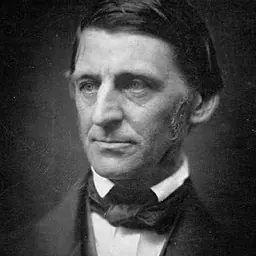
He studied the writings of Georg Wilhelm Friedrich Hegel and Ralph Waldo Emerson, and recommended the study of their books to his readers who wished to understand what he characterized as "the monistic theory of the cosmos." He argued that energy and strength is not drawn from food but from a "mysterious power", a life force that is received into the body during sleep via the brain by God. Wattles believed that fasting opened the door to the possibility of spiritual immortality. Byrne's daughter, Hayley, had given her mother a copy of the Wattles book to help her recover from her breakdown. The film itself also references, by re-popularizing the term The Law of Attraction, Wattles, W. D (1909). Making the man who can. Holyoke, Mass.: Elizabeth Towne. OCLC 15166857. republished later as How to Promote Yourself (Elizabeth Towne, May 5, 1914) Wattles, W. D (1910). What Is Truth? (1909) (serialized in The Nautilus Magazine, Holyoke, Mass.: Elizabeth Towne) Wattles, W. D (1910). "Perpetual Youth" (1909, in The Cavalier), an early science fiction story. Wattles, W. D (1910). A new Christ. United States: publisher not identified. OCLC 71205618. Wattles, W. D. (1910). Hell-fire Harrison ... Illustrated and decorated in colors by Frank T. Merrill. Boston: L. C. Page & Co. OCLC 1158155497 Wattles, W. D (c.1910). Letters to a Woman's Husband (pamphlet) Wattles, W. D (c.1910). The Constructive Use of Foods (pamphlet) Wattles, W. D (n. d.). How to get what you want. Holyoke, Mass.: Elizabeth Towne Co. OCLC 80529245.
"The Science of" trilogy:
Wattles, W. D (1910). The Science of Getting Rich. Holyoke, Mass.: E. Towne. OCLC 7806018. Republished posthumously in 1915 as Financial success through creative thought. San Gabriel, Calif.; Los Angeles: Willing; Distributed by Scrivener. OCLC 36936118. Wattles, W. D (1910). The science of being well. Holyoke, Mass.: Towne. OCLC 9139133. Wattles, W. D (1911). The science of being great. Holyoke, Mass.: E. Towne. OCLC 5883077.
Don’t just read it —
keep it.
Full-length biographies made to live with: read them, listen on the way to work, watch them tonight.
- E-book
- Audio
- Video
Instant download · yours to keep · every purchase keeps this site free
Important facts
People in Wallace Wattles's life
Named in this biography and alive at the same time



Related people
Same field, nearest in time



Contemporaries
People whose lives overlapped Wallace Wattles's



Frequently asked questions
Who was Wallace Wattles?
American writer (1860–1911)
When was Wallace Wattles born?
Wallace Wattles was born in 1860 in Illinois.
When did Wallace Wattles die?
Wallace Wattles died on 7 February 1911.
What was Wallace Wattles's occupation?
Wallace Wattles was a writer, philosopher and author.
What nationality was Wallace Wattles?
Wallace Wattles was American.
Sources & further reading
Cite this page
APA: Biography.guide. (2026). Wallace Wattles. https://biography.guide/wallace-wattles/
MLA: "Wallace Wattles." Biography.guide, https://biography.guide/wallace-wattles/.
Chicago: "Wallace Wattles." Biography.guide. https://biography.guide/wallace-wattles/.
Data last updated: 2026-09-22 · Spot an error? Report a correction.
Portrait: Wikimedia Commons · author & licence
Page generated 2026-09-27 05:04 UTC