
About Waldemar Tully Oxholm
Lived 1805 – 1876 (aged 70). Waldemar Tully Oxholm was a Danish civil servant, diplomat, lord Chamberlain of Denmark and hofmarschall.
Waldemar Tully (von) Oxholm (11 November 1805 – 3 August 1876) was a Danish nobleman, diplomat, and senior court official. He served as Lord Marshal of the Court under Christian IX from 1863 until his death, and although never in executive office, he is regarded as an influential intermediary in Denmark's transition from absolutism to constitutional monarchy, particularly during the political crises of 1848 and 1863.
Born in Copenhagen, the son of Governor-General Peter Lotharius Oxholm and Ann O’Neill, he was educated at Herlufsholm School and the University of Copenhagen. He joined the Foot Guards in 1821 and spent the following decade in the Danish West Indies, where he assisted in managing his family's plantations on Saint Croix and served as adjutant to Governor-General Peter von Scholten. Returning to Copenhagen in 1834, he assisted Scholten in government deliberations on the abolition of slavery, and was that year appointed tutor to Prince Christian of Glücksburg (later Christian IX), whom he accompanied to the University of Bonn, where a lifelong relationship of trust was established.
After his return to Denmark, Oxholm entered court service as chamberlain (1840) and later chief of the Crown Prince Frederick's household (1842–1847). During the March Revolution of 1848 he mediated between King Frederick VII, Count Adam Wilhelm Moltke, and the National Liberal leaders in forming the March Ministry, subsequently sitting in the Danish Constituent Assembly (1848–1849) and the Landsting (1849–1853). At the outset of the First Schleswig War, he was sent on diplomatic missions to St Petersburg, Stockholm, and London, and served as Danish minister to Britain from 1854 to 1857.
In 1863 Oxholm accompanied Prince Christian and Princess Louise to London for the marriage of Princess Alexandra to the Prince of Wales, where he transmitted the British proposal that Prince William of Denmark should be elected King of Greece. Following Christian IX's accession in November 1863, Oxholm was appointed Lord Marshal of the Court , becoming chief officer of the royal household and principal adviser to the new king. During the constitutional crisis of December 1863, when the recently enacted November Constitution provoked international opposition and the threat of war with Prussia and Austria, he coordinated communication between the crown and the government. Regarded by the National Liberals with suspicion but respected in conservative circles for his loyalty and integrity, he remained one of Christian IX's most trusted advisers until his death at Smidstrup near Vedbæk, aged 70, on 3 August 1876.
Early life and education Waldemar (Valdemar) Tully Oxholm was born on 11 November 1805 in Copenhagen, the son of Peter Lotharius Oxholm, later lieutenant general, governor-general of the Danish West Indies, and proprietor of extensive plantations on Saint Croix, and of his second wife Ann O’Neill, daughter of a plantation owner on St. Croix.
After private tuition, he entered the classical school at Herlufsholm aged 11, and was matriculated to the University of Copenhagen in 1820. The following year he passed the examen philosophicum, passed an officer's examination, and received a commission as second lieutenant à la suite in the Foot Guards. By 1824 he held the court rank of kammerjunker (gentleman of the bedchamber).
Family obligations soon led him overseas. In 1822, he obtained leave from the army to assist his father in the management of his extensive plantations on Saint Croix. Although he periodically returned to Denmark for military duty, the following decade was largely spent between Copenhagen and the Danish West Indies, alternating service at court and in colonial administration.
Colonial service in the Danish West Indies (1822–1834) Following his father's death in 1827, Oxholm returned to Saint Croix to oversee the family estates, together with his elder brother Frederik Thomas (“Fritz”) Oxholm. Their combined holdings amounted to about 750 acres, and the brothers succeeded in restoring their profitability after years of financial strain. At that time, the Oxholm brothers owned the plantations ‘Mountain’, 'Mint' and ‘Envy’ in the Prince's Quarter. Both maintained a close working relationship with Governor-General Peter von Scholten, who became their father's successor and later patron. He embarked at Falmouth on the Danish brig St. Jan at the end of May 1827 and reached the islands on 8 July.
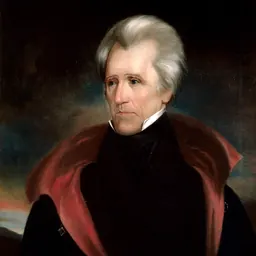
That same year, von Scholten appointed Waldemar Oxholm his adjutant, a position that made him one of the Governor-General's principal aides. Oxholm accompanied von Scholten on official voyages through the Caribbean and to North America. In the summer of 1830, Oxholm travelled with von Scholten to the United States, then continued independently to Canada, journeying across Lake Ontario and visiting Niagara Falls before rejoining von Scholten in New York City. During this period, reports reached them of the July Revolution in France, which provoked widespread excitement in the US and was soon commemorated with public celebrations in major American cities. Staying in the US, they travelled to Washington, D.C. in October 1830, where they conducted a diplomatic mission and met with President Andrew Jackson, discussing commercial relations and maritime issues.
His duties also included dispatches to Spanish territories (notably Puerto Rico) and to the Venezuelan littoral, and courier service among the Danish islands. Between 1830 and 1834 Oxholm travelled repeatedly between Europe and the West Indies, sometimes recalled for reasons of health but consistently reappointed to the Governor-General's staff. He was active in the negotiations over the legal status of the free people of colour .
During the princes’ residence abroad, a close, trusting and enduring friendship developed between Oxholm and Prince Christian. The sojourn is generally regarded as the beginning of the close and lasting relationship between Oxholm and the future King Christian IX, and would later prove of great significance to both men.
Service to the crown prince and central administration Upon the princes’ return, Oxholm entered service in the central administration. In 1841, he was appointed as commissioner in the General Customs Chamber “with the West Indian cases to hand". Christian VIII wrote to von Scholten on this occasion: "With him, one can be sure of knowledge and integrity". He was given concurrent placement à la suite as major in recognition of his military seniority.
He helped organise Frederik's 1841 marriage to Duchess Caroline Mariane of Mecklenburg. From 1842 to 1847 he served as Lord Chamberlain of the Household to the crown prince, Frederik (later Frederik VII), administering the prince's household, coordinating ceremonial and travel, and acting as a principal liaison between the heir apparent and the ministries. He held this position for five years, but resigned in 1847 in protest at the crown prince's liaison with Louise Rasmussen, later Countess Danner. The rupture, however, was not permanent, and following his accession in 1848, Frederik VII again turned to Oxholm for advice in forming his first constitutional government. Acting as intermediary between the king, Moltke, and figures such as Peter Georg Bang, Orla Lehmann, and Anton Frederik Tscherning, he helped secure agreement on the formation of the March Ministry, a coalition under Count Adam Wilhelm Moltke tasked with averting escalation in the duchies, initiating constitutional reforms, and steering the monarchy from absolutism toward parliamentary rule. In his memoirs, Orla Lehmann later recalled that Christian IX and Count Molke heavily considered appointing Oxholm as Minister of Foreign Affairs, in the first cabinet of Moltke. However, Oxholm declined office for himself, and proposed C. E. Zahrtmann for the Navy (ultimately serving only in a secretarial capacity while Moltke held the portfolio). The First Schleswig War followed within weeks, whereupon he was dispatched on sensitive diplomatic missions.
Diplomatic missions In late March 1848 he was dispatched to St Petersburg to solicit Russian adherence to a policy of non-intervention. He returned to the Russian court in June to soothe imperial anger after the fighting on Sundeved. In Stockholm he assisted at the negotiation of the Dano–Swedish-Norwegian military convention for an auxiliary corps, and in August 1848 he took part in the talks that produced the Armistice of Malmö. Early in 1849 he participated in the ultimately fruitless London peace deliberations. For his services he received brevet rank as general major (1848).
Throughout 1854 to 1856 he handled routine legation business and the political weather of a belligerent capital, but by mid-1856, after protracted strain and several periods of leave, he requested formal release of his duties. The request was accepted at year's end, and Denmark exchanged formal letters of recall in early 1857; Oxholm was succeeded in the London legation by Alfred Reventlow-Criminil (interim, 1856) and, after a short interregnum, by Carl Edvard van Dockum (1858–1860).
Court marshal to Christian IX (1863–1876) W. Oxholm, wood-engraving in his obituary in Illustreret Tidende, 1876.
December 1863 constitutional crisis
Following the accession of King Christian IX in November 1863, Oxholm was appointed Lord Marshal of the Court , becoming the highest-ranking court official and the monarch's principal intermediary in both ceremonial and political matters. He simultaneously retained the office of Master of Ceremonies until 1867, overseeing court protocol, precedence, and investitures.
The new position opened under conditions of acute constitutional and diplomatic tension. The government of Carl Christian Hall had, on 18 November 1863, enacted the November Constitution, uniting Denmark and Schleswig under a common framework that violated the guarantees of the London Protocol of 1852. The resulting opposition from Prussia and Austria brought the monarchy to the brink of war and placed the inexperienced Christian IX in a position of extraordinary difficulty.
Contemporary notes by Privy Councillor C. N. David record Oxholm's direct involvement in the events of 25 December 1863, when the King resolved to convene the Rigsråd to consider suspending the Constitution before it entered into force. David reports that Christian IX stated that “General Oxholm” had offered, on an interim basis, to assemble a new ministry should the existing government refuse to act. Oxholm then oversaw the practical arrangements for summoning councillors to an extended Council of State that evening and ensured that David was instructed to prepare the opening address.
Court finance, ceremonial, and influence In the years following the Second Schleswig War (1864), Oxholm continued to exercise influence at court, particularly in questions of ceremonial and royal finance. David's later recollections portray him as a consistent defender of the dignity and outward prestige of the monarchy. Oxholm opposed proposals to abolish the Royal Horse Guards, advocated a civil list comparable to that of Frederik VII, and insisted on adequate resources for the maintenance of Amalienborg Palace and other royal residences. He is quoted as saying that “what is necessary for the royal dignity, money must be found for”. These views made him a controversial figure: the National Liberals regarded him with distrust and saw him as a conservative bulwark within the royal household, while in conservative circles he was esteemed for his personal courtesy, affable manner, and pronounced sense of rectitude.
In 1866, he accompanied the eighteen-year-old Princess Dagmar of Denmark on her journey to Russia for her marriage to the heir to the Russian throne, the future Emperor Alexander III. In her diary Dagmar described the anguish of parting from her parents and affectionately noted Oxholm's kindness: “The good Oxholm, to distract me a little, bought me a parrot, knowing that I had always wished for one”. The estate lay outside the protected area surrounding Henriksholm and formed part of a traditional agricultural property.
After Oxholm's death, Smidstrupgård was purchased in 1888 by George I of Greece, who owned it until 1911 and used it as a summer residence during visits to Denmark, when he did not reside at Bernstorff Palace. The manor house fell into disrepair during the mid-twentieth century and was demolished in 1969–1970; its parkland was subsequently subdivided for residential development.
Personal life
Marriages Oxholm married twice. On 29 May 1841, in Hannover, he married Anna von Rudloff (1821–1841), daughter of the Hanoverian legation councillor and general post director Wilhelm August von Rudloff and Henriette Sophie von Scheele. She died only a few months after their wedding. According to contemporary accounts, their engagement originated from a social misunderstanding: during a severe winter storm, Oxholm assisted the young lady into his carriage as she arrived for an audience at Amalienborg, mistaking her for another courtier. The incident developed into an acquaintance that soon led to marriage. The king's cabinet secretary J. P. Trap later described him as “a very handsome man of agreeable ease in society and constant good will,” but added that “as a practical man he was somewhat restless, with shifting ideas, which could make him difficult to serve under, although his good nature on the other hand must have eased relations.” By contrast, general adjutant Heinrich Kauffmann judged him more critically during the run-up to the 1864 war, calling Oxholm the king's “closest adviser, surely loyally devoted to him, but quite devoid of statesmanlike tact and sure judgment in the dangerous situation”.
Honours
Denmark
Order of the Elephant: Knight (28 July 1869) Order of the Dannebrog: Knight (21 October 1834) Commander (6 October 1844) Cross of Honour (Dannebrogsmændenes Hæderstegn) (28 June 1847) Grand Cross (11 August 1848)
Foreign orders and decorations
Sweden-Norway: Order of the Seraphim: Knight Order of the Sword: Commander Grand Cross, with brilliants Order of St. Olav: Grand Cross Greece: Order of the Redeemer: Grand Cross Portugal: Order of Aviz: Grand Cross Tunisia: Nichan Iftikhar: 1st Class Russian Empire: Order of St. Alexander Nevsky Order of the White Eagle (Russian Empire) Order of St. Anna: 1st Class, with brilliants Order of St. Vladimir: 4th Class
Don’t just read it —
keep it.
Full-length biographies made to live with: read them, listen on the way to work, watch them tonight.
- E-book
- Audio
- Video
Instant download · yours to keep · every purchase keeps this site free
Important facts
People in Waldemar Tully Oxholm's life
Named in this biography and alive at the same time


Related people
Same field, nearest in time

Contemporaries
People whose lives overlapped Waldemar Tully Oxholm's





Frequently asked questions
Who was Waldemar Tully Oxholm?
(1805-1876)
When was Waldemar Tully Oxholm born?
Waldemar Tully Oxholm was born on 11 November 1805.
When did Waldemar Tully Oxholm die?
Waldemar Tully Oxholm died on 3 August 1876.
What was Waldemar Tully Oxholm's occupation?
Waldemar Tully Oxholm was a civil servant, diplomat, lord Chamberlain of Denmark and hofmarschall.
What nationality was Waldemar Tully Oxholm?
Waldemar Tully Oxholm was Danish.
Sources & further reading
· Wikipedia: Waldemar Tully Oxholm
· DBpedia: Waldemar Tully Oxholm
Cite this page
APA: Biography.guide. (2026). Waldemar Tully Oxholm. https://biography.guide/waldemar-tully-oxholm/
MLA: "Waldemar Tully Oxholm." Biography.guide, https://biography.guide/waldemar-tully-oxholm/.
Chicago: "Waldemar Tully Oxholm." Biography.guide. https://biography.guide/waldemar-tully-oxholm/.
Data last updated: 2026-09-20 · Spot an error? Report a correction.
Page generated 2026-09-27 05:18 UTC