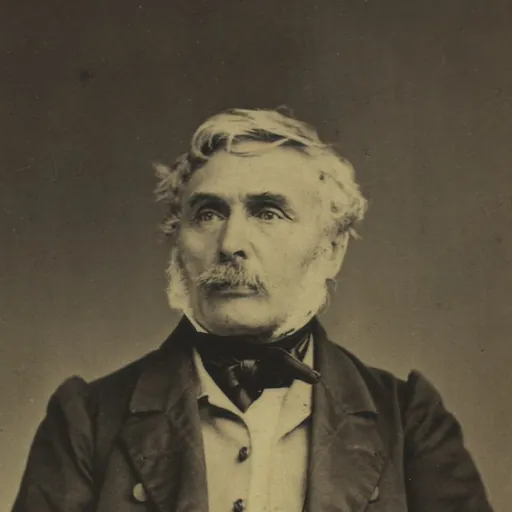
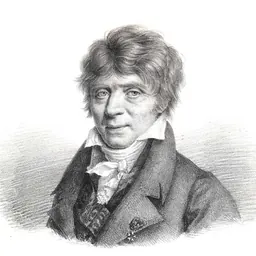
Anton Frederik Tscherning
Danish army officer, politician, minister of war and military reformist
About Anton Frederik Tscherning
Lived 1795 – 1874 (aged 78). Anton Frederik Tscherning was a Danish politician, military officer and military personnel.
Ant(h)on Frederik Tscherning (12 December 1795 – 29 June 1874) was a Danish army officer who became a politician.
During the First Schleswig War he served, briefly, as Denmarks's first Minister for War between March and November in 1848. Tscherning rapidly organised of a military infrastructure which enabled the country to resist Prussian attack, but failed to distinguish himself as a military strategist. He was a member of the Folketing (Danish parliament) between 1849 and 1864 and of the Statsrådet (Council of State) between 1854 and 1864.
In his interventions he championed the liberal causes of the time, such as extension of democratic participation and free trade. During the 1860s, as the issue of Schleswig separatism forced itself to the top of the political agenda, he opposed the government policy of attempting uncompromisingly to impose Danish control in a region where, progressively, the German speaking minority was becoming a majority.
Life Provenance and early years Tscherning was born in Frederiksværk during the run-up to Denmark's involvement in the Napoleonic Wars. Frederiksværk was a small town on Zealand with a large gun factory. The family could trace its origins back to Silesia from where they had migrated to Denmark at the time of the Religious Wars. Like many war children, Tscherning was keen to join the fighting, enrolling for military training at the age of nine. The English attack on Copenhagen in 1807 intensified his soldierly ambitions. He enlisted as a cadet in 1809, emerging four years later as a second lieutenant of artillery. He was sent with the army to Holstein in 1813 and followed General von Kardorff into Germany, but his ambitions to become involved in the fighting were thwarted by the Treaty of Kiel, concluded in January 1814, which finally put an end to two decades of war. In 1838 Tscherning was informed that his study trip was completed and he was permitted/summoned to return home. On arriving back home he issued another booklet, arguing that the solution to the problem of integrating the military into the state apparatus must be part of a wider solution involving the reorganisation of the overall government structure and indeed something approaching a revitalisation of the national soul. He again applied to resign from the army but his application was turned down. although her father – Tscherning's maternal uncle, General Major Adam Tobias Lützow (1775–1844) – had acknowledged Eleonora as his daughter (and adopted her legally) only in 1837. Following the dismissal of the Stemann government in March 1848, having promoted the constitutional conference of 1848, it was natural that Tscherning should be invited to join the new administration under Adam Wilhelm Moltke, and his public profile over military reform meant that the War Ministry was the appropriate department for him to take over, albeit in the face of opposition from the conservative military establishment. The king promoted him to the rank of colonel in the wake of victory against at Bov in April 1848, which was considered more appropriate than that of captain for the government's Minister for War (although relations between Tscherning and the king subsequently soured).
The Battle of Bov was the first significant conflict of the First Schleswig War which was essentially a separatist rebellion by Schleswig and Holstein, territories which formed the southern part of the Danish kingdom but which also had increasing links to Germany, intensified by migration pressures and a shifting language frontier. To the south Holstein had also, till its abolition in 1806, formed part of the Holy Roman Empire, and now combined its ties to the Danish crown with membership of the German Confederation. In a century of rising nationalism the tensions this situation created could only increase, and the rebellion took on the character of an international war when Prussia intervened on behalf of the separatists. By July the Danish army had succeeded in stopping the rebels and their Prussian allies, although the underlying tensions that had triggered the war remained unresolved. Tscherning was felt to have provided excellent leadership, demonstrating clarity of thought and abundant stamina. He might not have been loved by the conservative military leaders, but he did enjoy widespread political support in the country, especially in the rural areas where support for the Society of the Friends of Peasants was concentrated. He was able to prepare the way for universal military service. He found the political backing to transform the army into a single coherent fighting entity, taking care at a detailed level of training and health issues, and very quickly, through changing the personnel at the top of the army and through personal example, gaining the loyalty of the forces. By the time the government resigned, in November 1848, Denmark could call on a well coordinated army of approximately 30,000 men.
Tscherning's conduct of the war was not beyond criticism, however. There are suggestions that if he had maximised the forces sent to crush the rebellion that erupted in Holstein at the outset, the subsequent coming together of a separatist Schleswig-Holstein rebel force might have been avoided. There were occasions when disagreement at the top led to a lack of clarity over chains of command. Some of his strategic decisions were portrayed as gratuitously whimsical. However, he was also constrained by political considerations during the summer of 1848: the Danish government position was widely backed by foreign powers (aside from those in the German confederation), but there was a growing risk that allies might initiate peace talks on Denmark's behalf. When he resigned in November 1848 Tscherning was not convinced that a further three years of war was desirable and he increasingly came to the view that, while rebellion should be seen for what it was and put down accordingly, that did not mean that regional differences and language rights should be ignored. In political terms, his belief in democratic structures and principals was very much on display between 1849 and 1864, the years that he spent as a member of parliament. He also never lost his enthusiasm for military affairs, and never gave up on his belief in the "nation in arms" concept, in order to "holder Folket friskt og disciplinerer det" ("keep the people energetic and disciplined").
Tscherning's tombstone at the Garrison Cemetery in Copenhagen. Tscherning died on 29 June 1874. He is buried at Copenhagen's Garrison Cemetery.
Don’t just read it —
keep it.
Full-length biographies made to live with: read them, listen on the way to work, watch them tonight.
- E-book
- Audio
- Video
Instant download · yours to keep · every purchase keeps this site free
Important facts
Family & relationships
People in Anton Frederik Tscherning's life
Named in this biography and alive at the same time

Related people
Same field, nearest in time



Contemporaries
People whose lives overlapped Anton Frederik Tscherning's




Frequently asked questions
Who was Anton Frederik Tscherning?
Danish army officer, politician, minister of war and military reformist (1795-1874)
When was Anton Frederik Tscherning born?
Anton Frederik Tscherning was born on 12 December 1795 in Frederiksværk.
When did Anton Frederik Tscherning die?
Anton Frederik Tscherning died on 29 June 1874 in Copenhagen.
What was Anton Frederik Tscherning's occupation?
Anton Frederik Tscherning was a politician, military officer and military personnel.
What nationality was Anton Frederik Tscherning?
Anton Frederik Tscherning was Danish.
Sources & further reading
· Wikipedia: Anton Frederik Tscherning
· DBpedia: Anton Frederik Tscherning
Cite this page
APA: Biography.guide. (2026). Anton Frederik Tscherning. https://biography.guide/anton-frederik-tscherning/
MLA: "Anton Frederik Tscherning." Biography.guide, https://biography.guide/anton-frederik-tscherning/.
Chicago: "Anton Frederik Tscherning." Biography.guide. https://biography.guide/anton-frederik-tscherning/.
Data last updated: 2026-09-23 · Spot an error? Report a correction.
Portrait: Wikimedia Commons · author & licence
Page generated 2026-09-27 05:07 UTC