
Waddell Cunningham
Cunningham, Waddell (1729–1797), merchant and politician
About Waddell Cunningham
Lived 1729 – 1797 (aged 68). Waddell Cunningham was a businessperson.
Captain Waddell Cunningham ( – 15 December 1797) was an Irish trans-Atlantic trader, Dominican slave-holder and merchant, prominent in the commercial and civic life of Georgian-era Belfast. In a town much agitated by the American struggle for independence he was seen a friend of reform. He was a patron of the Belfast Charitable Society and its Poor House; a commander of the patriot Volunteer militia; and a leading subscriber among Presbyterians to the costs of erecting Belfast's first Catholic chapel. But his commercial interests and opposition to immediate Catholic Emancipation placed him at odds with the more democratic elements of the town and surrounding districts.
In retaliation for rent increases and evictions, in 1771 his house in Belfast was attacked and destroyed by tenant "Steelboys" from his home region north of the town. In 1786 public protest forced him to abandon plans to commission ships in the port for the Atlantic slave trade. In 1792, following Bastille Day celebrations, his attempt to water down a town resolution in favour of political coalition with Ireland's Catholic majority was defeated by fellow Volunteers styling themselves the United Irishmen. As preparations were laid for the 1798 Rebellion, Cunningham was prominent among the town's loyalists in volunteering his services to the local yeomanry.
New York ship owner and privateer
Waddell Cunningham was born in Killead, County Antrim , the youngest son of John Cunningham and his wife Jane. Both of Cunningham's parents came from families who were involved in farming and the linen and overseas trades. By 1752, he had started working as a ship-owner who was involved in the triangular trade. His merchant ships carried rough linen clothing and salted provisions from Belfast to the British West Indies, where they were sold to slave plantations; sugar and rum from the West Indies to Baltimore and New York City; and flaxseed from the Thirteen Colonies (where, in contrast to Belfast and its hinterlands, the relative scarcity of labour made it unprofitable to process flax into linen fibre) back to Ireland.
Dealings in New York brought him into contact and partnership with Thomas Greg, another Belfast Presbyterian. Benefitting from the rise in the prices of provisions during the Seven Years’ War (1756–1763) and, although themselves trading illicitly with the French and Spanish, from licence to attack and plunder enemy vessels, Greg & Cunningham became one of New York's largest shipping companies. (On Dominica, their enterprise has lent the name Belfast to an elevated neighbourhood above the coastal village of Mahaut and to the adjacent Belfast River).
Belfast merchant Facing legal sanctions in New York for his illicit trading, Cunningham returned to Belfast in 1763 where, with Greg, he acted to improve the town's commercial infrastructure. They invested in the Lagan navigation canal (1763), in new docks and quays (Cunningham was the first president of the Belfast Ballast--later Harbour--Board), and in the construction of the White Linen Hall (1785) which, together, attracted the linen trade to Belfast that had formerly gone through Dublin. insurance, and tobacco smuggling. He was also a promoter of the Belfast Academy and the Belfast Society for Promoting Knowledge (the Linen Hall Library).
Irish Volunteer and Whig reformer Although secretly engaged in the supply of linen uniforms to the insurgent American colonists, following the raid upon Belfast Lough by the American privateer John Paul Jones in April 1778, Cunningham was among the first to organise his own Volunteer company. Ostensibly formed to defend the Ireland against the Americans and their French allies, the large Presbyterian contingent in the Volunteer movement demonstrated sympathy for their kinfolk in the colonies. Cunningham was a delegate to Volunteer conventions in Dungannon and Dublin which echoed American discontents in calling for legislative independence and freedom from the restrictions of Britain's Navigation Acts. After these were conceded by London, Cunningham (following the example of the "African Company" in Limerick) proposed to commission ships in Belfast for the Middle Passage, previously a preserve of British ports. The victory of the abolitionists was sealed by the popular reception given to Olaudah Equiano who, promoting his memoir of slavery in West Indies, visited Belfast in 1791.
When, in the wake of the French Revolution, calls for reform revived, Cunningham became a member of the Northern Whig Club. The club proposed reforming the system of "pocket boroughs" whereby most members of the Irish House of Commons were nominees of kingdom's largest landowners (already seated in the House of Lords). After the borough proprietor, Lord Donegall, ignored a petition to nominate Cunningham as one of Belfast's two Members of Parliament in the general election of 1783, Cunningham stood on a platform of parliamentary reform in neighbouring Carrickfergus. He was returned by 474 votes to 289.
Cunningham favoured relieving the kingdom's Catholic majority of their civil disabilities under the Penal Laws. In May 1784, his Belfast Volunteer Company opened its rank to Catholics and under Cunningham paraded for the opening for the town's first Catholic chapel, St Mary's, for which they had made "a handsome collection". But on his visit to Belfast in 1791, Wolfe Tone found Cunningham was not among the northern reformers convinced by his Argument on behalf of the Catholics of Ireland—Tone's insistence that a national government for Ireland would never be secured without engaging Catholics on the basis of complete equality.
Government loyalist
On Bastille Day 1792, celebrating what he and his fellow Whig reformers still regarded as a French reprise of England's Glorious Revolution, Cunningham led his Volunteers in a muster and parade in Belfast. He was alarmed, however, by the knowledge the day was to end in a public banquet and meeting at which Tone's supporters, the United Irishmen, would move an Address to the People of Ireland. Samuel Neilson, publisher of the Painite paper, the Northern Star, found Cunningham the previous evening in an inn haranguing Volunteers up from the country against Catholics "and talking of some sedition to be broached next day".
The Address's offending passage proved to be the declaration that "no reform, were even such attainable, would answer our ideas of utility or justice, which should not equally include all sects and denominations of Irishmen". Cunningham, together with his church minister, William Bruce, and the publisher of the Star's rival title, The News Letter, Henry Joy, proposed, rather, "the gradual emancipation of our Roman Catholic brethren". Their caution was swept aside, with Neilson expressing "astonishment at hearing ... any part of the address called a Catholic question." The only question was "whether Irishmen should be free."
As the United Irishmen prepared, under growing martial-law repression, for a republican insurrection, Cunningham declared his loyalty to the Crown and to the government in Dublin, now entrusted to the least compromising representatives of the Anglican Ascendancy. He captained the town's yeomanry corps.
Cunningham was interred under an imposing memorial, attributed to Roger Mulholland, in Knockbreda Church cemetery overlooking Belfast. The inscription reads: "Here are deposited the remains of Waddell Cunningham, Esq. whose integrity as a merchant, generosity as a patron and whose steadiness and hospitality as a friend will long be the objects of the most respectful and greatful rememberance. He died the 15th of December 1797 aged 68 years".
Don’t just read it —
keep it.
Full-length biographies made to live with: read them, listen on the way to work, watch them tonight.
- E-book
- Audio
- Video
Instant download · yours to keep · every purchase keeps this site free
Important facts
People in Waddell Cunningham's life
Named in this biography and alive at the same time
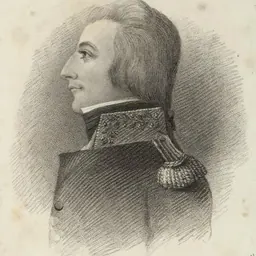


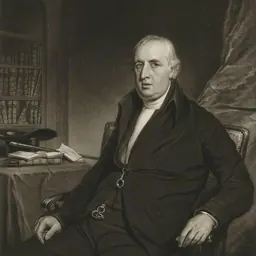
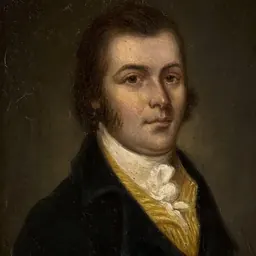

Related people
Same field, nearest in time
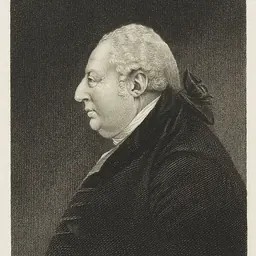


Contemporaries
People whose lives overlapped Waddell Cunningham's





Frequently asked questions
Who was Waddell Cunningham?
Cunningham, Waddell (1729–1797), merchant and politician
When was Waddell Cunningham born?
Waddell Cunningham was born on 17 January 1729 in Killead.
When did Waddell Cunningham die?
Waddell Cunningham died on 17 January 1797 in Belfast, Kingdom of Ireland.
What was Waddell Cunningham's occupation?
Waddell Cunningham was a businessperson.
Sources & further reading
· Wikipedia: Waddell Cunningham
Cite this page
APA: Biography.guide. (2026). Waddell Cunningham. https://biography.guide/waddell-cunningham/
MLA: "Waddell Cunningham." Biography.guide, https://biography.guide/waddell-cunningham/.
Chicago: "Waddell Cunningham." Biography.guide. https://biography.guide/waddell-cunningham/.
Data last updated: 2026-09-22 · Spot an error? Report a correction.
Page generated 2026-09-27 05:16 UTC