
About W. Scott Peters
Lived 1861 – 1919 (aged 57–58). W. Scott Peters was a lawyer.
Winfield Scott Peters (May 25, 1861 – July 20, 1919) was an American lawyer and politician who served as District Attorney of Essex County, Massachusetts from 1899 to 1911.
Early life Peters was born in Porter, Maine. His family moved to Haverhill, Massachusetts when he was 14 years old. He graduated from Haverhill High School and the Boston University School of Law. Best was found guilty of murder in the first degree. Peters was unable to run for reelection in 1910 due to term-limits, so he ran for the 4th Essex District seat in the Massachusetts Senate. He lost the Republican nomination to incumbent Arthur L. Nason. The main issue in the campaign was that year's United States Senate election. Nason supported Butler Ames and Peters backed Henry Cabot Lodge.
Private practice In 1905, Peters was retained by two cousins of Stephen Salisbury III who sought to contest his will. Salisbury left the bulk of his estate to the Worcester Art Museum and the cousins were two of the five blood relatives not mentioned in Salisbury's will.
Peters represented Jessie M. Chapman, who was arrested for killing her neighbor and former friend, Eva F. Ingalls. On May 15, 1913, Chapman pleaded guilty to murder in the second degree.
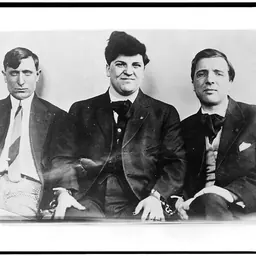
He defended Arturo Giovannitti, a leader of the 1912 Lawrence textile strike who was charged with the murder of Anna LoPizzo, a striker who was killed in the protest. Giovannitti and co-defendants Joseph James Ettor and Joseph Caruso were found not guilty. In 1913 he was counsel for Charles L. Eaton, who was charged with manslaughter in the shooting of Michael Bernstein. The case ended in a mistrial when the jury was unable to reach a verdict.
In 1916, Peters defended Haverhill mayor Albert L. Bartlett and aldermen Roswell L. Wood, Albert E. Stickney, Charles M. Hoyt, and Christopher C. Cook, who were charged with failure to suppress an unlawful assembly after the Leyden riot. The jury returned not guilty verdicts on all of the charges against Hoyt and on one of the two charges against Bartlett. They were unable to come to an agreement on the charges against Cook, Wood, and Stickney.
In 1919 Peters represented the Haverhill Shoe Manufacturers' Association in negotiations with the Shoe Workers' Protective Union, who were represented by Frederick Mansfield.
Death Peters died suddenly on July 20, 1919, in Hampton Beach, New Hampshire.
Don’t just read it —
keep it.
Full-length biographies made to live with: read them, listen on the way to work, watch them tonight.
- E-book
- Audio
- Video
Instant download · yours to keep · every purchase keeps this site free
Important facts
People in W. Scott Peters's life
Named in this biography and alive at the same time




Related people
Same field, nearest in time


Contemporaries
People whose lives overlapped W. Scott Peters's


Frequently asked questions
Who was W. Scott Peters?
American lawyer and politician
When was W. Scott Peters born?
W. Scott Peters was born in 1861.
When did W. Scott Peters die?
W. Scott Peters died in 1919.
What was W. Scott Peters's occupation?
W. Scott Peters was a lawyer.
Sources & further reading
Cite this page
APA: Biography.guide. (2026). W. Scott Peters. https://biography.guide/w-scott-peters/
MLA: "W. Scott Peters." Biography.guide, https://biography.guide/w-scott-peters/.
Chicago: "W. Scott Peters." Biography.guide. https://biography.guide/w-scott-peters/.
Data last updated: 2026-09-20 · Spot an error? Report a correction.
Page generated 2026-09-27 05:20 UTC