
About Volney Mathison
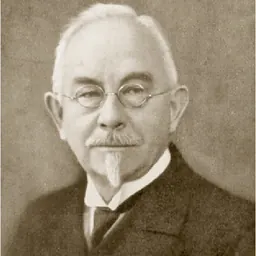
Lived 1897 – 1965 (aged 67). Volney Mathison was an American novelist, science fiction writer and inventor, known for E-meter.
Volney G. Mathison, also known by the pseudonym Dex Volney (August 13, 1897 – January 3, 1965), was an American chiropractor, writer, and inventor of the first E-meter used by the Church of Scientology.
Family In 1935, Mathison was married to Jean Darrell, a music librarian for NBC. She died in November 1964.
Career
Writer
In 1921, Mathison wrote the fictional short story "A Phony Phone", which was published in Radio News edited by Hugo Gernsback. In 1924, he wrote the fictional book The Radiobuster: Being Some of the Adventures of Samuel Jones, Deep Sea Wireless Operator. The book is listed in American Fiction, 1901-1925: A Bibliography. He also wrote stories most of which were published under the pseudonym of "Dex Volney".
In the June 1929 issue of Amazing Stories, Mathison's story "The Mongolian's Ray" appeared and was promoted on the cover. Forrest J. Ackerman and Brad Linaweaver write in the book Worlds of Tomorrow, "In this story, he created the fictional device that shortly after the introduction of Dianetics, morphed into reality as the E-meter employed today to supposedly reveal the personalities of individuals interested in becoming 'clears' in the Dianetic regimen."
Inventor In 1935, Mathison was employed building short wave radios. According to some critics of Scientology, Mathison designed and built the first E-meter in the 1940s, or E-meter, to read electrodermal activity. and other writers identify the lecturer as L. Ron Hubbard.
The E-meter "has a needle that swings back and forth across a scale when a patient holds on to two electrical contacts".
Mathison was a follower of Dianetics founded by L. Ron Hubbard. Hubbard incorporated Mathison's device into Scientology practices. Simon Singh and Edzard Ernst write in Trick or Treatment that "The E-meter was also widely used by the Church of Scientology, so much so that many Scientologists believe that it was invented by their founder L. Ron Hubbard."
Another writer tells yet a third version this history. According to Gordon Melton, the first E-meter was "developed by Volney Mathison, following Hubbard's designs."
Use of the E-meter in Dianetics practice was subsequently stopped by Hubbard in 1954. In 1966, Hubbard was awarded a United States patent for a solid-state E-meter, described as a "Device for Measuring and Indicating Changes in Resistance of a Living Body".
Many of Mathison's professional activities and publications — chiropractic, psychoanalysis, past life regression, and hypnotherapy — have been classed as pseudosciences by various critics.
Don’t just read it —
keep it.
Full-length biographies made to live with: read them, listen on the way to work, watch them tonight.
- E-book
- Audio
- Video
Instant download · yours to keep · every purchase keeps this site free
Important facts
People in Volney Mathison's life
Named in this biography and alive at the same time





Related people
Same field, nearest in time
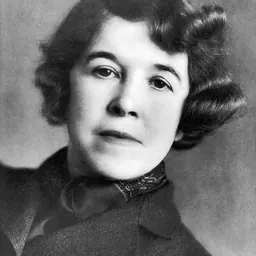
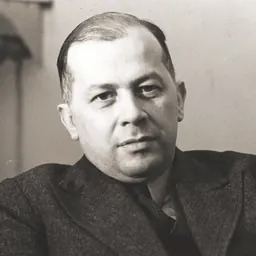




Contemporaries
People whose lives overlapped Volney Mathison's

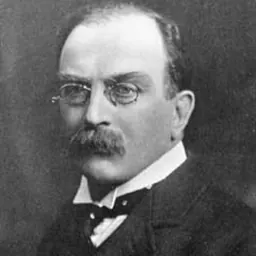

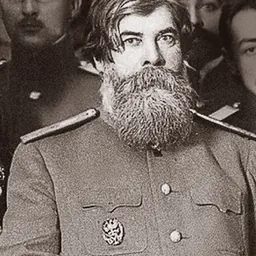

Frequently asked questions
Who was Volney Mathison?
American writer
When was Volney Mathison born?
Volney Mathison was born on 13 August 1897.
When did Volney Mathison die?
Volney Mathison died on 3 January 1965.
What was Volney Mathison's occupation?
Volney Mathison was a novelist, science fiction writer and inventor.
What was Volney Mathison known for?
Volney Mathison was known for E-meter.
What nationality was Volney Mathison?
Volney Mathison was American.
Sources & further reading
Cite this page
APA: Biography.guide. (2026). Volney Mathison. https://biography.guide/volney-mathison/
MLA: "Volney Mathison." Biography.guide, https://biography.guide/volney-mathison/.
Chicago: "Volney Mathison." Biography.guide. https://biography.guide/volney-mathison/.
Data last updated: 2026-09-22 · Spot an error? Report a correction.
Page generated 2026-09-27 05:22 UTC