
Vladimir Vetrov
Soviet spy for France
About Vladimir Vetrov
Lived 1932 – 1985 (aged 52). Vladimir Vetrov was a Russian mole.
Vladimir Ippolitovich Vetrov (; 10 October 1932 – 23 January 1985) was a high-ranking KGB spy during the Cold War who decided to covertly release valuable information, later known as the Farewell Dossier, to France and NATO on the Soviet Union's clandestine program aimed at stealing technology from the West.
Vetrov was assigned the code-name Farewell by the French intelligence service the Direction de la surveillance du territoire (DST), which recruited him. He was known by that name throughout NATO's intelligence services. The code-name was chosen as an English word, so that the KGB would assume he worked for the CIA if it learned his codename.
Vetrov was executed for treason in the Soviet Union on 23 January 1985. His life inspired a film and books were written about his life and career.
Biography Vladimir Vetrov was born on 10 October 1932 and grew up within the Soviet Union. After college, where he studied electronic engineering, he was enlisted in the KGB.
He lived in France for five years, beginning in 1965, when posted there as a Line X officer working for the KGB's 'Directorate T', which specialized in obtaining information about advanced science and technology from western countries. While there, he befriended Jacques Prévost, an engineer working with Thomson-CSF. Vetrov returned to Moscow at the end of his posting, with a subsequent posting to Montreal, though Vetrov was recalled prematurely for reasons that are unclear.
There, he rose through the ranks of Directorate T, eventually supervising the evaluation of the intelligence collected by Line X agents around the world, and passing key information to the relevant users inside the Soviet Union. Having become increasingly disillusioned with the Communist system, he decided to pass important state secrets to the west for purely ideological reasons, though he eventually and reluctantly accepted 25,500 rubles (roughly equivalent to four years of his salary). he contacted Prévost, by then working in the Soviet Union, who operated as a liaison to the French DST and offered his services to the West.
Between the spring of 1981 and early 1982, Vetrov, code-named FAREWELL, gave the DST almost 4,000 secret documents, including the complete official list of 250 Line X officers stationed under legal cover in embassies around the world, causing a breakdown of the Soviet espionage effort to obtain scientific, industrial and technical information from the West. Members of the GRU, the Soviet Academy of Sciences and several other bodies all took part in such efforts. One report states that information provided by Vetrov "neutralized 422 KGB officers and 54 Western agents (Soviet moles) working for the KGB and the USSR bloc". KGB agents from France on 5 April 1983. Arrests were also made, including Pierre Bourdiol, whom he had himself recruited, which was considered a faux pas in the espionage community, as it was considered a violation of protocol to burn one's own recruit. When a man knocked on the car window, Vetrov thought his spying had been discovered, so he stabbed and killed the man. He happened to be an auxiliary policeman, likely looking for a bribe from what he thought were two people having sex in a highway median. News of his execution reached France in March 1985.
Legacy The information which Vetrov provided (400 names) enabled the western countries to expel nearly 150 Soviet technology spies around the world, including the 47 mentioned above, most of whom were from Line X. This caused the collapse of the Soviet's information program at a time when it was particularly crucial. The U.S. created a massive operation to provide the Soviets with faulty data and sabotaged parts for certain technologies, as a consequence of the Farewell Dossier. Vetrov was also responsible for exposing the spy Dieter Gerhardt, a senior officer in the South African Navy who had been spying for the Soviets for 20 years. Vetrov also provided information hinting at a Polish coup d'état (eventually found to be that by Wojciech Jaruzelski), It was loosely adapted for the French film L'affaire Farewell (2009), starring Emir Kusturica, Guillaume Canet and Alexandra Maria Lara.
Kostin and Eric Raynaud published a more complete and updated account of the Farewell Dossier under the title Adieu Farewell (Laffont, Paris, 2009). This title became available in English for the first time in 2011, some thirty years after the events.
Don’t just read it —
keep it.
Full-length biographies made to live with: read them, listen on the way to work, watch them tonight.
- E-book
- Audio
- Video
Instant download · yours to keep · every purchase keeps this site free
Important facts
People in Vladimir Vetrov's life
Named in this biography and alive at the same time

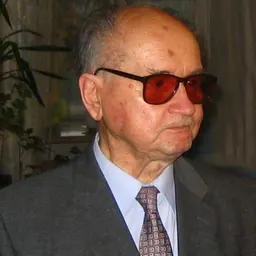



Contemporaries
People whose lives overlapped Vladimir Vetrov's

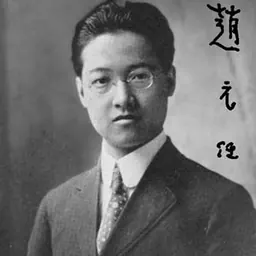

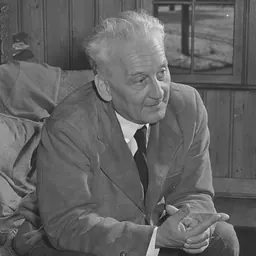
Frequently asked questions
Who was Vladimir Vetrov?
Soviet spy for France (1932-1985)
When was Vladimir Vetrov born?
Vladimir Vetrov was born on 10 October 1932 in Moscow.
When did Vladimir Vetrov die?
Vladimir Vetrov died on 23 January 1985 in Moscow.
What was Vladimir Vetrov's occupation?
Vladimir Vetrov was a mole.
What nationality was Vladimir Vetrov?
Vladimir Vetrov was Russian.
Sources & further reading
Cite this page
APA: Biography.guide. (2026). Vladimir Vetrov. https://biography.guide/vladimir-vetrov/
MLA: "Vladimir Vetrov." Biography.guide, https://biography.guide/vladimir-vetrov/.
Chicago: "Vladimir Vetrov." Biography.guide. https://biography.guide/vladimir-vetrov/.
Data last updated: 2026-09-20 · Spot an error? Report a correction.
Page generated 2026-09-27 05:31 UTC