
Vladimir Vapnik
Russian-American mathematician (born 1936)
About Vladimir Vapnik
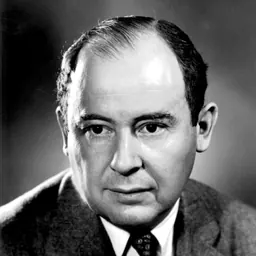
Born 1936. Vladimir Vapnik is a Russian and American mathematician, computer scientist, university teacher and statistician, known for Statistical learning theory, Structural risk minimization and Support-vector machine.
Vladimir Naumovich Vapnik (; born 6 December 1936) is a statistician, researcher, and academic. He is one of the main developers of the Vapnik–Chervonenkis theory of statistical learning and the co-inventor of the support-vector machine method and support-vector clustering algorithms.
Early life and education Vladimir Vapnik was born to a Jewish family in the Soviet Union. He received his master's degree in mathematics from the Uzbek State University, Samarkand, Uzbek SSR in 1958 and Ph.D in statistics at the Institute of Control Sciences, Moscow in 1964. He worked at this institute from 1961 to 1990 and became Head of the Computer Science Research Department. which enabled the algorithm to categorize inputs without labels—becoming one of the most ubiquitous data clustering applications in use. Vapnik left AT&T in 2002 and joined NEC Laboratories in Princeton, New Jersey, where he worked in the Machine Learning group. He also holds a Professor of Computer Science and Statistics position at Royal Holloway, University of London since 1995, as well as a position as Professor of Computer Science at Columbia University, New York City since 2003. As of February 1, 2021, he has an h-index of 86 and, overall, his publications have been cited 226597 times. His book on "The Nature of Statistical Learning Theory" alone has been cited around 113000 times.
On November 25, 2014, Vapnik joined Facebook Artificial Intelligence Research (now Meta AI), where he is working alongside his longtime collaborators Jason Weston, Léon Bottou, Ronan Collobert, and Yann LeCun. In 2016, he also joined Peraton Labs.
Honors and awards Vladimir Vapnik was inducted into the U.S. National Academy of Engineering in 2006. He received the 2005 Gabor Award from the International Neural Network Society, the 2008 Paris Kanellakis Award, the 2010 Neural Networks Pioneer Award, the 2012 IEEE Frank Rosenblatt Award, the 2012 Benjamin Franklin Medal in Computer and Cognitive Science from the Franklin Institute, the 2013 C&C Prize from the NEC C&C Foundation, the 2014 Kampé de Fériet Award, the 2017 IEEE John von Neumann Medal. In 2018, he received the Kolmogorov Medal from University of London and delivered the Kolmogorov Lecture. In 2019, Vladimir Vapnik received BBVA Foundation Frontiers of Knowledge Award.
Selected publications On the uniform convergence of relative frequencies of events to their probabilities, co-author A. Y. Chervonenkis, 1971 Necessary and sufficient conditions for the uniform convergence of means to their expectations, co-author A. Y. Chervonenkis, 1981 Estimation of Dependences Based on Empirical Data, 1982 The Nature of Statistical Learning Theory, 1995 Statistical Learning Theory (1998). Wiley-Interscience. Estimation of Dependences Based on Empirical Data, Reprint 2006 (Springer), also contains a philosophical essay on Empirical Inference Science, 2006
Don’t just read it —
keep it.
Full-length biographies made to live with: read them, listen on the way to work, watch them tonight.
- E-book
- Audio
- Video
Instant download · yours to keep · every purchase keeps this site free
Important facts
People in Vladimir Vapnik's life
Named in this biography and alive at the same time





Related people
Same field, nearest in time


Contemporaries
People whose lives overlapped Vladimir Vapnik's




Frequently asked questions
Who is Vladimir Vapnik?
Russian-American mathematician (born 1936)
When was Vladimir Vapnik born?
Vladimir Vapnik was born on 6 December 1936 in Tashkent.
What is Vladimir Vapnik's occupation?
Vladimir Vapnik is a mathematician, computer scientist, university teacher and statistician.
What is Vladimir Vapnik known for?
Vladimir Vapnik is known for Statistical learning theory, Structural risk minimization, Support-vector machine, Vapnik–Chervonenkis dimension and Vapnik–Chervonenkis theory.
What nationality is Vladimir Vapnik?
Vladimir Vapnik is Russian and American.
Sources & further reading
Cite this page
APA: Biography.guide. (2026). Vladimir Vapnik. https://biography.guide/vladimir-vapnik/
MLA: "Vladimir Vapnik." Biography.guide, https://biography.guide/vladimir-vapnik/.
Chicago: "Vladimir Vapnik." Biography.guide. https://biography.guide/vladimir-vapnik/.
Data last updated: 2026-09-20 · Spot an error? Report a correction.
Page generated 2026-09-27 05:06 UTC