
Vladimir Lamsdorf
Russian politician of Baltic German origin
About Vladimir Lamsdorf
Lived 1845 – 1907 (aged 62). Vladimir Lamsdorf was a Russian diplomat, politician and foreign Minister of Russia.
Count Vladimir Nikolayevich Lamsdorf (; ; ) was a Russian statesman of Baltic German descent who served as the foreign minister of the Russian Empire from 1900 to 1906, a crucial period which included the Russo-Japanese War and the Russian Revolution of 1905.
Early career Lamsdorf was the son of a career officer in the Imperial Russian Army and attended the Page Corps as a youth. As with many other Russian diplomats, he attended the Tsarskoye Selo Lyceum and began his career as a government bureaucrat in 1866. At the Berlin Congress he was in the retinue of Prince Alexander Gorchakov, the Chancellor of the Russian Empire. In 1884 the young diplomat was present at the meeting of Alexander III of Russia, Wilhelm I of Prussia and Franz Josef of Austria in Skierniewice and Kroměříž.
Gorchakov's successor, Nicholas de Giers, singled out Lamsdorf as his protégé and prospective successor. During the 1880s, he was a vocal supporter of the Three Emperors' League but shifted his views after Bismarck's resignation in 1890. In 1897 he was appointed Deputy Foreign Minister. He played a major role at the First Hague Peace Conference of 1899. There was a fair degree of continuity in policies when he succeeded Mikhail Muraviev three years later in 1900.
Foreign minister Lamsdorf's main concerns revolved around the Eastern Question and the proposed administrative reform of the Ottoman Empire towards strengthening and protecting Russia's position in the Balkans. In late 1902 he personally visited Belgrade, Sofia and Vienna to discuss the Balkan impasse with Nikola Pašić, Hristo Tatarchev, Agenor Maria Gołuchowski, and their monarchs. In September 1903 he accompanied Tsar Nicholas II to Vienna and Mürzzuschlag. Lamsdorf was anxious to prevent the collapse of the Ottoman Empire in the face of Slavic nationalism and emphatically condemned the Ilinden-Preobrazhenie Uprising and other activities of the Internal Macedonian Revolutionary Organization. He was also sympathetic to the Zionist cause, as promoted by Theodor Herzl.
Lamsdorf did not share the Tsar's position that Russia was destined to rule East Asia, and cooperated with Finance Minister Sergei Witte and War Minister Aleksey Kuropatkin to curtail the influence of the Bezobrazov Circle over the Tsar.
Lamsdorf was instrumental in Russia's support of France in the Moroccan Crisis of 1906 against Germany, which was a step towards the creation of the Triple Entente. Lamsdorf's decidedly cool attitude to both British and German empires was demonstrated by his handling of the Dogger Bank incident and the Treaty of Björkö.
Personality Lamsdorf was described by his contemporaries as a "leisurely, well-bred man of good society... with a very high forehead and a soft affable manner". At his resignation, Lamsdorf was admitted into the State Council of Imperial Russia but chose to spend the few remaining months of his life on the Italian Riviera, where he died (in San Remo) at the age of 62.
Honours and decorations
link=Order of St. Stanislav Order of St. Stanislaus 1st degree
link= Order of St. Alexander Nevsky, Order of St. Alexander Nevsky
Foreign decorations Order of Merit of the Prussian Crown - September 1901 - on the occasion of the visit to Germany of Tsar Nikolai II for Fleet maneuvers. Grand Cross of the Order of Saint Stephen - December 1902 - during a visit to Vienna.
Don’t just read it —
keep it.
Full-length biographies made to live with: read them, listen on the way to work, watch them tonight.
- E-book
- Audio
- Video
Instant download · yours to keep · every purchase keeps this site free
Important facts
People in Vladimir Lamsdorf's life
Named in this biography and alive at the same time

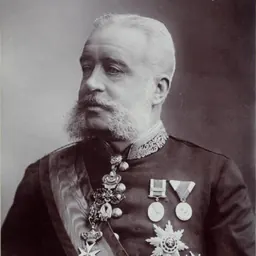

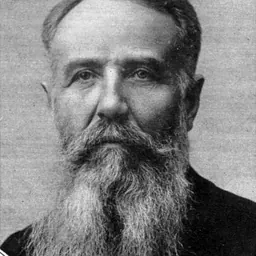

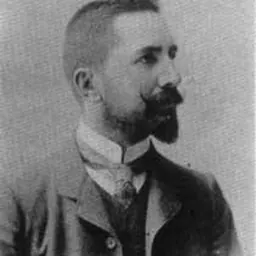
Related people
Same field, nearest in time
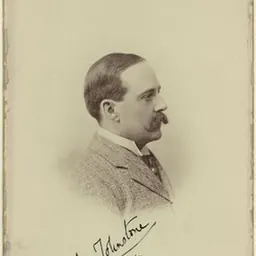
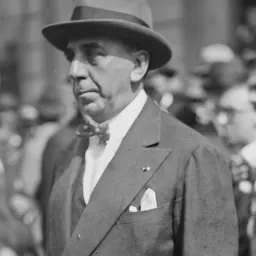
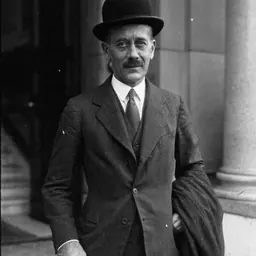
Contemporaries
People whose lives overlapped Vladimir Lamsdorf's
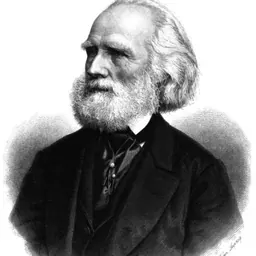
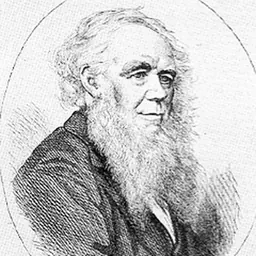


Frequently asked questions
Who was Vladimir Lamsdorf?
Russian politician of Baltic German origin (1845-1907)
When was Vladimir Lamsdorf born?
Vladimir Lamsdorf was born on 6 January 1845 in Saint Petersburg.
When did Vladimir Lamsdorf die?
Vladimir Lamsdorf died on 19 March 1907 in Sanremo.
What was Vladimir Lamsdorf's occupation?
Vladimir Lamsdorf was a diplomat, politician and foreign Minister of Russia.
What nationality was Vladimir Lamsdorf?
Vladimir Lamsdorf was Russian.
Sources & further reading
· Wikipedia: Vladimir Lamsdorf
Cite this page
APA: Biography.guide. (2026). Vladimir Lamsdorf. https://biography.guide/vladimir-lamsdorf/
MLA: "Vladimir Lamsdorf." Biography.guide, https://biography.guide/vladimir-lamsdorf/.
Chicago: "Vladimir Lamsdorf." Biography.guide. https://biography.guide/vladimir-lamsdorf/.
Data last updated: 2026-09-20 · Spot an error? Report a correction.
Page generated 2026-09-27 05:30 UTC