
Alexander Gorchakov
Russian diplomat, minister, chancellor
About Alexander Gorchakov
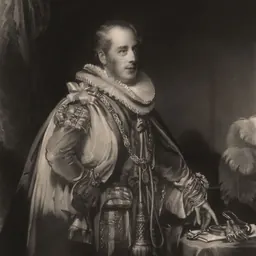
Lived 1798 – 1883 (aged 84). Alexander Gorchakov was a Russian diplomat, politician, chancellor and foreign minister.
Prince Alexander Mikhailovich Gorchakov (Russian: Алекса́ндр Миха́йлович Горчако́в; 15 July 1798 – 11 March 1883 ) was a Russian diplomat and statesman from the Gorchakov princely family. He has an enduring reputation as one of the most influential and respected diplomats of the mid-19th century. Scholars agree that the termination of the demilitarisation of the Black Sea was Gorchakov's greatest accomplishment but add that he stayed too long as foreign minister.
Early life and career Gorchakov was born at Haapsalu, Governorate of Estonia, and was educated at the Tsarskoye Selo Lyceum, where he had the poet Alexander Pushkin as a school-fellow. He became a good classical scholar, and learned to speak and write in French with facility and elegance. Pushkin in one of his poems described young Gorchakov as Fortune's favoured son, and predicted his success.
On leaving the lyceum Gorchakov entered the foreign office under Count Nesselrode. His first diplomatic work of importance was the negotiation of a marriage between the Grand Duchess Olga and the crown prince Charles of Württemberg. He remained at Stuttgart for some years as Russian minister and confidential adviser of the crown princess. He foretold the outbreak of the revolutionary spirit in Germany and Austria, and was credited with counselling the abdication of Ferdinand I of Austria in favour of Francis Joseph. When the German Confederation was re-established in 1850 in place of the Frankfurt Parliament, Gorchakov was appointed Russian minister to the diet. It was here that he first met Count Bismarck, with whom he formed a friendship which was afterwards renewed at St Petersburg.
Minister of foreign affairs Not long after his accession to office, Gorchakov issued a circular to the foreign powers in which he announced that Russia proposed, for internal reasons, to keep herself as free as possible from complications abroad, and he added the now-historic phrase, La Russie ne boude pas; elle se recueille ('Russia is not sulking, she is composing herself'). During the January Uprising in Congress Poland, Gorchakov rebuffed the suggestions of Britain, Austria and France for assuaging the severities employed in quelling it, and he was especially acrid in his replies to Earl Russell's despatches. The Prussian support was assured by the Alvensleben Convention. In July 1863 Gorchakov was appointed Chancellor of the Russian Empire, expressly in reward for his bold diplomatic attitude towards an indignant Europe. The appointment was hailed with enthusiasm in Russia.
A rapprochement now began between the courts of Russia and Prussia, and in 1863, Gorchakov smoothed the way for the occupation of Schleswig-Holstein by German troops. That seemed equally favourable to Austria and Prussia, but it was the latter power that gained all the substantial advantages. When conflict arose between Austria and Prussia in 1866, Russia remained neutral and permitted Prussia to reap the benefits arising from the conflict and establish its supremacy in Germany.
As a diplomat, he displayed many brilliant qualities: adroitness in negotiation, incisiveness in argument and elegance in style. His statesmanship, though marred occasionally by personal vanity and love of popular applause, was far-seeing and prudent. In the latter part of his career, his main object was to raise the prestige of Russia by undoing the results of the Crimean War, and it may fairly be said that he greatly succeeded. Knight of the House Order of Fidelity, 1857; in Diamonds, 1863 Grand Cross of the Order of the Dannebrog, 8 July 1852 Knight of the Order of the Elephant, 16 September 1857 Grand Cross of the Ludwig Order, 2 July 1857 Mexican Empire: Grand Cross of the Imperial Order of Guadalupe, 1864 Knight of the Order of the Gold Lion of the House of Nassau, August 1864 Kingdom of Prussia: Knight of the Order of the Black Eagle, 24 June 1856; in Diamonds, 1859 Kingdom of Sardinia: Knight of the Supreme Order of the Most Holy Annunciation, 30 October 1859 Knight of the Order of the Golden Fleece, 17 February 1857 Sweden-Norway: Knight of the Royal Order of the Seraphim, 16 May 1860 Grand Duchy of Tuscany: Commander of the Order of Saint Joseph Knight of the Order of Saint Januarius, 1845 Grand Cross of the Order of the Württemberg Crown, 1846
Don’t just read it —
keep it.
Full-length biographies made to live with: read them, listen on the way to work, watch them tonight.
- E-book
- Audio
- Video
Instant download · yours to keep · every purchase keeps this site free
Important facts
more
Aleksandr Mikhailovich Gorchakov, Gorchakoff, Gorchakof, A. M. Gorchakoff, A. M. Gorchakof, Alexander Gorchakoff, Alexander Gorchakof, Prince Gortchakoff, Gortchakoff, Alexander Gortchakoff, A. M. Gortchakoff, Alexander Michailowitsch GotschakowFamily & relationships
People in Alexander Gorchakov's life
Named in this biography and alive at the same time

Related people
Same field, nearest in time



Contemporaries
People whose lives overlapped Alexander Gorchakov's





Frequently asked questions
Who was Alexander Gorchakov?
Russian diplomat, minister, chancellor (1798-1883)
When was Alexander Gorchakov born?
Alexander Gorchakov was born on 4 June 1798 in Haapsalu.
When did Alexander Gorchakov die?
Alexander Gorchakov died on 27 February 1883 in Baden-Baden.
What was Alexander Gorchakov's occupation?
Alexander Gorchakov was a diplomat, politician, chancellor and foreign minister.
What nationality was Alexander Gorchakov?
Alexander Gorchakov was Russian.
Sources & further reading
· Wikipedia: Alexander Gorchakov
· DBpedia: Alexander Gorchakov
Cite this page
APA: Biography.guide. (2026). Alexander Gorchakov. https://biography.guide/alexander-gorchakov/
MLA: "Alexander Gorchakov." Biography.guide, https://biography.guide/alexander-gorchakov/.
Chicago: "Alexander Gorchakov." Biography.guide. https://biography.guide/alexander-gorchakov/.
Data last updated: 2026-09-20 · Spot an error? Report a correction.
Page generated 2026-09-27 05:19 UTC