
About Vladimir Ghika
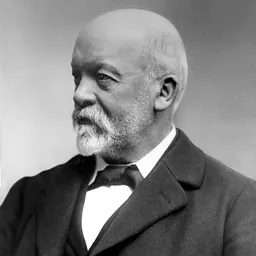
Lived 1873 – 1954 (aged 80). Vladimir Ghika was a Romanian diplomat, catholic priest and writer.
Vladimir Ghika (or Ghica) (25 December 1873 – 16 May 1954) was a Romanian diplomat and essayist who, after his conversion from Romanian Orthodoxy became a priest of the Catholic Church. He was a member of the princely Ghica family, which ruled Moldavia and Wallachia at various times from the 17th to the 19th century. He died in prison in May 1954 after his arrest by the Communist regime of Romania.
Biography Early life Vladimir Ghika was born on Christmas Day of 1873 in Constantinople (now Istanbul, Turkey). His father was Ioan Grigore Ghica, diplomat, minister plenipotentiary in Turkey; his mother Alexandrina was born Moret de Blaremberg (van Blarembergue) in a Flemish-Russian family; he had four brothers and a sister: Gregory, Alexander, George and Ella (who both died at an early age), and Dimitrie I. Ghika (future ambassador and minister of foreign affairs). He was the grandson of the last Prince sovereign of Moldavia, Prince Gregory V Ghika, who ruled from 1849 to 1856.
He was raised with the Eastern Orthodox faith. In 1878, in order to give a good education to the children, the family moved to Toulouse in France. There, they frequented the Protestant community, because the Orthodox church was not represented in the area. Ghika received his Degree in Law in 1895, after which he attended the Paris Faculty of Political Science. At the same time, he frequented courses of Medicine, Botany, Art, Literature, Philosophy, and History. He returned to Romania due to an attack of angina pectoris and continued his studies in Romania.
Ghika was an alumnus of the College of St. Thomas, the future Pontifical University of St. Thomas Aquinas Angelicum, in Rome. In 1898, he enrolled in the Faculty of Philosophy and Theology. Soon after, he converted to the Catholic faith in 1902. At the Angelicum, Ghika completed a licentiate in Philosophy and a Doctorate in Theology in 1905.
Pilgrimage
Ghika wanted to become a priest or monk, but Pius X advised him to give up the idea, at least for a while, and to dedicate himself to secular apostolate instead. He became one of the pioneers of the lay apostolate.
After returning to Romania, he dedicated himself to works of charity and opened the first free clinic in Bucharest called Mariae Bethlehem. He also set the foundation for a great hospital and sanatorium named after Vincent de Paul, founded the first free hospital in Romania and the first ambulance, thereby becoming founder of the first Catholic charity work in Romania. He was dedicated to patient care while participating in health services in the Balkan War in 1913, without the fear of cholera in Zimnicea.
During World War I, he was also in charge of diplomatic missions among the victims of the Avezzano earthquake who were suffering from tuberculosis in the Hospice of Rome.
On 7 October 1923, Ghika was ordained a priest in Paris by Cardinal Dubois, Archbishop of the city. He served as a priest in France until 1939. Shortly after Ghika was ordained, the Holy See authorized him to celebrate the Byzantine Rite. Prince Ghika thereby became the first bi-ritual Romanian priest.
On 13 May 1931, the Pope appointed Ghika to be an Apostolic Protonotary, but he was reluctant to accept it. He worked worldwide, including Bucharest, Rome, Paris, Congo, Tokyo, Sydney, and Buenos Aires, among others. Later, in jest, Pope Pius XI called him an "apostolic vagabond".
Imprisonment and death On 3 August 1939 he returned to Romania, where he was caught in the Second World War. He refused to leave Romania at that time so that he could be with the poor and sick, and he did so even when the Allies began bombing Bucharest, where he lived. In 1947, when the Communists came to power, he refused to leave on the royal train, for the same reasons.
He was arrested on 18 November 1952, because of his support for the Catholic Church in communion with Rome and his opposition to the schismatic church that the regime was creating. He was charged for "high treason" and threatened, beaten, tortured and processed. Eventually, he was imprisoned at Jilava Prison on 16 May, and he died in 1954 due to the treatment to which he was subjected.
Beatification
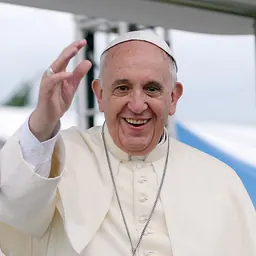
Ghika was proposed for beatification by the Archdiocese of Bucharest, based on a dossier with his biography submitted to the Congregation for the Causes of Saints in the Vatican. On 27 March 2013, Pope Francis declared Ghika to be a martyr. He was beatified on 31 August 2013.
Education 1893 – School of Toulouse (France) 1893–1895 – Faculty of Political Sciences in Paris; attending courses in Medicine, Botany, Art, Literature, Philosophy, History, and Law 1895-1898 – Continued his studies in private 1898–1905 – Faculty of Philosophy and Theology; obtained a Degree in Philosophy and a Doctorate in Theology 1904–1906 – Continues to study History
Writings Although he had culture and capacity, he avoided producing personal writings. He wrote only because he was forced by circumstances and needs. He did research work in the Vatican archives, publishing some of the results in the Revue Catolique. He also wrote magazine articles in Literary Talk, La Revue Hebdomadaire, Les Études, Le Correspondant, La Revue des Jeunes, and La Documentation Catholique. His short personal meditations were subsequently published in various editions as Pensées pour la suite des jours.
Writings published in French Méditation de l'Heure Sainte, first edition, 1912 Pensées pour la suite des jours, first edition, 1923 Les intermèdes de Talloires, 1924 La Messe Byzantine dite de Saint Jean-Chrystome. Nouvelle traduction française adaptée à l'usage courant des fidèles du rite Latin avec commentaire et introduction par le prince Vladimir I. Ghika, 1924 La visite des pauvres: manuel de la dame de Charité : conférences, first edition, 1923 Roseau d'Or (Chroniques – Volume VIII), a collection of thoughts (such Pensées pour la suite des jours), 1928 La Sainte Vierge et le Saint Sacrement, 1929 Vigia (book IV), a collection of thoughts (such Pensées pour la suite des jours), 1930 La Femme adultère. Un prologue, un acte, un épilogue. 2e édition, 1931 La souffrance, first edition, 1932 La Liturgie du prochain, first edition, 1932 La Présence de Dieu, first edition, 1932 Derniers témoignages [seem] Mgr Vladimir Ghika. Presentes par Yvonne Estienne, 1970; posthumous publication that collects various other unpublished thoughts
Writings published in Romanian Our Lady and the Holy Sacrament. Speech delivered by Monsignor Ghika opening in November 1928 Eucharistic Congress in Sydney, Australia Adulteress. Gospel Mystery comprising a prologue, an act, an epilogue. Pieasă theater Thoughts For the Days Ahead Spiritual Conversation Interludes in Talloires Last witness, Vladimir Ghika, pref. Yvonne Estienne Posthumous fragments. Institute of previously unpublished archive "Vladimir Ghika" (translation of documents unpublished)
Legacy In 1970, the Fraternity of the Transfiguration was founded; the Fraternity's spirituality stems from Vladimir Ghika.
Don’t just read it —
keep it.
Full-length biographies made to live with: read them, listen on the way to work, watch them tonight.
- E-book
- Audio
- Video
Instant download · yours to keep · every purchase keeps this site free
Important facts
People in Vladimir Ghika's life
Named in this biography and alive at the same time

Related people
Same field, nearest in time

Contemporaries
People whose lives overlapped Vladimir Ghika's


Frequently asked questions
Who was Vladimir Ghika?
Romanian diplomat and writer
When was Vladimir Ghika born?
Vladimir Ghika was born on 25 December 1873 in Constantinople.
When did Vladimir Ghika die?
Vladimir Ghika died on 16 May 1954 in Jilava prison.
What was Vladimir Ghika's occupation?
Vladimir Ghika was a diplomat, catholic priest and writer.
What nationality was Vladimir Ghika?
Vladimir Ghika was Romanian.
Sources & further reading
Cite this page
APA: Biography.guide. (2026). Vladimir Ghika. https://biography.guide/vladimir-ghika/
MLA: "Vladimir Ghika." Biography.guide, https://biography.guide/vladimir-ghika/.
Chicago: "Vladimir Ghika." Biography.guide. https://biography.guide/vladimir-ghika/.
Data last updated: 2026-09-20 · Spot an error? Report a correction.
Page generated 2026-09-27 05:22 UTC