
About Vladimir Colin
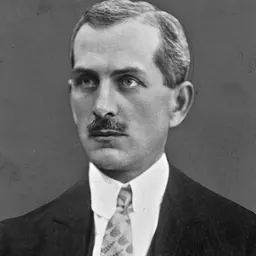
Lived 1921 – 1991 (aged 70). Vladimir Colin was a Romanian writer, children's writer, science fiction writer, poet and translator.
Vladimir Colin (; pen name of Jean Colin; May 1, 1921 – December 6, 1991) was a Romanian short story writer and novelist. One of the most important fantasy and science fiction authors in Romanian literature, whose main works are known on several continents, he was also a noted poet, essayist, translator, journalist and comic book author. After he and his spouse at the time Nina Cassian rallied with the left-wing literary circle Orizont during the late 1940s, Colin started his career as a communist and socialist realist writer. During the early years of the Romanian Communist regime, he was assigned offices in the censorship and propaganda apparatus. His 1951 novel Soarele răsare în Deltă ("The Sun Rises in the Delta") was an early representative of local socialist realist school, but earned Colin much criticism from the cultural establishment of the day, for what it perceived as ideological mistakes.
Progressively after the mid-1950s, Colin concentrated on his literary career and abandoned communist ideology. He authored celebrated works such as the mythopoeia ("Legends from Vamland") and fairy tale collections, making his debut in local science fiction literature with Colecția de Povestiri Științifico-Fantastice journal. His work in science fiction, culminating in the 1978 novel Babel, earned Colin three Eurocon prizes. He was given posthumous recognition for his contribution to the genre, and an award named in his honor is regularly granted to established Romanian science fiction authors. From 1970 until his death, he was one of the editors for the Writers' Union literary magazine, Viața Românească.
Biography
Early life Colin was born on May 1, 1921, in Bucharest, into a family of emancipated Romanian Jews. He was the son of Lazăr Colin, a civil servant, and his wife Ella. His mother was the sister of Ana Pauker, a prominent activist of the Romanian Communist Party and later one of Communist Romania's political leaders. Both Colin and Cassian had by 1941 joined the then-illegal Communist Party, as activists of its Communist Youth (UTC) wing—as Cassian recalled in 2008, they were motivated by a will to "change the world for the better", abhorring both antisemitism and fascism.
Colin married Nina Cassian in 1943. The two divorced five years later, and Cassian remarried Al. I. Ștefănescu. Later, Colin was again married, to graphic artist .
Communist writer After the August 1944 Coup against the pro-Axis Antonescu and the start of Soviet occupation, Colin became a noted supporter of left-wing causes. That year, at the age of twenty-three, he also graduated from Bucharest's Cantemir Vodă High School and had his first poem published in Victoria journal. The piece was titled Manifest ("Manifesto") and signed Ștefan Colin.
As contributors to Orizont, Colin, Cassian and Solomon supported the view that writers were supposed to immerse themselves into social struggles, an attitude which represented one of the main literary tendencies in the post-war young literature of Romania. In parallel, he was pursuing a career as a poet: his debut volume 27 de poeme ("27 Poems") saw print in 1947. The Writers' Union convened a special session to review Colin's case. On that occasion, several of his writer colleagues expressed criticism on behalf of the Union, among them Ben Corlaciu, Petru Dumitriu, Alexandru Jar, and , most of whom expressed the view that Colin was indebted to "formalism".
1953–1980 After he made his fantasy and children's literature debut with Basme ("Fairy Tales"), which earned him the State Prize for Prose for 1953,
Vladimir Colin made his science fiction debut contributing short stories for Colecția de Povestiri Științifico-Fantastice, which functioned as a literary supplement for the magazine Știință și Tehnică and was edited by . He became especially noted for his works in the science fantasy genre, beginning with the 1964 novel A zecea lume ("The Tenth World"). He was also acknowledged as one of the few Romanian comic book writers, and for thus contributing to an art and literary genre which was just building a tradition in Romania under communism.
Final years His work in science fantasy earned Colin three Eurocon awards during his lifetime (a recognition no other Romanian writer has since equaled). In addition to one of the 19 Awards at Eurocon 1976, he won the Best Novel Award, for Babel, and the Lifelong Literary Achievement Award (1989). Babel was also the recipient of a 1978 award granted by the Bucharest section of the Writers' Union His text is noted for having largely preserved Verne's original spellings of Romanian-language words, whereas later translations attempted to identify their supposed source variants. One of these literary pieces constituted praise for communization under Romania's first five-year plan: titled Cîntec pentru primul plan economic ("Song for the First Economic Plan"), it was one in a series of propaganda pieces on the same subject (it also included works by Maria Banuș, Dan Deșliu, and ). However, Vasilescu also introduced criticism of Colin's style, claiming that it failed in "deepening [its] central idea, the issue of vigilance", and that the investigations made by communist protagonists seemed "casual".
Soarele răsare în Deltă, also centered on the Danube Delta, and having the model-fisherman Artiom for a protagonist, prolonged the debate about the merits of Colin's literary contributions. Contimporanul 's Sami Damian opined that the writer "fails to portray in significant traits the complexity of new, advanced, phenomena which emerge in the Delta region", and that he lacked "profound knowledge of the new reality, [which] he has distorted, falsified." This critique of Colin formed part of a larger piece about the low "ideological level" of various novels, to which Damian opposed examples of works by Petru Dumitriu and Ion Călugăru. Writing for Viața Românească, critic Eugen Campus stood against Damian's pronouncements, notably praising Soarele răsare în Deltă for its treatment of the "exploiter" as a person of "gluttonous idleness", "cruelty" and "lack of humanity". He also noted that, "in general, [Colin] avoided clichés", but expressed criticism for the novel having little narrative focus (comparing it to a "meandering river") and for a "conceptual deficiency" which, he argued, tended to favor "that which is old." This verdict was backed by the local literary review Iașul Nou, which, although viewing the novel as an authentic work ("Vladimir Colin, we presume, is an actual son of the Delta"), added similar topics of criticism.
By the time when the special Writers' Union meeting was convened to discuss Soarele răsare în Deltă, Colin's case was being analyzed by the Communist Party organ, Scînteia. Official critic Sergiu Fărcășan, himself later known as a since fiction author, contributed the Scînteia column of May 1952 in which he reacted against the supposed leniency on the part of other commentators. The article notably likened the appraisals found in Campus' review of the novel with "book advertisements that used to be made by bourgeois publishing houses". It concluded that, as a writer, Vladimir Colin had "broken away from the masses." The Writers' Union debate itself, involving primarily the Communist Party unit, was summarized in a report issued by the Party's Agitprop Directorate as follows: "Colin was criticized by Party members for the serious mistakes of his novel Soarele răsare în Deltă." In a 1953 article, Campus revisited Colin's novel, listing it among the "works which falsify reality, which are mistaken from an ideological point of view" (also included in this category were books by Eusebiu Camilar and Ben Corlaciu).
Debut in fantasy Colin's move to the modern fantasy genre, which he helped pioneer in Romania, came at a time when science fiction literature was used by the regime to further popularize its ideological messages. At the time, Vladimir Colin made controversial statements such as claiming that the fantasy genre was supposed to be employed as "a weapon in the hands of the people". Published soon after, Legendele țării lui Vam is written as a collection of myths relating to a vanished civilization, which is supposed to have lived in the Black Sea area in the Neolithic period. Introduced as the translation of archeological finds in Northern Dobruja, Trapped and chained by Ormag early in the narrative, Vam and his mistress Una inspire their descendants to meet the gods' cruelty with a passive form of resistance, and obtain their own immortality in the hearts of people.
Debut in science fiction Colin's science fiction prose has been noted for its lyrical approach to the subject and the classical line of its narrative, displaying influences from Karel Čapek, H. P. Lovecraft and A. Merritt. Likewise, Iovănel believes that, after the 1960s, Romanian science fiction literature, freed from the more stringent of ideological commands, was foremost represented by "survivors" whose early careers were marked by "sufficient compromises" with the regime, but whose later contributions to the genre were often outstanding. This criterion, he argued, applied to Colin, Rogoz, Fărcășan, Camil Baciu and, to a certain degree, Ovid Crohmălniceanu (who, late in his career, also wrote various science fiction stories). Also according to Nicot, Colin, like the Soviet brothers Arkady and Boris Strugatsky and the Polish Stanisław Lem, was able to evade "takeover by the single party", which had come to "largely suppress authors who were nevertheless not devoid of talent." Inspired in part by the style of Gérard Klein and his Overlords of War, In the decades after it was published at home, Babel was translated into French, English, German, Russian and Bulgarian. Among the Romanian and international recipients of the Vladimir Colin International Award are Vladimir Tismăneanu, Andrei Codrescu, Nicolae Manolescu, and Șerban Foarță. In 2000, Ion Hobana and Gérard Klein instituted the Vladimir Colin Awards for excellence in science fiction literature. Due to various constraints, the awards were not granted for a period of five years after their creation, and they cannot be granted to past recipients. Several authors took inspiration from Colin's work. In his 1976 novel Verde Aixa, Aramă expanded on Colin's Broasca themes. Mihai Iovănel nevertheless argues that, "outside of fandom", Colin's work remains "mostly forgotten" in Romania. Legendele țării lui Vam has also been reissued as a comic book by the French magazine Métal Hurlant, being illustrated by the Croatian artist Igor Kordey and circulated in France and Spain.
Don’t just read it —
keep it.
Full-length biographies made to live with: read them, listen on the way to work, watch them tonight.
- E-book
- Audio
- Video
Instant download · yours to keep · every purchase keeps this site free
Important facts
People in Vladimir Colin's life
Named in this biography and alive at the same time


Related people
Same field, nearest in time




Contemporaries
People whose lives overlapped Vladimir Colin's

Frequently asked questions
Who was Vladimir Colin?
Romanian writer (1921–1991)
When was Vladimir Colin born?
Vladimir Colin was born on 1 May 1921 in Bucharest.
When did Vladimir Colin die?
Vladimir Colin died on 6 December 1991 in Bucharest.
What was Vladimir Colin's occupation?
Vladimir Colin was a writer, children's writer, science fiction writer, poet and translator.
What nationality was Vladimir Colin?
Vladimir Colin was Romanian.
Sources & further reading
Cite this page
APA: Biography.guide. (2026). Vladimir Colin. https://biography.guide/vladimir-colin/
MLA: "Vladimir Colin." Biography.guide, https://biography.guide/vladimir-colin/.
Chicago: "Vladimir Colin." Biography.guide. https://biography.guide/vladimir-colin/.
Data last updated: 2026-09-20 · Spot an error? Report a correction.
Page generated 2026-09-27 05:29 UTC