
Vladimir (Bogoyavlensky)
Metropolitan of Kyiv and Gallich (1915–1918), Metropolitan of Moscow
About Vladimir (Bogoyavlensky)
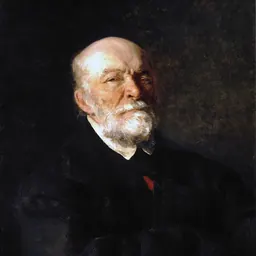
Lived 1848 – 1918 (aged 70). Vladimir (Bogoyavlensky) was a Russian metropolitan and religious leader.
Icon of St. Vladimir of Kiev and Gallich at the Alexander Nevsky Lavra in Saint Petersburg
Vladimir , baptismal name: Vasily Nikiforovich Bogoyavlensky (; 1 January 1848 – ), was a bishop of the Russian Orthodox Church. He was appointed to the position of Metropolitan of Moscow and Kolomna between 1898 and 1912, Metropolitan of St. Petersburg and Ladoga between 1912 and 1915, and the Metropolitan of Kiev and Galicia between 1915 and 1918. Murdered by Bolshevik soldiers in 1918, Metropolitan Vladimir was glorified as a Hieromartyr by the Russian Orthodox Church in 1992.
He was Chairman (the leading member) of the Most Holy Synod (1912–1917).
Priesthood Born to a family of a clergyman in Tambov Governorate, Vasili Bogoyavlensky graduated from a seminary in Tambov and Kiev Theological Academy. He then returned to Tambov to teach at his alma mater. In 1882, Vasili was ordained a priest in a town of Kozlov in Tambov Guberniya. On the death of his wife and child in 1886, he was tonsured (took monastic vows) being given the religious name of Vladimir, and was appointed igumen (abbot) of the Trinity Monastery in that same town.
Bishop of Samara and Stavropol In 1888, Igumen Vladimir was sent to St Petersburg as a vicar to assist the Metropolitan and was thereafter consecrated as a bishop. He was soon assigned to preach in Samara. When the country was afflicted by the epidemic of cholera and crop failure, he called upon the clergy and laity to help the needy and often conducted moliebens himself, beseeching the Lord to deliver people from calamities.
Metropolitan of Kiev and Galich In December 1915, Vladimir was sent away to Kiev. He was Metropolitan of Kiev and Gallich from 1915 to 1918. A few months after the October Revolution, Metropolitan Vladimir was arrested by five Red Army soldiers on when the army of Muravyov swept through Ukraine and in front of his monks he was immediately executed and his body mutilated.
Metropolitan Vladimir was glorified (canonized) as a saint by the Russian Orthodox Church in 1992. His feast day is celebrated on January 25, the date of his martyrdom. The Russian Orthodox Church follows the traditional Julian Calendar in determining feast day; currently, January 25 falls on February 7 of the modern Gregorian Calendar. He was the first bishop to suffer as a New Martyr under the Soviets.
Don’t just read it —
keep it.
Full-length biographies made to live with: read them, listen on the way to work, watch them tonight.
- E-book
- Audio
- Video
Instant download · yours to keep · every purchase keeps this site free
Important facts
Related people
Same field, nearest in time



Contemporaries
People whose lives overlapped Vladimir (Bogoyavlensky)'s




Frequently asked questions
Who was Vladimir (Bogoyavlensky)?
Metropolitan of Kyiv and Gallich (1915–1918), Metropolitan of Moscow (1898–1912)
When was Vladimir (Bogoyavlensky) born?
Vladimir (Bogoyavlensky) was born on 1 January 1848 in Morshansky Uyezd.
When did Vladimir (Bogoyavlensky) die?
Vladimir (Bogoyavlensky) died on 25 January 1918 in Kyiv.
What was Vladimir (Bogoyavlensky)'s occupation?
Vladimir (Bogoyavlensky) was a metropolitan and religious leader.
What nationality was Vladimir (Bogoyavlensky)?
Vladimir (Bogoyavlensky) was Russian.
Sources & further reading
· Wikipedia: Vladimir (Bogoyavlensky)
· DBpedia: Vladimir Bogoyavlensky
Cite this page
APA: Biography.guide. (2026). Vladimir (Bogoyavlensky). https://biography.guide/vladimir-bogoyavlensky/
MLA: "Vladimir (Bogoyavlensky)." Biography.guide, https://biography.guide/vladimir-bogoyavlensky/.
Chicago: "Vladimir (Bogoyavlensky)." Biography.guide. https://biography.guide/vladimir-bogoyavlensky/.
Data last updated: 2026-09-20 · Spot an error? Report a correction.
Page generated 2026-09-27 05:24 UTC