
About Vittorio Scialoja
Lived 1856 – 1933 (aged 77). Vittorio Scialoja was an Italian jurist, politician, university teacher and senate of the Kingdom of Italy.
Vittorio Giulio Ippolito Camillo Scialoja (; 24 April 1856 – 19 November 1933) was an influential Italian Professor of Jurisprudence. His early focus was on Roman law, but he later broadened the scope of his research and teaching to embrace other branches of civil law. Membership of the , on which he served between 1893 and 1913, led to his nomination as a senator on 4 March 1904. That in turn became the launch pad for an increasingly engaged parallel career in politics and public life. He served briefly as Minister of Justice in 1909/10, Minister without portfolio between 1916 and 1917, and as Minister of Foreign Affairs during 1919/20.
Biography Provenance and early years Vittorio Scialoja was born at Turin where his father, the exiled Naples economist-politician (1817–1877) had settled with his family and built a career at the university following a conservative revival in the south during 1849. After unification the family moved to Florence, the new capital for a new kingdom, where Vittorio spent the second half of his childhood, attending the prestigious secondary school. Vittorio's mother, born Giulia Achard (1823-1878), was the daughter of a successful French businessman.
He attended the Sapienza University of Rome, receiving a first degree in 1877 in return for a project "on the Precarium in Roman law". The dissertation was published shortly afterwards. It was common at this time for Italian students of Jurisprudence, especially where the focus was on Roman Law, to spend a period of study in a German university, but Vittorio Scialoja, confident in his own intellectual rigour and inherent autodidacticism, stayed in Italy. He contemplated building a career in the judiciary. Growing up as the son of Antonio Scialoja, Vittorio was on the receiving end of sound advice from a number of the leading politicians of the day, who were regular guests in the family home. It was at the urging of one of these Pasquale Mancini, that he set these thoughts aside, in favour of a career in the universities sector. He remained at Camerino for only one year.
Siena At the end of 1880 he accepted an invitation to move across to Siena, where he was installed as Extraordinary Professor of Roman Law on 18 January 1881. He was still very young, and the appointment was controversial in some quarters. The full professorship nevertheless followed on 17 November 1883. In May 1881 the classroom tensions had grown into a revolt among Scialoja's students. That was followed by the suspension of his lectures by the university's Academic Council. (The lectures were quickly reinstated through a direct intervention from Rome by Guido Baccelli, the Education Minister.) Notwithstanding the student revolt during 1881, Scialoja's four years at Siena can be seen as a period of significant achievement. Promoted to a full professorship in 1883/84, he taught several students who went on to achieve notability on their own account, including the jurist and Roman Law specialist and the lawyer-pianist Dante Caporali. He established the law faculty's "Circle of jurists" which met regularly for seminars and animated discussions. He teamed up with the criminologist Enrico Ferri to promote the launch of the associated journal, "Studi senesi". Also dating from this period is an open letter which Scialoja addressed to Senator-Professor for his "Archivio Giuridico" (study series on Roman Law published between 1863 and 1903) "on the Methodology for Teaching Roman Law in Italian universities: "We do not need to be under any delusions. Pure Roman Law is dead, and while modern law may be descended from it, it is not the same .... [but] far from diminishing the importance [of Roman Law as a topic for study], perhaps this increases it".
Rome After three years at Siena Scialoja received the call from Rome. He was installed as "Ordinary [i.e. full] Professor of Roman Law at the University of Rome" with effect from 11 May 1884, retaining his professorship at Rome till his retirement from teaching in 1931.
In terms of building up the university law school Scialoja displayed an exceptional ability, not merely through his rare teaching talents, but also in his selection and training of young scholars. The extent to which his students subsequently achieved notability as leading legal academics meant that Scialoja's impact on the application and development of The Law in Italy was enduring and profound. Those whom he taught and/or powerfully influenced included Roman Law professors such as (1864-1932), Gino Segrè (1864–1942), Salvatore Riccobono (1864–1958), Carlo Longo (1869–1938), (1875-1957) and Vincenzo Arangio-Ruiz (1884-1964).
Civil law reform? In 1924 Scialoja accepted an invitation to serve as president over the first of four sub-commissions appointed by the royal commission mandated to draw up a revised legal code ( or "civil code"), in order to build on and supplement that of 1865. Although Scialoja's sub-committee was instructed to work on "civil law", it would also trespass constructively into the field of civil court procedure. In practical terms, however, the entire exercise had little short-term impact, although a draft for a new civil code was published in 1930. The commission work might, under different political circumstances, have been used as the opportunity for a deep and comprehensive revision of the existing situation, but that opportunity was not grasped. It is hard to think that it was for lack of any lack of experience, energy, and intellectual capacity on the part of the sub-commission president and members, that the impact on Italian civil law was at best fragmentary and formalised. Commentators conclude that, despite frequent attempts by Scialoja to solicit input from the government, even after the Matteotti assassination which horrified the Italian legal and academic establishments, the leader was uninterested and government members were reluctant to engage in discussion of substantive reforms to the code. Scialoja accordingly tried to resist any wide-ranging redefinition of "private law", which at that time could only have been viewed as a fundamental distortion of an established structure, with a liberal impetus which would have served only to encourage and hasten the already pervasive infiltration of totalitarian, corporatist and interventionist principles that was a feature of Mussolini's Italy. Such considerations lay behind the "incorrigible scepticism" with which Scialoja was reproached by the Fascist Foreign Minister Dino Grandi (with whom he was evidently on at least moderately cordial terms ) when, during the course of this process, the two men found themselves on opposite sides of the argument over the still unresolved question of whether or not the justice system should be clearly separated from politics. Scialoja therefore came to see it as his principal objective as president of the sub-committee on Civil Law reform, to avoid upending the Civil Code of 1865, in ways that would facilitate the intensification of Fascist control over the lives of individuals. In this, he largely succeeded.
Senator By 1904 Vittorio Scialoja had acquired a relatively high public profile as a Rome-based law professor. On 4 March 1904 he was appointed to the senate by the new king. The appointment was validated (confirmed) by senators on 21 March 1904. Before 1947 those appointed to the senate retained their senate seats for life, and Scialoja's role in national politics became an important element in his contribution to public life between 1904 and his death in 1933. He also served, for a time, as a Rome city councillor. He then served between 1921 and 1932 as Italy's principal delegate to the League of Nations (to the "covenant" of which he had himself contributed) in Geneva, winning plaudits from colleagues and commentators for the quickness of intellect, legal rigour and breadth of knowledge that he brought to the role. During this period, on 4 October 1926, he was appointed as a "Minister of State". The Boselli government lasted for nearly eighteenth months, during which Boselli robustly defended Marshall Cadorna and the other army commanders from parliamentary scrutiny. The government was unable to avoid its share of responsibility for the military catastrophe at Caporetto, however, and resigned with effect from 29 October 1917. Scialoja's government duties were taken on by under the next administration.
Scialoja's third ministerial term came in 1919. When Nitti created his first government he selected Tommaso Tittoni as his Foreign Minister, but Tittoni's health began to break down, probably on account of the strain imposed by the Paris Peace Conference, and Nitti found himself serving as his own Foreign Minister for several months. Sources differ over precise timelines, but in around November 1919 Vittorio Scialoja, who was already a key member of the little Italian delegation at Versailles, took over the Foreign Affairs portfolio, serving till 15 June 1920, following the collapse of the short-lived and terminally divided Nitti government.
Memberships Vittorio Scialoja acquired a number of honorary professorships within Italy and abroad, and was also a member of various learned societies and associations. The most significant of these, probably, was the Rome-based Accademia dei Lincei of which he became a corresponding member on 15 July 1901 and a full member on 19 April 1918. Between 1923 and 1926 and again for a year between July 1932 and 1933 he served as vice-president of the Accademia, while holding the presidency between 1926 and 1932 and again, during the final months of his life, between July and November 1933.
Don’t just read it —
keep it.
Full-length biographies made to live with: read them, listen on the way to work, watch them tonight.
- E-book
- Audio
- Video
Instant download · yours to keep · every purchase keeps this site free
Important facts
People in Vittorio Scialoja's life
Named in this biography and alive at the same time
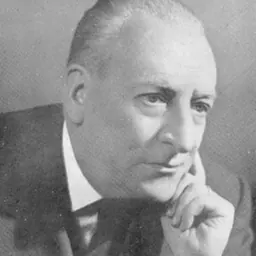
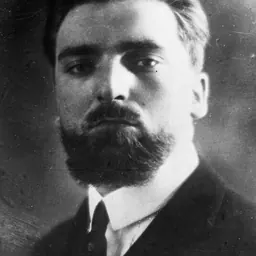
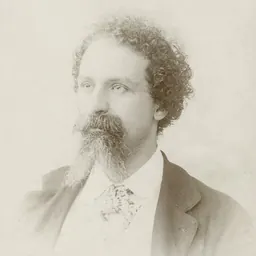
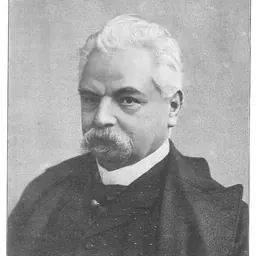

Related people
Same field, nearest in time


Contemporaries
People whose lives overlapped Vittorio Scialoja's


Frequently asked questions
Who was Vittorio Scialoja?
Italian jurist and politician (1856-1933)
When was Vittorio Scialoja born?
Vittorio Scialoja was born on 24 April 1856 in Turin.
When did Vittorio Scialoja die?
Vittorio Scialoja died on 19 November 1933 in Rome.
What was Vittorio Scialoja's occupation?
Vittorio Scialoja was a jurist, politician, university teacher and senate of the Kingdom of Italy.
What nationality was Vittorio Scialoja?
Vittorio Scialoja was Italian.
Sources & further reading
· Wikipedia: Vittorio Scialoja
Cite this page
APA: Biography.guide. (2026). Vittorio Scialoja. https://biography.guide/vittorio-scialoja/
MLA: "Vittorio Scialoja." Biography.guide, https://biography.guide/vittorio-scialoja/.
Chicago: "Vittorio Scialoja." Biography.guide. https://biography.guide/vittorio-scialoja/.
Data last updated: 2026-09-25 · Spot an error? Report a correction.
Page generated 2026-09-27 05:12 UTC