
About Virgilio Giotti
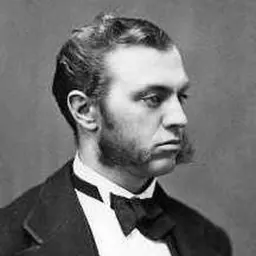
Lived 1885 – 1957 (aged 72). Virgilio Giotti was an Italian poet and writer.
Virgil Schönbeck (15 January 1885 – 21 September 1957), known by his pen name Virgilio Giotti, was an Italian poet writing both in Italian and in the Triestine dialect. Giotti's poetry "which is not so much linked to the vernacular tradition as to contemporary poetry in the Italian language, from Pascoli and the Crepuscolari to hermeticism, uses the dialect to give more intimate vibration to its lyrical motifs, now inspired by a loving or familiar, serene or painful intimacy, now by nature, by the landscape, by the minute life of his city; in forms that from the musicality of the canzonetta approach more and more, and with ever greater grace, an epigrammatic essentiality." and Emilia Ghiotto, a Venetian, from whose surname he derived his pseudonym. In 1907 he moved with his family to Florence to escape the Hapsburg draft and for several years was a commercial traveler, mainly travelling to Switzerland. In 1912 he met the Muscovite noblewoman Nina Schekotoff,
In May 1919 he returned to Trieste, opening a small newsagent selling newspapers and books. He published prose and above all poetry for many magazines, including Solaria, Riviera Ligure, Circoli, L'Italia letteraria, Lirica, and Letteratura. He later had a job at the Lega nazionale, as an inspector of kindergartens in Istria and the Karst. Giotti was a skillful painter, and during this period produced many drawings. Giotti, who in 1941 lost his mother Emilia, worked so that his son Paolo may set out to the Eastern front to act as an interpreter. His son did depart in February 1942, and his brother Franco followed him in December. Both his sons were captured, and died in January 1943. Giotti kept hoping until January 1946, when the news of Paolo's death finally reached him. Thereafter, keeping his sobriety and lucidity, he started writing a diary which was published posthumously as Appunti inutili, published with an introduction by Stuparich in 1959. However, when Giorgio left his sister for the writer Anna Curiel, Maria committed suicide, taking her sick child with her. Facing such tragedies, Giotti always kept a calm and sober attitude. He didn't share Saba's passion for psychoanalysis, and his relationship with Saba deteriorated during the 1930s, up to when they even avoided to meet.
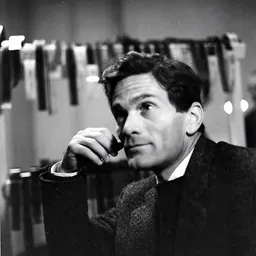
He was also the author of delicate poems in the Italian language, such as Lyrics and Idylls published in the 1931 edition of Solaria, of the aforementioned private diary Appunti inutili, and of some short stories; in 1946 he translated the poet Esenin's A Letter to Mother from Russian into Italian. In 1937 the critic dedicated an article to the poet from Trieste in the Corriere della Sera. Pancrazi, in his Giotti poeta triestino, put him among the great poets of the century, calling his dialectical poetry écriture d'artiste. Other prominent critics, such as Natalino Sapegno, Cesare Segre, Gianfranco Contini wrote positively about him. In the essay Poesia di Giotti published by on Il ponte in November 1948, he was acknowledged as the greatest among the poets writing in dialect. He was consecrated as such by Pier Paolo Pasolini, first in the anthology Poesia dialettale del Novecento (1952), and then in a memorable conference in 1956, later published in Paragone.
Poetry The first verses of Giotti were influenced by Pascoli, Gozzano and the Crepuscolari, both in the style and in the themes; starting from Caprizzi, Canzonete and Stòrie the melodic motifs dominate in his verses, which will bring him closer to Di Giacomo and to some production of Saba.
Giotti's dialect is a dialect which, while remaining natural, is not vernacular but intellectualistic and seems to contrast with the character of its themes linked to the daily life of a quite internalized Trieste. Unlike Svevo and Saba, Giotti's Trieste is not the Habsburg port of Central Europe but rather a simple picture of affections and people: its "Triestinity", alien to the search for the picturesque and folkloric, lies in the use of the dialect and in the setting, background for poetry of high lyrical tension.
In his verses the quatrain of partially rhythmic hendecasyllables with typical metric inversions prevails (Dei purziteri, / ne le vetrine) which make the syntactic- rhythmic figures well balanced (le feste / de Pasqua xe vignude, e vignù xe / l'istà). Typical of Giotti is also the use of enjambement, especially in the second collection, which divides not only the syntactic groups between strophe and strophe or between verse and verse, but also the same word into two parts (veda- / rò"; "de con- / tentezze). The punctuation is very dense and analytical. A more colloquial agreement between syntax and meter is found in the last collection, closer to certain verses of Saba, where the hendecasyllable becomes discursive and elegiac.
Works Piccolo canzoniere in dialetto triestino, Gonnelli, Florence 1914 Caprizzi, Canzonete e Stòrie, Edizioni di "Solaria", Florence 1928 Colori (silloge delle sue liriche), Florence, Parenti, 1941; Padua, Le Tre Venezie, 1943; Milan-Naples, Ricciardi, 1957; Milan, Longanesi, 1972 (con l'incorporazione delle Poesie per Carlotta, scritte nel 1949); Turin, Einaudi, 1992, a cura di Anna Modena (anche questa edizione è comprensiva delle Poesie per Carlotta) Sera, Edizione privata, Trieste 1946; Turin, De Silva, 1948 Versi, Edizioni dello Zibaldone, Trieste 1953 Appunti inutili, Edizioni dello Zibaldone, Trieste 1959 Kleine Töne Meine Töne/ Pice Note Mie Note. Gedichte/Poesie.Unnötige Notizen/Appunti inutili. Transl.by Hans RAIMUND: Drava Verlag 2013
Don’t just read it —
keep it.
Full-length biographies made to live with: read them, listen on the way to work, watch them tonight.
- E-book
- Audio
- Video
Instant download · yours to keep · every purchase keeps this site free
Important facts
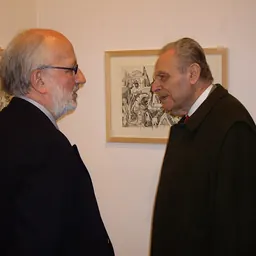
People in Virgilio Giotti's life
Named in this biography and alive at the same time


Related people
Same field, nearest in time

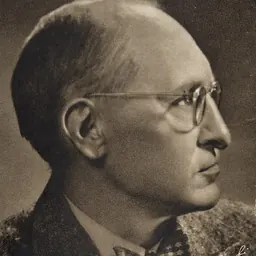
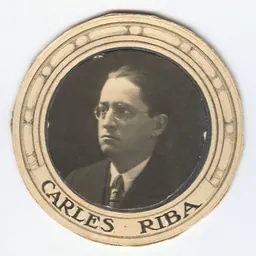
Contemporaries
People whose lives overlapped Virgilio Giotti's
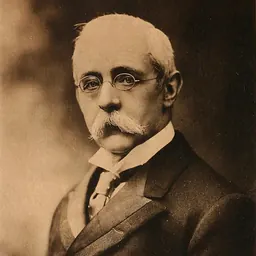
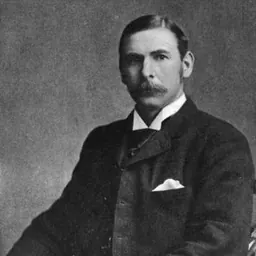


Frequently asked questions
Who was Virgilio Giotti?
Italian poet (1885-1957)
When was Virgilio Giotti born?
Virgilio Giotti was born on 15 January 1885 in Trieste.
When did Virgilio Giotti die?
Virgilio Giotti died on 21 September 1957 in Trieste.
What was Virgilio Giotti's occupation?
Virgilio Giotti was a poet and writer.
What nationality was Virgilio Giotti?
Virgilio Giotti was Italian.
Sources & further reading
Cite this page
APA: Biography.guide. (2026). Virgilio Giotti. https://biography.guide/virgilio-giotti/
MLA: "Virgilio Giotti." Biography.guide, https://biography.guide/virgilio-giotti/.
Chicago: "Virgilio Giotti." Biography.guide. https://biography.guide/virgilio-giotti/.
Data last updated: 2026-09-20 · Spot an error? Report a correction.
Page generated 2026-09-27 05:22 UTC