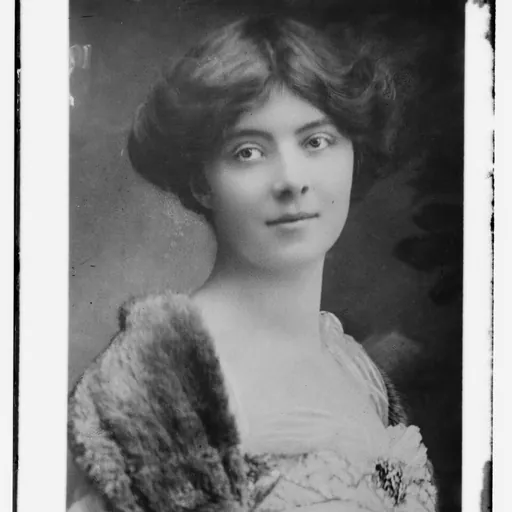
About Viola Tree
Lived 1884 – 1938 (aged 54). Viola Tree was a British actor, singer, memoirist and film actor.
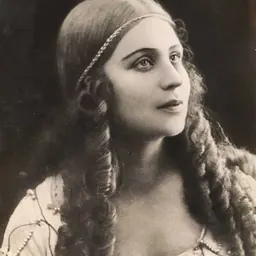
right|frame Viola Tree (17 July 1884 – 15 November 1938) was an English actress, singer, playwright and author. Daughter of the actor Herbert Beerbohm Tree, she made many of her early appearances with his company at His Majesty's Theatre. Later she appeared in opera, variety, straight theatre and film.
Tree made her London debut in 1904 as Viola in Twelfth Night, and for the next four years she appeared in her father's productions at His Majesty's Theatre, often in Shakespeare roles. She yearned to have an operatic career, and studied in Milan, but sang only two opera roles; she then resumed her career in plays and in variety. In 1919, she became manager of the Aldwych Theatre, while continuing her acting career.
In 1930–31 she played on Broadway and on tour in drama and appeared in the Ziegfeld Follies. In London in the 1930s, she played in comedies and tried her hand at directing. Her last West End role was in The Melody that Got Lost in 1938. She also appeared in four films between 1920 and 1938, wrote two plays and several books, including a novel and a book of etiquette.
Biography Tree was born in London, the eldest of three daughters of Herbert Beerbohm Tree and his wife, the actress Helen Maud Tree, née Holt. Her aunt was author Constance Beerbohm and an uncle was Max Beerbohm. She was educated privately in London and in Europe. Her sisters were Felicity Tree and Iris Tree. She also had seven illegitimate half-siblings, the products of her father's many infidelities, among them the director Carol Reed and Peter Reed, whose son became the actor Oliver Reed.
Stage and film career Originally, Tree planned a career as a singer, but entered the family profession in 1904. She made a very successful London debut in March 1904 as Viola in Twelfth Night. For the next four years she appeared in her father's productions at His Majesty's Theatre. Her other Shakespeare roles included Hero in Much Ado about Nothing, the Queen in Richard II, Ariel in The Tempest, Anne Page in The Merry Wives of Windsor, Ophelia in Hamlet and Perdita in The Winter's Tale, in which Ellen Terry played Hermione.
Tree continued to plan an operatic career, and after making a success in the title role of Iphigénie en Tauride and as Euridice in Orfeo ed Euridice at the Savoy Theatre in 1910, she went to Milan to study. On her return, however, she did not pursue her operatic ambitions, except for playing Euridice again in 1912. Instead, she continued to build her stage career in plays and in variety.
In 1919, Tree took over the management of the Aldwych Theatre, scoring particular success with the works of Sacha Guitry. In 1930–31 she was in the US, appearing on Broadway and on tour in drama and also appeared in the Ziegfeld Follies. and in 1934 she directed Jean-Philippe Rameau's opera Castor et Pollux for the Oxford University Opera Club. In 1931 she starred in the play with music For the Love of Mike, and starred in the works' film adaptation in 1932.
Tree's last West End appearance was in The Melody that Got Lost, "a comedy with music", in January 1938. She was an early and strong supporter of the foundation of a National Theatre.
Tree also played in four films between 1920 and 1938, Viola Tree revived the play in 1920; and she played a cameo role in the film, in which her son David Tree played Freddy.
Writing In 1923 The Dancers, a play written by Tree in collaboration with the actor-manager Gerald du Maurier under the joint pen name of Hubert Parsons, opened at Wyndham's Theatre, starring Tallulah Bankhead in her London début. It ran for 349 performances and subsequently transferred to the Broadhurst Theatre on Broadway, where it lasted for 133 performances. She wrote a second play, The Swallow, about decent people coping with the rise of Italian Fascism, produced in London in 1925. Tree published several books: her memoirs, Castles in the Air (1926); a book of etiquette advice, Can I Help You? (1937); a novel; a biography of her husband; and an anthology, Alan Parsons' Book (1937).
Tree died of pleurisy in London, aged 54.
Filmography Year Title Role Notes1917 Masks and Faces Member of Rich's Company #4 1920 Unmarried 1932 For the Love of Mike Emma Miller 1935 Heart's Desire Lady Bennington 1938 Pygmalion Perfide Social Reporter (final film role)
Don’t just read it —
keep it.
Full-length biographies made to live with: read them, listen on the way to work, watch them tonight.
- E-book
- Audio
- Video
Instant download · yours to keep · every purchase keeps this site free
Important facts
People in Viola Tree's life
Named in this biography and alive at the same time


Related people
Same field, nearest in time


Contemporaries
People whose lives overlapped Viola Tree's

Frequently asked questions
Who was Viola Tree?
British actor-singer (1884-1938)
When was Viola Tree born?
Viola Tree was born on 17 July 1884 in London.
When did Viola Tree die?
Viola Tree died on 15 November 1938.
What was Viola Tree's occupation?
Viola Tree was an actor, singer, memoirist and film actor.
What nationality was Viola Tree?
Viola Tree was British.
Sources & further reading
Cite this page
APA: Biography.guide. (2026). Viola Tree. https://biography.guide/viola-tree/
MLA: "Viola Tree." Biography.guide, https://biography.guide/viola-tree/.
Chicago: "Viola Tree." Biography.guide. https://biography.guide/viola-tree/.
Data last updated: 2026-09-20 · Spot an error? Report a correction.
Portrait: Wikimedia Commons · author & licence
Page generated 2026-09-27 04:58 UTC