
About Vincenzo Rustici
Lived 1556 – 1632 (aged 75–76). Vincenzo Rustici was a painter.
Vincenzo Rustici (Siena, 1556 – Siena, 1632) was an Italian painter active in Siena. He was known for his religious compositions as well as his vedute showing public celebrations in Siena.
Life Precise details about the life and career of Vincenzo Rustici are scarce.
He was born in Siena in 1556 in an artistic family of architects and artists originally from Piacenza who had settled in Siena in the 16th century. His father Lorenzo, known as Il Rustico or Lorenzo di Cristoforo Rustici, was a prominent Renaissance painter of stucco and grotesque decorations. His older brother Cristoforo, also known as Il Rusticcone (1552 - 1641), was also a painter.
After his sister Aurelia married the eminent Sienese painter Alessandro Casolani in 1582, Rustici probably started working in the workshop of his brother-in-law. He may have executed in the studio works destined for a less demanding clientele. Upon the death of Casolani in 1606, he completed Casolani’s Resurrection of Lazarus in the Basilica of Saint Francis in Siena. Alessandro Casolani himself was influenced by the work of Domenico Beccafumi. In the period during which his son Francesco worked in his workshop, Vincenzo Rustici's hand was initially difficult to distinguish from that of his son.
In December 1616, Vincenzo Rustici was commissioned to repaint three of the original fresco’s of Pinturicchio in the Chapel of Saint John the Baptist in the Siena Cathedral.
Work Vincenzo Rustici was a painter of history subjects as well as vedute, i.e. city views. He worked mainly in Siena, where his best-known works are preserved.
He is now mainly known for two canvases depicting respectively the Palio di Siena (a downtown horse race with bull hunt) and the Procession of the Contrade in the Piazza del Campo held on 15 August 1546 (Palazzo Salimbeni, Collection of the Banca Monte dei Paschi, Siena). These works provide an important record of these public festivities at the time. Vincenzo Rustici relied on a description in a contemporary letter by Cecchino Cartaio (‘Cecchino the Stationer’) to create these canvases years after the events depicted in them occurred. These paintings were originally preserved in the Villa del Poggio Imperiale in Florence, where they are documented as early as 1654.
Don’t just read it —
keep it.
Full-length biographies made to live with: read them, listen on the way to work, watch them tonight.
- E-book
- Audio
- Video
Instant download · yours to keep · every purchase keeps this site free
Important facts
People in Vincenzo Rustici's life
Named in this biography and alive at the same time


Related people
Same field, nearest in time
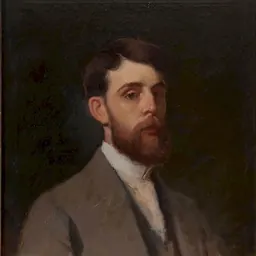
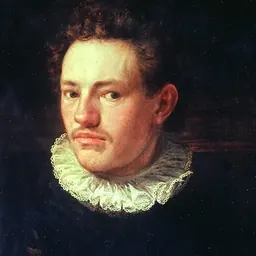

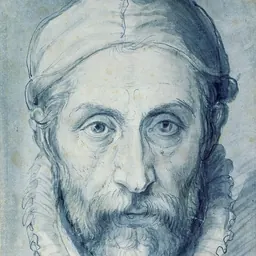
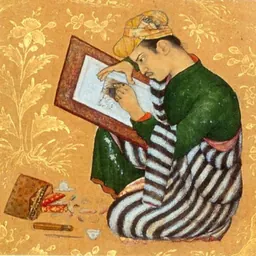
Contemporaries
People whose lives overlapped Vincenzo Rustici's


Frequently asked questions
Who was Vincenzo Rustici?
Italian painter (1556-1632)
When was Vincenzo Rustici born?
Vincenzo Rustici was born in 1556 in Siena.
When did Vincenzo Rustici die?
Vincenzo Rustici died in 1632 in Siena.
What was Vincenzo Rustici's occupation?
Vincenzo Rustici was a painter.
Sources & further reading
Cite this page
APA: Biography.guide. (2026). Vincenzo Rustici. https://biography.guide/vincenzo-rustici/
MLA: "Vincenzo Rustici." Biography.guide, https://biography.guide/vincenzo-rustici/.
Chicago: "Vincenzo Rustici." Biography.guide. https://biography.guide/vincenzo-rustici/.
Data last updated: 2026-09-20 · Spot an error? Report a correction.
Page generated 2026-09-27 05:30 UTC