
About Vincenzo Rugeri
Lived 1663 – 1719 (aged 55). Vincenzo Rugeri was a musical instrument maker and luthier.
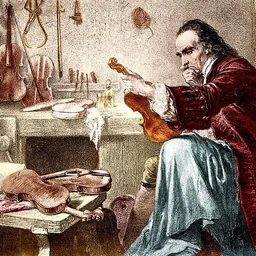
Vincenzo Rugeri (30 September 1663 – 4 May 1719) (also known as Ruger, Rugier, Rugieri, Ruggeri, Ruggieri, Ruggerius), was an Italian luthier of string instruments such as violins, cellos, and, violas in Cremona, Italy. His instruments are noted for their craftsmanship and tone quality. Vincenzo came from a distinguished family of luthiers, the first of whom was his father, Francesco Rugeri. Despite the local tradition of artisan families laboring together through generations, Vincenzo left the family shop and set up a successful shop of his own in the center of Cremona. Vincenzo was the third son of luthier Francesco Rugeri. Vincenzo's work, like Francesco's, is influenced by Nicolò Amati's Grand Pattern model, however Vincenzo's work was distinguished from his father's by utilizing a lower arch inspired by Antonio Stradivari. Vincenzo's instruments, though less numerous, are valued at least equal to those of his father. A violin by Vincenzo Rugeri realized $502,320 on October 3, 2011 at Brompton's Auctions in London. Carlo Bergonzi was a distinguished apprentice of Vincenzo Rugeri.
Early life Vincenzo Rugeri was born just outside of the city limits of Cremona, Italy in the Parish of San Bernardo on 30 September 1663. By the age of apprenticeship, he was working alongside his two older brothers, Giovanni Battista Rugeri (2 July 1653 – 14 December 1711) and Giacinto Rugeri (15 May 1661 – 2 June 1697) assisting in their father's shop. By 1687, Francesco had acquired land and a home closer to the city of Cremona in the Parish of San Sebastiano next to the beautiful Convent of San Sigismondo. Vincenzo likely followed the family to San Sebastiano and lived there until 1689 when he married. Even though Vincenzo's youngest brother, Carlo Rugeri (1666–1713) inherited Francesco's tools relating to "violins, guitars, violoni, and calascioni," Carlo does not appear to have been significantly involved with the family's violin shop based on the extremely rare instruments that are attributed to him.
Career By 1690, Vincenzo Rugeri had married, left the family shop, and opened his own shop in the northwest side of Cremona. Rugeri prospered as an independent violin maker in his own right despite competition with the Stradivari and Guarneri families. His productions date from about 1680–1717. His confirmed works are based on the Nicolo Amati Grand Pattern model combined with a more tonally advanced lower arch. His work is characterized by a high standard of conception and workmanship and the maple wood he employed for the backs was often of fine foreign growth. His F-holes, while Amati-like, have narrower upright stems and an upright upper curve.
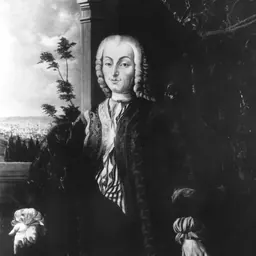
Towards the last years of the 17th century, Rugeri's shop flourished financially as evidenced by Vincenzo buying up property around his workshop. Upon examining his 1719 will however, it is apparent that he experienced a decline in circumstances by 1719. His production seems to have slowed after about 1710 probably owing to competition from the Stradivari workshop. Previously, Giuseppe Giovanni Battista Guarneri and Antonio Stradivari had been erroneously postulated as being Bergonzi's first teachers by W.E. Hill & Sons and Count Ignazio Alessandro Cozio di Salabue. Carlo Bergonzi and his family lived in close proximity to Vincenzo's workshop in Cremona, which would have been the most obvious place for apprenticeship for Carlo in about 1696, given the social and financial connections between the two families. Carlo Bergonzi's mother was the Godmother to Vincenzo's daughter, Teresa.
When comparing the work of Bergonzi with Vincenzo Rugeri, their similarity of work is apparent in the treatment of the scrolls, the use of beech purfling, the lack of dorsal thicknessing pins, and the working technique of scarfing the linings into the corner blocks at an angle instead of square. Bergonzi's early works such as the "Thibaud" violin from 1715 and others from this early period follow similar outlines and proportions to Vincenzo Rugeri's violins as can be expected, however the outlines of Bergonzi's later instruments became his own. Like that of Francesco, Vincenzo included the words "detto il Per" in his labels.
The Cremonese School Cremona, Italy is known for its rich history in the design and production of string instruments. Indeed, the greatest luthiers of all time are Cremonese. Violin workshops in Cremona can trace their origins back to the beginning of the sixteenth century. As economic development began to take place at the turn of the century, so did the developments in artistic production and commerce within the city. It is around this time that violin makers like Andrea Amati, Antonio Stradivari, and Francesco Rugeri began their individual practices. The main reason for the production of string instruments at this time was to provide court entertainment for the French royalty.
Rugeri's Instruments
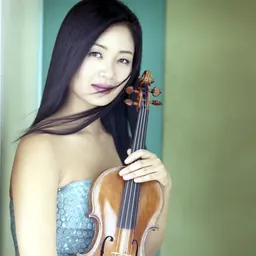
The violin collector David L. Fulton owns a 1697 viola by Vincenzo. A violin dated 1697 and a cello dated 1693 by Vincenzo are in the collections of the Chimei Museum. "Baron Knoop" violin by Vincenzo Rugeri 1700c—Once thought by the Hills to be one of the finest existing Francesco Rugeri violins, it is now known to be a very fine violin by Vincenzo. Violinist Stefan Jackiw performs exclusively on a violin by Vincenzo dated 1704. "Le Brun" violin by Vincenzo made in 1705 was formerly owned by Charles Lebrun and was formerly in the collection of the Royal Academy of Music. Yoonshin Song, Concertmaster of the Detroit Symphony Orchestra, plays a 1707 violin by Vincenzo Rugeri on loan to her from a sponsor. A violin by Vincenzo Rugeri was lost when the SS Flying Enterprise sank in 1952.
Don’t just read it —
keep it.
Full-length biographies made to live with: read them, listen on the way to work, watch them tonight.
- E-book
- Audio
- Video
Instant download · yours to keep · every purchase keeps this site free
Important facts
People in Vincenzo Rugeri's life
Named in this biography and alive at the same time

Related people
Same field, nearest in time




Contemporaries
People whose lives overlapped Vincenzo Rugeri's



Frequently asked questions
Who was Vincenzo Rugeri?
Italian luthier
When was Vincenzo Rugeri born?
Vincenzo Rugeri was born on 30 September 1663 in Cremona.
When did Vincenzo Rugeri die?
Vincenzo Rugeri died on 4 May 1719.
What was Vincenzo Rugeri's occupation?
Vincenzo Rugeri was a musical instrument maker and luthier.
What nationality was Vincenzo Rugeri?
Vincenzo Rugeri's recorded nationality: Italian people.
Sources & further reading
Cite this page
APA: Biography.guide. (2026). Vincenzo Rugeri. https://biography.guide/vincenzo-rugeri/
MLA: "Vincenzo Rugeri." Biography.guide, https://biography.guide/vincenzo-rugeri/.
Chicago: "Vincenzo Rugeri." Biography.guide. https://biography.guide/vincenzo-rugeri/.
Data last updated: 2026-09-22 · Spot an error? Report a correction.
Page generated 2026-09-27 05:28 UTC