
About Vincenz Hundhausen
Lived 1878 – 1955 (aged 76–77). Vincenz Hundhausen was a German linguist, translator, poet lawyer, writer, publisher and director.
Vincenz Maria Hermann Hundhausen (15 December 1878 – 18 May 1955) was a German national, who was also a German-language professor at Peking University and a translator of Chinese works into German. He used the Chinese name Hong Taosheng .
In 2001 Annette Merker, author of a book review of Vincenz Hundhausen (1878-1955): Leben und Werk des Dichters, Druckers, Verlegers, Professors, Regisseurs und Anwalts in Peking, wrote that he was "little known by non-sinologists".
Life Hundhausen was born in Grevenbroich on 15 December 1878. His father, V. Hundhausen, was a factory owner. V. Hundhausen's grandfather, , was a friend of Ernst Moritz Arndt.
Hundhausen studied law in the cities of Bonn, Berlin, Freiburg, and Munich. In 1909 in Berlin Hundhausen began practicing law and working as a notary. During World War I Hundhausen initially served as an officer. He became a prosecutor serving in Eastern Europe for the Commander-in-Chief of the East. Hundhausen stayed in China, living and working there for 31 years, with one short interruption. In 1946 Hundhausen stated that after he first arrived in China he decided to stay there because he foresaw political developments that would occur in Germany.
In China he also became a publisher-printer, a poet, and a translator. In western Beijing he lived in an estate called "Poplar Island" (Pappelinsel), near the former wall's southwestern corner. or , ) He died in Grevenbroich in 1955.
Hundhausen had translated Chinese poetry and dramas into German. Poems translated by Hundhausen include those of Bai Juyi, Li Taibo, Su Dongpo, and Tao Yuanming. He also made German translations of philosophical tracts by Laozi and Zhuangzi.
In 1930 he wrote a German translation for Tale of the Pipa (Pipa ji). In 1937 he published a German translation of The Peony Pavilion (Mudan ting) by Tang Xianzu. He also translated Wang Shifu's The Western Chamber, as well as Tang Xianzu's The Soul's Return. Hartmut Walravens, author of "German Influence on the Press in China," wrote that Hundhausen was a "masterly translator". Bieg stated that Hundhausen had an "apparently rather limited knowledge of the (literary? classical?) Chinese language" and that he was an "amateur sinologist", his colleagues and helpers, including Feng Zhi and Xu Daolin, were "excellent". In 1946 he wrote "Mein Lebenslauf" (My life), an autobiographical work.
He had a German-language theater company, Pekinger Bühnenspiele, which performed Chinese dramas in the German language, and also created publications. In its dramas the company used Chinese and German actors and catered to mostly German audiences in Beijing. It also conducted tours in Qingdao, Tianjin, in Shanghai. The theater company and Hundhausen toured Austria and Switzerland in the northern hemisphere spring of 1936.
In addition he edited and was responsible for several sonderausgaben special issues of the Deutsch-Chinesische Nachrichten. These issues included, on anniversaries of famous people, the famous peoples' articles, translations and texts to celebrate them. He had published festschrifts about Johann Wolfgang von Goethe, Wilhelm von Humboldt, von Platen, Friedrich Schiller, Baruch Spinoza, and Christoph Martin Wieland.
Erwin von Zach has a positive reception to Hundhausen's work. Some academics criticized Hundhausen. Erich Schmitt, a professor based in Bonn, Germany, accused Hundhausen of plagiarism.
List of publications Vincenz Hundhausen: Die Oden des Horaz (Odes of Horace). In deutscher Sprache. Borngräber o.J. (1925) Vincenz Hundhausen: Die Laute ("The Lute", Tale of the Pipa). Ein chinesisches Singspiel. In deutscher Sprache. Peking: Pekinger Verlag, 1930 Vincenz Hundhausen: Chinesische Dichter in deutscher Sprache. Peking, Leipzig: Pekinger Verlag, Leipzig : Carl Emil Krug, 1926 Vincenz Hundhausen: Der Ölhändler und das Freudenmädchen. Eine chinesische Geschichte in 5 Gesängen. Peking: Pekinger Verlag, (1928) Vincenz Hundhausen: Das Westzimmer. Ein chinesisches Singspiel aus dem dreizehnten Jahrhundert. Eisenach, 1926 Vincenz Hundhausen: Die Weisheit des Dschuang-Dse in deutschen Lehrgedichten. Peking: Pekinger Verlag 1926 Vincenz Hundhausen: Die Rückkehr der Seele. Ein romantisches Drama Von Tang Hsiän Dsu. 3 Bände: Traum und Tod / Die Auferstehung / Im Neuen Leben. Erich Röth-Verlag, 1937 Vincenz Hundhausen: Chinesische Dichter ~ des dritten bis elften Jahrhunderts. Erich Röth-Verlag, 1926 Vincenz Hundhausen: Korrespondenzen 1934–1954, Briefe an Rudolf Pannwitz 1931–1954, Abbildungen und Dokumente zu Leben und Werk. Wiesbaden: Otto Harrassowitz, 2001.
Don’t just read it —
keep it.
Full-length biographies made to live with: read them, listen on the way to work, watch them tonight.
- E-book
- Audio
- Video
Instant download · yours to keep · every purchase keeps this site free
Important facts
People in Vincenz Hundhausen's life
Named in this biography and alive at the same time

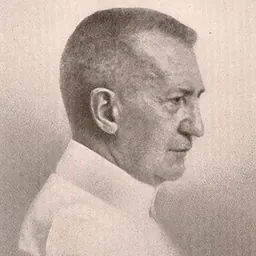




Related people
Same field, nearest in time
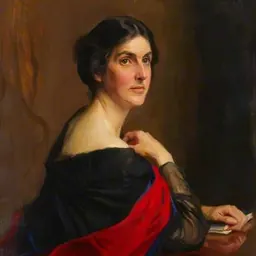

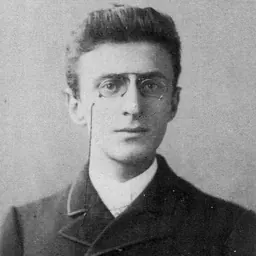
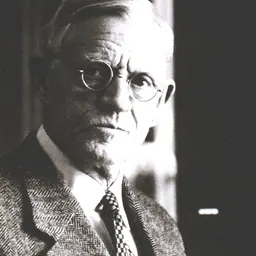
Contemporaries
People whose lives overlapped Vincenz Hundhausen's




Frequently asked questions
Who was Vincenz Hundhausen?
German translator
When was Vincenz Hundhausen born?
Vincenz Hundhausen was born on 15 December 1878 in Grevenbroich.
When did Vincenz Hundhausen die?
Vincenz Hundhausen died in 1955 in Grevenbroich.
What was Vincenz Hundhausen's occupation?
Vincenz Hundhausen was a linguist, translator, poet lawyer, writer, publisher and director.
What nationality was Vincenz Hundhausen?
Vincenz Hundhausen was German.
Sources & further reading
· Wikipedia: Vincenz Hundhausen
Cite this page
APA: Biography.guide. (2026). Vincenz Hundhausen. https://biography.guide/vincenz-hundhausen/
MLA: "Vincenz Hundhausen." Biography.guide, https://biography.guide/vincenz-hundhausen/.
Chicago: "Vincenz Hundhausen." Biography.guide. https://biography.guide/vincenz-hundhausen/.
Data last updated: 2026-09-25 · Spot an error? Report a correction.
Page generated 2026-09-27 05:11 UTC