
About Vincent O'Brien
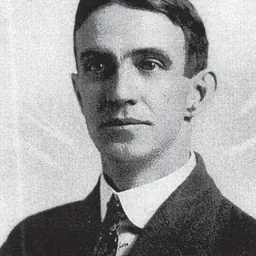
Lived 1917 – 2009 (aged 92). Vincent O'Brien was an Irish horse trainer.
Michael Vincent O'Brien (9 April 1917 – 1 June 2009) was an Irish race horse trainer from Churchtown, County Cork, Ireland. In 2003 he was voted the greatest influence in horse racing history in a worldwide poll hosted by the Racing Post. In earlier Racing Post polls he was voted the best ever trainer of national hunt and of flat racehorses. He trained six horses to win the Epsom Derby, won three Grand Nationals in succession and trained the only British Triple Crown winner, Nijinsky, since the Second World War. He was twice British champion trainer in flat racing and also twice in national hunt racing; the only trainer in history to have been champion under both rules. Aidan O'Brien (no relation) took over the Ballydoyle stables after his retirement.
The National Hunt years
His training career started in 1944. That year, he did the Irish Cambridgeshire/Irish Cesarewitch double with Drybob (dead heat) and Good Days.
In his early days Vincent O'Brien was a trainer at Churchtown of steeplechasers and hurdlers, and won the Grand National at Liverpool three times in succession, with three different horses – Early Mist in 1953, Royal Tan in 1954, and Quare Times in 1955. The greatest steeplechaser he trained was Cottage Rake, which won the Cheltenham Gold Cup three times in succession (1948–1950). He later trained Knock Hard to also win the Cheltenham Gold Cup (1953). He also won the Champion Hurdle three years in succession with Hatton's Grace (1949–1951).
In 1951 he moved to and established the now famous Ballydoyle stables near Cashel in Co. Tipperary.
The flat years Soon after his third Grand National triumph, he turned his attention to flat racing, and set up his stables at Ballydoyle, near Cashel, County Tipperary. Ballymoss, owned by American businessman John McShain, was O'Brien's first top-flight flat racing horse. This colt won the Irish Derby Stakes and England's St. Leger Stakes in 1957 and France's Prix de l'Arc de Triomphe in 1958, en route to earning European Horse of the Year honours. For another American, Alice du Pont Mills, he trained the filly Glad Rags who in 1966 gave him his only win in the 1,000 Guineas Stakes. O'Brien's first Derby winner was Larkspur in 1962. His other Derby winners were Sir Ivor (1968), Nijinsky (1970), Roberto (1972), The Minstrel (1977) and finally Golden Fleece (1982). O'Brien also trained the brilliant dual Prix de L'Arc de Triomphe winner, Alleged, which triumphed in 1977 and 1978.
During the 1970s, he and owner Robert Sangster, along with O'Brien's son-in-law, John Magnier, established what became known as the Coolmore syndicate, which became a successful horse-racing and breeding operation, centred on Coolmore Stud in County Tipperary, and later incorporating stud farms in Kentucky and Australia. The combination of Vincent O'Brien's incredible gift for picking world class horses and John Magnier's business mind propelled Coolmore Stud to the top of the racing world, boasting greater assets than any other racing stud in Europe, the Middle East, or America. The key to the success was through use of the bloodline of a Canadian-bred horse named Northern Dancer, who had won a Kentucky Derby. One son of Northern Dancer was the British Triple Crown winner, Nijinsky, probably the best horse O'Brien ever trained. Nijinsky was ranked the best ever winner of The Derby by a panel of experts assembled by the Daily Telegraph in 2018. He was ridden to victory at Epsom by Lester Piggott, who was associated with the Ballydoyle stable during the most successful years of the late sixties and seventies.
Other flat racehorses trained by Vincent O'Brien include: El Gran Senor, Gladness, Valoris, Pieces of Eight, Long Look, Boucher, Thatch, Lisadell, Abergwaun, Home Guard, Apalachee, Artaius, Try My Best, Cloonlara, Godswalk, Be My Guest, Marinsky, Lady Capulet, Solinus, Jaazeiro, Thatching, Monterverdi, Solford, Bluebird, Lomond, Godetia, Storm Bird, Kings Lake, Caerleon, Law Society, El Prado, Woodstream, Capriciossa, Prince of Birds, Dark Lomond and College Chapel. He trained Sadler's Wells (by Northern Dancer) to win the Beresford Stakes, Irish 2000 Guineas, Eclipse Stakes and Irish Champion Stakes. Sadlers Wells went on to become the greatest ever European sire and an outstanding 'sire of sires' including Galileo, Montjeu and El Prado.
Vincent O'Brien retired from training in 1994, four years after winning the 1990 Breeders' Cup Mile at Belmont Park in New York with Royal Academy.
Aidan O'Brien was then employed by Coolmore to take over the training responsibilities of Vincent O'Brien. Unlike Vincent, who was involved in every stage of the horses' selecting, training and breeding, Aidan's role involves training whatever horses have been bought or bred for him by Coolmore. This narrow focus has allowed Aidan to produce a great number of winners from Vincent's first rate bloodline of horses, maintaining Coolmore's status as the leading bloodstock company in the world.
In spring 1960, Vincent O'Brien was banned by the Irish Turf Club until November 1961 when after winning a minor race at the Curragh, the colt Chamour was found to have a minute amount of a substance resembling an amphetamine in his system. The horse subsequently won the 1960 Irish Derby when trained by Vincent's brother, Phonsie. O’Brien fought the ban which was overturned on 27 May 1961 with O’Brien receiving a full apology.
Accolades
Vincent O'Brien was voted the greatest national hunt trainer of the 20th century, and was then voted the greatest flat trainer of the 20th century. In the vote for the greatest figure in the history of horseracing hosted by the Racing Post newspaper, Vincent O'Brien came first with 28% of the total vote, with his long-time stable jockey Lester Piggott placed second out of a pool of 100 contenders selected by a panel of racing experts.
Major wins on the flat
Great Britain 1,000 Guineas – (1) – Glad Rags (1966) 2,000 Guineas – (4) – Sir Ivor (1968), Nijinsky (1970), Lomond (1983), El Gran Senor (1984) Ascot Gold Cup – (1) – Gladness (1958) Champion Stakes – (2) – Pieces of Eight (1966), Sir Ivor (1968) Cheveley Park Stakes – (3) – Lalibela (1967), Woodstream (1981), Capricciosa (1990) Coronation Cup – (2) – Ballymoss (1958), Roberto (1973) Coronation Stakes – (1) – Lisadell (1974) Derby – (6) – Larkspur (1962), Sir Ivor (1968), Nijinsky (1970), Roberto (1972), The Minstrel (1977), Golden Fleece (1982) Dewhurst Stakes – (7) – Nijinsky (1969), Cellini (1973), The Minstrel (1976), Try My Best (1977), Monteverdi (1979), Storm Bird (1980), El Gran Senor (1983) Eclipse Stakes – (5) – Ballymoss (1958), Pieces of Eight (1966), Artaius (1977), Solford (1983), Sadler's Wells (1984) Golden Jubilee Stakes – (5) – Welsh Saint (1970), Saritamer (1974), Swingtime (1975), Thatching (1979), College Chapel (1993) Haydock Sprint Cup – (1) – Abergwaun (1972) International Stakes – (2) – Roberto (1972), Caerleon (1983) July Cup – (5) – Thatch (1973), Saritamer (1974), Solinus (1978), Thatching (1979), Royal Academy (1990) King George VI and Queen Elizabeth Stakes – (3) – Ballymoss (1958), Nijinsky (1970), The Minstrel (1977) King's Stand Stakes – (5) – Cassarate (1962), Abergwaun (1973), Godswalk (1977), Solinus (1978), Bluebird (1987) Middle Park Stakes – (1) – Junius (1978) Nunthorpe Stakes – (1) – Solinus (1978) Oaks – (2) – Long Look (1965), Valoris (1966) Queen Anne Stakes – (1) – Imperial March (1975) Racing Post Trophy – (1) – Apalachee (1973) St. James's Palace Stakes – (2) – Thatch (1973), Jaazeiro (1978) St. Leger Stakes – (3) – Ballymoss (1957), Nijinsky (1970), Boucher (1972) Sussex Stakes – (4) – Thatch (1973), Artaius (1977), Jaazeiro (1978), King's Lake (1981)
Ireland Irish 1,000 Guineas – (3) – Valoris (1966), Lady Capulet (1977), Godetia (1979) Irish 2,000 Guineas – (5) – El Toro (1959), Jaazeiro (1978), King's Lake (1981), Sadler's Wells (1984), Prince of Birds (1988) Irish Champion Stakes – (5) – Inkerman (1978), Fordham (1979), Gregorian (1980), King's Lake (1981), Sadler's Wells (1984) Irish Derby – (6) – Chamier (1953), Ballymoss (1957), Nijinsky (1970), The Minstrel (1977), El Gran Senor (1984), Law Society (1985) Irish Oaks – (4) – Ancasta (1964), Aurabella (1965), Gaia (1969), Godetia (1979) Irish St. Leger – (9) – Barclay (1959), White Gloves (1966), Reindeer (1969), Caucasus (1975), Meneval (1976), Transworld (1977), Gonzales (1980), Leading Counsel (1985), Dark Lomond (1988) Matron Stakes – (3) – Kalamaika (1978), Magisterial (1979), Calandra (1980) Moyglare Stud Stakes – (2) – Woodstream (1981), Capricciosa (1990) National Stakes – (15) – Sir Ivor (1967), Roberto (1971), Chamozzle (1972), Cellini (1973), Sir Wimborne (1975), Monteverdi (1979), Storm Bird (1980), Glenstal (1982), El Gran Senor (1983), Law Society (1984), Tate Gallery (1985), Caerwent (1987), Classic Fame (1988), El Prado (1991), Fatherland (1992) Phoenix Stakes – (2) – Cloonlara (1976), Achieved (1981) Pretty Polly Stakes – (7) – Little Mo (1959), Ancasta (1964), Iskereen (1967), Rimark (1968), Godetia (1979), Calandra (1980), Dark Lomond (1988) Tattersalls Gold Cup – (5) – Nardoo (1963), White Gloves (1967), Selko (1969), Cavo Doro (1973), Golden Fleece (1982)
France Prix de l'Arc de Triomphe – (3) – Ballymoss (1958), Alleged (1977, 1978) Prix Jean-Luc Lagardère – (1) – Sir Ivor (1967) Prix du Jockey Club – (1) – Caerleon (1983) Prix Maurice de Gheest – (1) – College Chapel (1993)
United States Breeders' Cup Mile – (1) – Royal Academy (1990) Washington, D.C. International – (1) – Sir Ivor (1968)
Don’t just read it —
keep it.
Full-length biographies made to live with: read them, listen on the way to work, watch them tonight.
- E-book
- Audio
- Video
Instant download · yours to keep · every purchase keeps this site free
Important facts
People in Vincent O'Brien's life
Named in this biography and alive at the same time

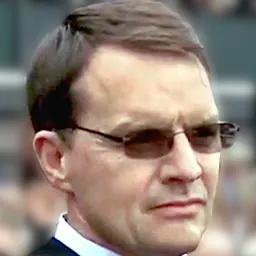



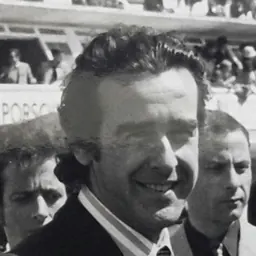

Related people
Same field, nearest in time

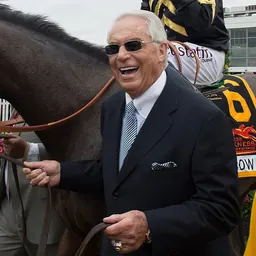
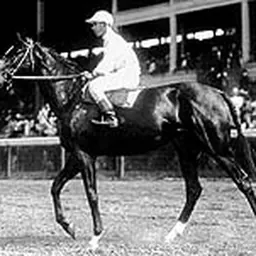


Contemporaries
People whose lives overlapped Vincent O'Brien's

Frequently asked questions
Who was Vincent O'Brien?
Irish horse trainer (1917–2009)
When was Vincent O'Brien born?
Vincent O'Brien was born on 9 April 1917.
When did Vincent O'Brien die?
Vincent O'Brien died on 1 June 2009 in Straffan.
What was Vincent O'Brien's occupation?
Vincent O'Brien was a horse trainer.
What nationality was Vincent O'Brien?
Vincent O'Brien was Irish.
Sources & further reading
Cite this page
APA: Biography.guide. (2026). Vincent O'Brien. https://biography.guide/vincent-o-brien-horse-trainer/
MLA: "Vincent O'Brien." Biography.guide, https://biography.guide/vincent-o-brien-horse-trainer/.
Chicago: "Vincent O'Brien." Biography.guide. https://biography.guide/vincent-o-brien-horse-trainer/.
Data last updated: 2026-09-20 · Spot an error? Report a correction.
Page generated 2026-09-27 05:22 UTC