
About Viktor Sarianidi
Lived 1929 – 2013 (aged 84). Viktor Sarianidi was a Russian and Greek anthropologist, archaeologist and prehistorian.
Viktor Ivanovich Sarianidi or Victor Sarigiannides (; ; September 23, 1929 – December 22, 2013) was a Soviet archaeologist. He discovered the remains of a Bronze Age culture in the Karakum Desert in 1976. The culture came to be known as the Bactria-Margiana Archaeological Complex.
Biography
Viktor Sarianidi was born on September 23, 1929, in Tashkent in a family of Pontic Greek descent. His parents, Ioannis and Athena Sarianidi had immigrated there from Yalta in the 1920s.
In 1996, he moved to Greece.
Sarianidi died in the night of December 22, 2013 in Moscow.
Career While still a student, in 1949, Sarianidi began to work at archaeological sites in Turkmenistan under the supervision of Mikhail Masson. Following his graduation from the Central Asian State University in 1952, he joined the Historical Museum in Samarkand, where he worked for two years.
Sarianidi participated in excavations of monuments of Tahirbey, Yaz Depe (1955-1956), Togolok (1970s). From 1974, he supervised excavations that led to the uncovering of the culture of Margiana (or Margush), and the discovery in 1990 of over 200 settlements dating to the Bronze Age and early Iron Age. Chief amongst these was the capital city Gonur Tepe, which was founded at the end of the third millennium BCE, lasting till around 1600 BCE. The city had a central palace protected by fortified walls with rectangular towers. Outside these walls, on the eastern side, was discovered the earliest known Fire temple, "predating Zoroaster [1000 BC] by at least fifteen hundred years but linked with what would become the rituals of his faith". Sacrificial temples had been set up along the southern and western faces of the walls. The temples were surrounded by a second series of reinforced monumental walls. In the south, two pools (one measuring 100 by 60 metres) were discovered, based on which it was speculated that the population of Gonur worshipped water. The discoveries of Margush and Gonurdepe caused Sarianidi to argue "that they proved that the Amu Darya (Oxus River) valley in Central Asia constitutes a fourth point of origin of urban civilization, along with the Nile, Indus, and Tigris-Euphrates valleys."
In 1978, Sarianidi discovered six undisturbed tombs at Tillya Tepe, dating to the 1st century BC. The deceased were richly equipped with gold, the so-called Bactrian Gold.
In 1996, a great necropolis was discovered 350 metres to the west of Gonur. Excavations there continued over the next ten years, and uncovered nearly 3000 graves.
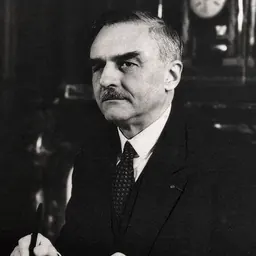
Public image Sarianidi, though not liked by everyone due to his bluff personality, is widely considered to be a legend in archeology circles. He sported a luxuriant walrus moustache and, in later years, a shock of white hair. Sarianidi was at home and at his best in the vast expanses of inhospitable Central Asian desert where he could be found barefoot and gesticulating with his cane. He lived an uncomfortable life which, besides excavating, was spent trying to stay alive and secure a supply of vodka.
Awards and recognition Gold cross of Order of Honour of Greece. Honorary citizenship of Turkmenistan, 2000. Makhtumkuli International Prize, Turkmenistan, 2001. Jamal ad-Din al-Afghani prize, the highest cultural honour of Afghanistan.
Don’t just read it —
keep it.
Full-length biographies made to live with: read them, listen on the way to work, watch them tonight.
- E-book
- Audio
- Video
Instant download · yours to keep · every purchase keeps this site free
Important facts
People in Viktor Sarianidi's life
Named in this biography and alive at the same time
Related people
Same field, nearest in time



Contemporaries
People whose lives overlapped Viktor Sarianidi's
Frequently asked questions
Who was Viktor Sarianidi?
Russian archaologist (1929-2013)
When was Viktor Sarianidi born?
Viktor Sarianidi was born on 23 September 1929 in Tashkent.
When did Viktor Sarianidi die?
Viktor Sarianidi died on 23 December 2013 in Moscow.
What was Viktor Sarianidi's occupation?
Viktor Sarianidi was an anthropologist, archaeologist and prehistorian.
What nationality was Viktor Sarianidi?
Viktor Sarianidi was Russian and Greek.
Sources & further reading
Cite this page
APA: Biography.guide. (2026). Viktor Sarianidi. https://biography.guide/viktor-sarianidi/
MLA: "Viktor Sarianidi." Biography.guide, https://biography.guide/viktor-sarianidi/.
Chicago: "Viktor Sarianidi." Biography.guide. https://biography.guide/viktor-sarianidi/.
Data last updated: 2026-09-20 · Spot an error? Report a correction.
Page generated 2026-09-27 05:25 UTC