
About Viktor Nekipelov
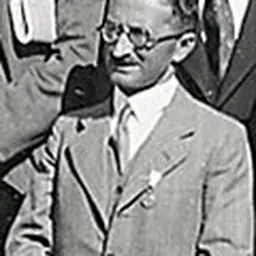
Lived 1928 – 1989 (aged 60). Viktor Nekipelov was a Russian poet, human rights defender, opinion journalist and pharmacist.
Viktor Aleksandrovich Nekipelov (, 29 September 1928 – 1 July 1989 ) was a Soviet Russian poet, writer, Soviet dissident, and a member of the Moscow Helsinki Group. He spent about nine years in prison for his participation in the Moscow Helsinki Group.
Early life Nekipelov was born to a Soviet family of workers of the Chinese Eastern Railway. In 1937, he and his mother came to the Soviet Union. In 1939, his mother was arrested and died in imprisonment. He left a high school in Omsk. From 1947 to 1950, he studied at the Omsk Army Medical School. In 1960, he graduated from the army medical faculty of the Kharkiv Medical Institute with honours as well. He worked as a pharmacist.
Dissident In 1973, he was arrested for "spreading of known false fabrications that is damaging the Soviet political system" (Article 190-1 of the RSFSR Criminal Code). Nekipelov was sent to the Section 4 of the Serbsky Institute of Forensic Psychiatry for psychiatric evaluation, which lasted from 15 January to 12 March 1974, was judged sane (which he was), tried, and sentenced to two years' imprisonment. based on his personal experience at Psychiatric Hospital of the Serbsky Institute and translated into English in 1980.
In October 1977, Nekipelov joined the Moscow Helsinki Group.
After publishing Institute of Fools, he was sentenced to the maximum punishment for "anti-Soviet agitation and propaganda" of seven years in a labour camp and then five years in internal exile. On 20 March 1983, Nekipelov and 9 other political prisoners in their letter to US President of Ronald Reagan sought his aid in urging inspection of Soviet camps.
Along with Arina Ginzburg, Malva Landa, Tatyana Velikanova and Andrei Sakharov he demanded a referendum in the Baltic republics to determine their political destiny.
Released in 1987, he emigrated to France where he died in 1989.
In 1992, the selection of his verses was published by Memorial society.
On his book In his book Institute of Fools, he wrote compassionately, engagingly, and observantly of the doctors and other patients; most of the latter were ordinary criminals feigning insanity in order to be sent to a mental hospital, because hospital was a "cushy number" as against prison camps. According to the response by Robert van Voren, Pekhterev in his article condescendingly argues that the Serbsky Institute was not so bad place and that Nekipelov exaggerates and slanders it, but Pekhterev, by doing so, misses the main point: living conditions in the Serbsky Institute were not bad, those who passed through psychiatric examination there were in a certain sense "on holiday" in comparison with the living conditions of the Gulag; and all the same, everyone was aware that the Serbsky Institute was more than the "gates of hell" from where people were sent to specialized psychiatric hospitals in Chernyakhovsk, Dnepropetrovsk, Kazan, Blagoveshchensk, and that is not all. Their life was transformed to unimaginable horror with daily tortures by forced administration of drugs, beatings and other forms of punishment. Many went crazy, could not endure what was happening to them, some even died during the "treatment" (for example, a miner from Donetsk Alexey Nikitin). Many books and memoirs are written about the life in the psychiatric Gulag and every time when reading them a shiver seizes us.
Don’t just read it —
keep it.
Full-length biographies made to live with: read them, listen on the way to work, watch them tonight.
- E-book
- Audio
- Video
Instant download · yours to keep · every purchase keeps this site free
Important facts
People in Viktor Nekipelov's life
Named in this biography and alive at the same time



Related people
Same field, nearest in time


Contemporaries
People whose lives overlapped Viktor Nekipelov's




Frequently asked questions
Who was Viktor Nekipelov?
Soviet dissident (1928–1989)
When was Viktor Nekipelov born?
Viktor Nekipelov was born on 29 September 1928 in Harbin.
When did Viktor Nekipelov die?
Viktor Nekipelov died on 1 July 1989 in Paris.
What was Viktor Nekipelov's occupation?
Viktor Nekipelov was a poet, human rights defender, opinion journalist and pharmacist.
What nationality was Viktor Nekipelov?
Viktor Nekipelov was Russian.
Sources & further reading
Cite this page
APA: Biography.guide. (2026). Viktor Nekipelov. https://biography.guide/viktor-nekipelov/
MLA: "Viktor Nekipelov." Biography.guide, https://biography.guide/viktor-nekipelov/.
Chicago: "Viktor Nekipelov." Biography.guide. https://biography.guide/viktor-nekipelov/.
Data last updated: 2026-09-22 · Spot an error? Report a correction.
Page generated 2026-09-27 05:16 UTC