
About Victoria Santa Cruz
Lived 1922 – 2014 (aged 91). Victoria Santa Cruz was a Peruvian composer, choreographer, poet, singer and university teacher.
Victoria Eugenia Santa Cruz Gamarra (27 October 1922 – August 30, 2014) was an Afro-Peruvian choreographer, composer and activist.
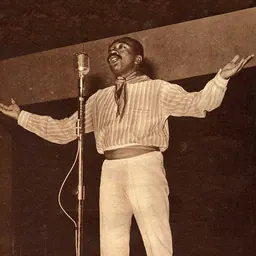
Victoria Santa Cruz would go on to be called "the mother of Afro Peruvian dance and theatre." Along with her brother, Nicomedes Santa Cruz, she is credited as significant in a revival of Afro-Peruvian culture in the 1960s and 1970s. They both came from a long-line of artists and intellectuals. For her part she is said to have had "Afrocentrism" influences in her view of dance trying to discover "ancestral memory" of African forms. She helped to found the Cumanana company.
Early life Santa Cruz was born eighth of ten children in Lima, Peru.
At an early age, Victoria Santa Cruz was introduced to the fine arts, having come from a household full of black artists and musicians. One of her earliest influences were her parents whom she first learned about Afro-Peruvian dance (marinera and other criollo dances) as well as poetry and music. This early on exposure to the fine arts led Victoria Santa Cruz to create and participate in musicals like Malató, which would later on embody one of her lifelong goals of "self-discovery and recuperation of culture based on internal rhythm and what she called ancestral memory." Through this goal, Victoria sought to "awaken black consciousness and pride" in the Afro-Peruvian culture. In this scene, she describes how her friends rejected her because of her African features. At the age of five when she was with her group of friends, a new blonde and white girl in her neighborhood told them: “If the black girl wants to play with us, I’ll go”. She makes a direct reference to this in her famous poem, Me gritaron negra. Out of this experience, the artist begins her long-lived exploration of self and recuperation. In this same interview, the artist demonstrates some of the internal dialogue that prompts her desire for self-discovery from a very young age, asking "What am I doing? What is to be black? What is to be white?" which were group performances led by Cruz and other prominent Afro-Peruvian dancers that played a role in reclaiming lost heritages. Traditional, cultural, music played in the background as the dancers performed their pieces individually and as a group. The importance of these performances highlights the "recovery, creation, and recreation" of dying rhythms such as "the zamacueca, the landau and the alcatraz". Her artistic career as a performer, choreographer, and composer took her to new heights like being televised on Peruvian Television and being visited on her international tours. But the biggest international milestone was perhaps the group's performance at the 1968 Olympics in Mexico City. She continued touring with the group through big nations like the United States, Canada, and Western Europe. and her position as a professor at Carnegie Mellon University (1982-1999).
Artworks and performances Malato (1961) - Musical/Play
Malato is a three act musical which showcased the relationship between the enslaved and their oppressor that was removed from the Peruvian history of slavery. The play was written, choreographed, and staged by Santa Cruz.
Cumanana (1970) - song
Cumanana (Kumanana) is the name of one of her more prominent songs because it evokes her past in the band with her brother Nicomedes. The term, as described by Victoria Santa Cruz, means "mix of Spanish and black things," which makes reference to her identity.
Me gritaron negra (1978) - poem/spoken word
She is known for her visual, lyrical poem Me gritaron negra (They Shouted Black At Me), show cased in the exhibition Radical Women: Latin American Art, 1960-1985 and at the Brooklyn Museum. Brooklyn Museum: Radical Women: Latin American Art, 1960-1985 Primer Festival y Seminario Latinoamericano de Televisión in 1970 Cali Festival, 1971
Collections Many of the artist's pieces were original or remade songs that now live as collections in CD's or online-accessible music. Access to her musical collections can be streamed through major platforms like Spotify, Apple Music, and Amazon. Her collections include:
- Poemas y Pregones Afro Peruanos (released) April 2, 2013) and includes her famous poem Me Gritaron Negra.
- Con Victoria Santa Cruz y Gente Morena (released October 2, 2015), includes her song Las Lavanderas.
- Victoria Santa Cruz: Orgullosa Afro Peruana (released May 11, 2016) and includes her biggest hits like Cumanana, La Buñolera, and Pa' Goza Con el Ritmo del Tambo.
Awards and honors
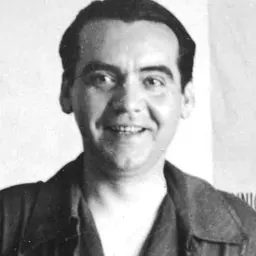
She received a scholarship by the French government and traveled to Paris to study choreography. Here, she succeeded as the creator and designer of the wardrobe for the play El Retablo de Don Cristóbal by Federico García Lorca. Best Folklorist, 1970 Appointed Director of the National Folklore Ensemble of the National Institute of Culture in 1973
Death In her last interview, Victoria Santa Cruz responds to the question "what has racism taught you?" by stating "in a little while, I will leave this life... and I want to leave in peace, with my conscience clean, and we'll see what happens here. But everything is weakened, dislocated in the entire world. And everyone is losing because really, this is not how you fight."
She died on August 30, 2014, in Lima, Peru.
Don’t just read it —
keep it.
Full-length biographies made to live with: read them, listen on the way to work, watch them tonight.
- E-book
- Audio
- Video
Instant download · yours to keep · every purchase keeps this site free
Important facts
People in Victoria Santa Cruz's life
Named in this biography and alive at the same time


Related people
Same field, nearest in time



Contemporaries
People whose lives overlapped Victoria Santa Cruz's


Frequently asked questions
Who was Victoria Santa Cruz?
Peruvian composer (1922–2014)
When was Victoria Santa Cruz born?
Victoria Santa Cruz was born on 27 October 1922 in Lima.
When did Victoria Santa Cruz die?
Victoria Santa Cruz died on 30 August 2014 in Lima.
What was Victoria Santa Cruz's occupation?
Victoria Santa Cruz was a composer, choreographer, poet, singer and university teacher.
What nationality was Victoria Santa Cruz?
Victoria Santa Cruz was Peruvian.
Sources & further reading
· Wikipedia: Victoria Santa Cruz
· DBpedia: Victoria Santa Cruz
Cite this page
APA: Biography.guide. (2026). Victoria Santa Cruz. https://biography.guide/victoria-santa-cruz/
MLA: "Victoria Santa Cruz." Biography.guide, https://biography.guide/victoria-santa-cruz/.
Chicago: "Victoria Santa Cruz." Biography.guide. https://biography.guide/victoria-santa-cruz/.
Data last updated: 2026-09-27 · Spot an error? Report a correction.
Page generated 2026-09-27 05:17 UTC