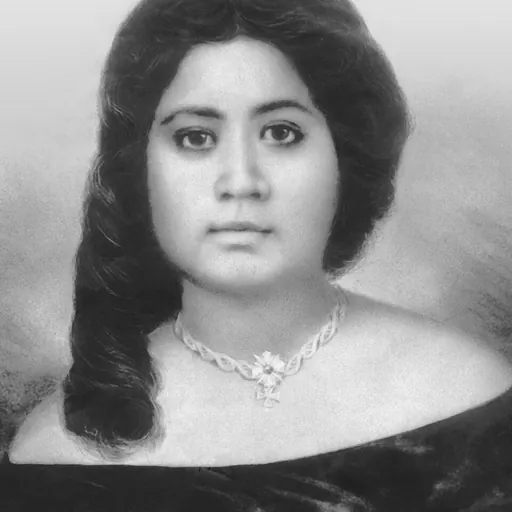
About Victoria Kamāmalu
Lived 1838 – 1866 (aged 27). Victoria Kamāmalu was a politician.
Victoria Kamāmalu Kaʻahumanu IV (November 1, 1838 – May 29, 1866) was Kuhina Nui of Hawaii and its crown princess. Named Wikolia Kamehamalu Keawenui Kaʻahumanu-a-Kekūanaōʻa and also named Kalehelani Kiheahealani, Having given away her previous four sons, Kīnaʻu refused to give her only remaining daughter in hānai to John Adams Kuakini who wanted to take her to be raised on the Big Island. Kīnaʻu defied the customs of the time and personally nursed her daughter. According to the journals of American missionary Levi Chamberlain, she was baptized on December 23. Kīnaʻu died from the mumps a few months after Victoria's birth. She would become the highest female chief in Hawaii at the time. Her kahu (attendants) were John Papa ʻĪʻī and his wife Sarai. They later accompanied Victoria to school due to her age.
Early life
Victoria was educated at Chiefs' Children's School (later renamed Royal School) along with all her cousins and brothers. Along with her other classmates, she was chosen by Kamehameha III to be eligible for the throne of the Kingdom of Hawaii. She was expected from birth to one day succeed to the position of Kuhina Nui if not the office of monarch, so she was educated by the Cookes with full attention to what political roles she might play in the near future. In the school, the students were permitted to visit with relatives from time to time. When the students fell ill, their kahu and families went to the school and stayed for a while to attend to them. Victoria's kahu, John Papa ʻĪʻī, was eventually appointed kahu for all of the students at the Chief's Children's School and visited in that capacity, though his political services were in such demand by the court that he was often absent.
Victoria's father Kekūanaōʻa raised her. He was the royal governor of Oahu. In Honolulu her father built her a Greek-revival mansion which was the largest house in the town of Honolulu, or anywhere in Hawaii, at the time. Her father was in debt to foreigners, however, so Kamehameha III bought the palace from him. He made it his royal palace and called it Hale Aliʻi (House of the Chiefs) and it was the first ʻIolani Palace.
Victoria was two months younger than the future queen Liliʻuokalani. At her birth, the High Chiefess Laura Kōnia went to Kīnaʻu with her adoptive daughter Liliʻu. Kīnaʻu would nurse Liliʻu while handing her own daughter to a nurse. Both girls were baptized on December 23, 1838, by American missionary Levi Chamberlain.
In 1854, her uncle Kamehameha III died and her brother Alexander Liholiho succeeded him as King Kamehameha IV. According to Robert Crichton Wyllie, the Minister of Foreign Affairs and a trusted friend of the royal family, opponents of the new king were planning to overthrow him and place his sister Princess Victoria on the throne instead. However, the conspiracy never culminated in anything. She became Kuhina Nui in 1855 mainly due to her brother's ascension to the throne after the death of her uncle. It is probable that Kamehameha III had meant for Keoni Ana to hold the office until his death; Keoni Ana did retain the role of Minister of the Interior. Victoria presided over the King's Privy Council.
In 1862, Victoria and her brother Lot were officially added to the line of succession in an amendment to the 1852 Constitution of the Kingdom of Hawaii. Lot and his heirs, follow by Princess Victoria and her heirs, would succeed in the case their brother died without any legitimate heirs. The change was made shortly before the death of Prince Albert Kamehameha, the only son of Kamehameha IV, on August 23, 1862.
Victoria constitutionally assumed the power of state for a day when her brother Kamehameha IV died leaving no designated heirs in 1863. Section II Article 47 of the 1852 Constitution of the Hawaiian Kingdom provided that the Kuhina Nui (Premier), in absence of a monarch, would fill the vacant office. Whenever the throne shall become vacant by reason of the King's death, or otherwise, and during the minority of any heir to the throne, the Kuhina Nui, for the time being, shall, during such vacancy or minority, perform all the duties incumbent on the King, and shall have and exercise all the powers, which by this Constitution are vested in the King.
After consulting with the Privy Councilors, she proclaimed in front the Legislature: It having pleased Almighty God to close the earthly career of King Kamehameha IV, at a quarter past 9 o'clock this morning, I, as Kuhina Nui, by and with the advice of the Privy Council of State hereby proclaim Prince Lot Kamehameha, King of Hawaii, under the style and title of Kamehameha V. God preserve the King!
Betrothal Princess Victoria (right) socializing with other members of the royal court. Victoria was betrothed to William Charles Lunalilo. Their parents had planned out their marriage from infancy and it was popular among the Hawaiians. The date was set, but they were forbidden to marry by her brothers Kamehameha IV and Kamehameha V, and the wedding was cancelled. The reason was that the children of Victoria and Lunalilo would have a higher rank or mana than the brothers' own lines. In fact Kamehameha IV had tried to split them apart by engaging Victoria to David Kalākaua, and Lunalilo to Lydia Kamakaʻeha.
Scandal In 1857, a scandal involved Victoria and Marcus Cummins Monsarrat (1828–1871), a married English auctioneer. Monsarrat had been a friend to her two brothers and was a frequent dinner guest. One night, on January 15, 1857, Prince Lot was informed that Monsarrat was in the princess' bedroom. He immediately went to her room and caught Victoria in a compromising position and Monsarrat in the act of "arranging his pantaloons". The enraged Prince told him to leave or he would kill him. When Kamehameha IV found out about the incident, he blamed Lot for not "shooting Monsarrat down like a dog."
Kamehameha IV subsequently banished Monsarrat from Hawaiʻi on May 20, 1857: Whereas, Marcus C. Monsarrat, a naturalized subject of this Kingdom, is guilty of having perpetuated a grievous injury to Ourselves and to Our Royal family, And Whereas, such injury is of such a character as in Our judgement, to authorize and require the expulsion of the said M. C. Monsarrat from Our Dominions...Now, therefore, know that We, in the exercise of the Power vested in Us by virtue of Our office as Sovereign of this Kingdom...do hereby order that the said Marcus C. Monsarrat be forthwith expelled from this Kingdom; and he is hereby strictly prohibited forever, from returning to any part of Our Dominions, under penalty of Death.
Monsarrat did, in fact, return and the King had him imprisoned and exiled again. Often accounted as Princess Victoria Kamāmalu's misbehavior and a love affair between the two, the contemporaneous Charles de Varigny defended the princess by saying Monsarrat's "insolence reached a point at which the princess was obliged to cry for help".
Her brothers were in the process of marrying her to Kalākaua around 1857. The Monsarrat scandal either ended this arrangement or was arranged to cover up the scandal.
Mark Twain, a spectator to the events, also labeled the acts of the grieving Hawaiians as "pagan orgies." Twain had his letters sent to his newspaper in Sacramento and he later published his observations in the book Roughing It. He didn't understand that for the last years of the Princess' life, she had become disillusioned with Western modernization and retreated to the ancient Hawaiian traditions, and the funeral ceremonies were her brother's way of honoring her dying wishes.
Honours 50px Dame Grand Cross of the Most Noble Order of Kamehameha I.
Don’t just read it —
keep it.
Full-length biographies made to live with: read them, listen on the way to work, watch them tonight.
- E-book
- Audio
- Video
Instant download · yours to keep · every purchase keeps this site free
Important facts
Family & relationships
People in Victoria Kamāmalu's life
Named in this biography and alive at the same time


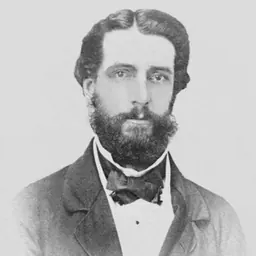
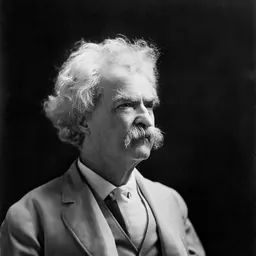
Related people
Same field, nearest in time

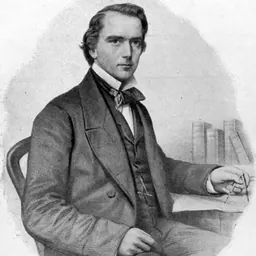




Contemporaries
People whose lives overlapped Victoria Kamāmalu's

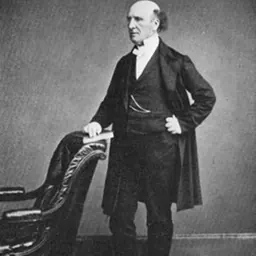


Frequently asked questions
Who was Victoria Kamāmalu?
Hawaiian princess (1838–1866)
When was Victoria Kamāmalu born?
Victoria Kamāmalu was born on 1 November 1838 in Honolulu.
When did Victoria Kamāmalu die?
Victoria Kamāmalu died on 29 May 1866 in Honolulu.
What was Victoria Kamāmalu's occupation?
Victoria Kamāmalu was a politician.
What nationality was Victoria Kamāmalu?
Victoria Kamāmalu's recorded nationality: Kingdom of Hawaiʻi.
Sources & further reading
· Wikipedia: Victoria Kamāmalu
Cite this page
APA: Biography.guide. (2026). Victoria Kamāmalu. https://biography.guide/victoria-kamamalu/
MLA: "Victoria Kamāmalu." Biography.guide, https://biography.guide/victoria-kamamalu/.
Chicago: "Victoria Kamāmalu." Biography.guide. https://biography.guide/victoria-kamamalu/.
Data last updated: 2026-09-21 · Spot an error? Report a correction.
Portrait: Wikimedia Commons · author & licence
Page generated 2026-09-27 04:59 UTC