
About Victor Folke Nelson
Lived 1898 – 1939 (aged 41). Victor Folke Nelson was a writer.
Victor Folke Nelson (June 5, 1898 – December 9, 1939) was a Swedish-American writer, prisoner, and prison reform advocate. He spent many years incarcerated in both the New York and Massachusetts prison systems and came to the attention of neurologist Abraham Myerson In 1932, Nelson published his book Prison Days and Nights with the assistance of Dr. Myerson. Victor's parents emigrated to the state of Massachusetts, US, with him and his three siblings when he was three years old.
Incarceration
Thomas Mott Osborne, Attorney Edward J. Ziegler, and Victor Folke Nelson 1921 Victor Nelson's first charge of larceny occurred when he was 18 years old, but was discharged by a grand jury in New York City. Nelson received a dishonorable discharge from the US Naval Reserve in 1920. primarily for robbery and larceny crimes. He spent some days planning his escape, even modifying a pair of prison-issued shoes, replacing the heavy soles with homemade felt soles to enable both speed and silent running. He made his break from a line of 13 prisoners after attending evening school in the prison chapel. Despite an attempted intervening tackle from a prisoner trusty and bullets from a guard's gun, where he managed to catch hold of the false coping of a small building in the corner where the south wing joined the main wall. He remained in Boston for ten days, then traveled through Massachusetts, West Virginia, New York, and Pennsylvania before heading to Ohio. After just a short time in East Liverpool, Nelson was nearly apprehended by a team of Pennsylvania and Ohio detectives, but he managed to escape across the state line into West Virginia where none of the detectives had jurisdiction to make arrests. Osborne also bemoaned those prisoners who had given innovative prison reform programs a bad name by failing to live constructively after release from prison.
During a 1931 hiatus from incarceration Nelson lived with friends in New York, who expected Nelson would work as a writer. In 1929 he published a review on The Mårbacka Edition of the Works of Selma Lagerlöf in The Saturday Review of Literature. Nelson also cultivated skills in art and regularly illustrated criminology articles for local newspapers, including his own articles in The Boston Record. The book was reviewed in newspapers across multiple states. Nelson's publications would continue to be cited in 20th and 21st century criminal justice and sociocultural writing and research, though he would never complete the second book he had begun writing, which was on the topic of alcoholism and was to be called Mornings After.
Later life and death
In 1936 Nelson suffered a broken neck in a car accident. After this injury, which caused him ongoing pain and discouragement, he struggled with depression and began drinking heavily. His wife, Pearl, remained a consistent support to him, despite his growing challenges. In March 1937 he was sentenced by Judge Elmer Briggs of the Boston Plymouth District Court to Bridgewater State Farm (where chronic alcoholics were often sent at the time, and which later became the Bridgewater State Hospital ) after assaulting an elderly neighbor while intoxicated.
On December 8, 1939, at the age of 41, Nelson phoned his wife after leaving home, telling her he intended to leave the state and that he was contemplating taking his own life. Police had received a call from an anonymous woman
Medical examiner William J. Brickley reported that Nelson had told three different people on previous occasions that he intended to take his own life using drugs. "The Mårbacka Edition" (review of The Mårbacka Edition of the Works of Selma Lagerlöf in The Saturday Review of Literature, January 19, 1929, issue) "In a Prison Cell I Sat" (series for The Boston Record that ran in 24 instalments from December 1932 to January 1933) "Ethics and Etiquette in Prison" (nonfiction article in The American Mercury, December 1932, pp. 455–462) Prison Days and Nights (nonfiction book, 1933) "Prison Stupor" (nonfiction article in The American Mercury, March 1933, pp. 339–344) "Addenda to 'Junker Lingo'" (nonfiction article in American Speech)
Don’t just read it —
keep it.
Full-length biographies made to live with: read them, listen on the way to work, watch them tonight.
- E-book
- Audio
- Video
Instant download · yours to keep · every purchase keeps this site free
Important facts
People in Victor Folke Nelson's life
Named in this biography and alive at the same time

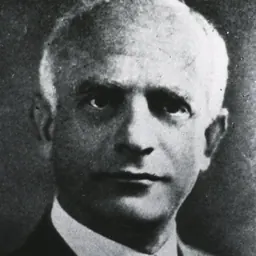
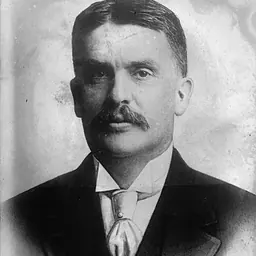
Related people
Same field, nearest in time
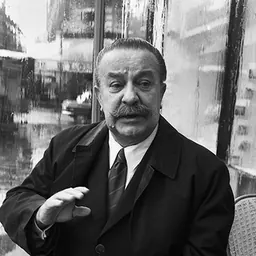

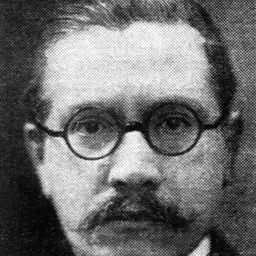

Contemporaries
People whose lives overlapped Victor Folke Nelson's





Frequently asked questions
Who was Victor Folke Nelson?
swedish-American author on prison reform
When was Victor Folke Nelson born?
Victor Folke Nelson was born on 5 June 1898 in Malmö, Sweden.
When did Victor Folke Nelson die?
Victor Folke Nelson died on 9 December 1939 in Boston, Massachusetts.
What was Victor Folke Nelson's occupation?
Victor Folke Nelson was a writer.
Sources & further reading
· Wikipedia: Victor Folke Nelson
· DBpedia: Victor Folke Nelson
Cite this page
APA: Biography.guide. (2026). Victor Folke Nelson. https://biography.guide/victor-folke-nelson/
MLA: "Victor Folke Nelson." Biography.guide, https://biography.guide/victor-folke-nelson/.
Chicago: "Victor Folke Nelson." Biography.guide. https://biography.guide/victor-folke-nelson/.
Data last updated: 2026-09-22 · Spot an error? Report a correction.
Page generated 2026-09-27 05:34 UTC