
About Victor Burenin
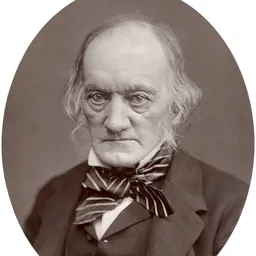
Lived 1841 – 1926 (aged 85). Victor Burenin was a Russian librettist, theatre critic, poet, literary critic, journalist and playwright.
Viktor Petrovich Burenin (, March 6 [ O.S. February 22], 1841 – August 15, 1926) was a Russian literary and theatre critic, publicist, novelist, dramatist, translator and satirical poet notorious for his confrontational articles and satirical poems, mostly targeting leftist writers. He was the author of several popular plays (some co-authored by Alexey Suvorin), novels and opera librettos (Tchaikovsky's Mazepa; Cui's Angelo).
Biography Viktor Burenin was born in Moscow, the twelfth child in the family of architect Pyotr Petrovich Burenin. As a student of the Moscow College of Architecture (1852-1859), he became friends with some amnestied Decembrists (Ivan Pushchin, Ivan Yakushkin, Gavriil Batenkov among others) who introduced the young man to the Russian literary circles. A strong influence proved to be petrashevets Sergey Durov who advised him to translate Barbier's Iambes et poemes for the Geneva-based The Word of the Underground magazine. In 1861 Burenin spent several months in Germany, Switzerland and France; since then his visits to the Western Europe became yearly. in 1862 started contributing satirical poems to magazines Iskra and Zritel, writing under the pseudonym Vladimir Monumentov.
In 1863 Nekrasov, Burenin moved to Saint Petersburg and a year later became a professional author. Three favorite targets for Burenin's wit in the 1860s were Prussian militarism, medical education for women and the corrupt Russian advocacy. In the years to come Ivan Goncharov and Nikolai Leskov referred to him as an "unscrupulous cynic". Writers including Maxim Gorky, Anton Chekhov, Alexander Blok, Vladimir Korolenko, Leonid Andreev and Ivan Bunin filed lawsuits against him and complained about the critic's harsh words about opponents. Still, his satires were immensely popular: Blok admitted to having known by heart Burenin's parodies of his poems and was often entertaining his friends reciting them. "While in the liberal circles to read Novoye Vremya was considered mauves ton, Berenin's feullietons were read by everybody, clandestinely," wrote author and publisher Boris Glinsky.
Burenin's novels and novellas had considerable commercial success (mainly due to their sensationalist nature: the characters were easily recognizable real people) but, according to biographer Lepyokhin, hold little artistic merit. More substantial were Burenin's plays, based on antique and Middle Ages plots (Medea, with Suvorin as co-author, 1883; Messalina, 1885; The Death of Agrippina, 1887; The Comedy of Princess Zabava Putyatishna and Boyar-lady Vasilisa Mikulishna, 1889), all staged by Maly and Alexandrinsky theatres. Burenin translated several plays, by William Shakespeare, Niccolò Machiavelli, Alexandre Dumas, Karl Gutzkow, Gerhart Hauptmann, among others. For many years Burenin was taking an active part in the life of Maly Theatre before founding (again with Suvorin) The Literary and Arts' Society Theatre. According to the 1911 edition of the Brockhaus and Efron Encyclopedic Dictionary, "Burenin’s literary character is defined... by the peculiar methods this critic used for his invectives, the methods that cannot be characterized in academic terms." Leskov still credited him for "great erudition, wit and cleverness". "Objectively speaking, he was one of the most gifted authors of the literary right wing," wrote Korney Chukovsky.
According to biographer M.P.Lepyokhin, though, Burenin was not a right wing sympathizer, and his satires often clashed with Suvorin-dictated general line of the newspaper. Never motivated by corporative or ideological interests, he was relying totally on his own ideas and concepts, one of which was that all Russian writers (and the new generation of them, in particular) were charlatans tending to fool their readership with nonsense which had nothing to do with reality. Burenin "despised [Russian] literature and lampooned it," Alexey Suvorin maintained.
Suvorin considered Burenin to be a victim of censorship which prevented him realizing his true potential. "Had we any freedom of the press, he'd have become the unique pamphleteer, using his wit to expose corrupt ministers, people like that. What he does now instead, is squander his gift on petty quarrels," he wrote. "A critic of considerable gift, an incomparable pamphleteer and totally worthless dramatist,” was Suvorin's more general verdict on his ally and friend. Yet, author and critic Nikolai Snessarev thought Suvorin (who reviewed his plays regularly and always negatively) might have been jealous of Burenin, a highly popular playwright.
As a literary critic Burenin was credited with originality and wit by Lev Tolstoy, Nikolai Nekrasov and Nikolai Leskov. Fyodor Dostoyevsky even argued that Burenin "understood him better than any other man" who wrote about him. According to biographer M.Lepyokhin, Burenin has launched "a genre reform" which changed radically the face and the nature of Russian feuilleton. "With his arrival for the first time [in Russia] a highly detailed, sharp satire aimed at concrete targets superseded some abstract moralization," argued the critic.
Select bibliography
Novels The Dead Leg (Мертвая нога, 1889) The Romance in Kislovodsk (Роман в Кисловодске, 1889) From the Notes of a Suicide (Из записок самоубийцы, 1875) A Strange Case (Странный случай, 1878)
Plays Medea (Медея, 1884, with Alexey Suvorin) Messalina (Мессалина, 1885) The Death of Agrippina (Смерть Агриппины, 1886) The Comedy of Zabava Putyatishna and Boyarynya Vasilisa Mikulishna (Комедия о княжне Забаве Путятишне и боярыне Василисе Микулишне», 1890) The Byzantine Captive (Пленник Византии, drama, 1893) Diana Fornari (Диана Форнари, drama, 1894) All Is Well That’s Ended Well (Все хорошо, что хорошо кончилось, comedy, 1893) Aphrodita’s Necklace (Ожерелье Афродиты, drama, 1896) The Sunken Bell (Потонувший колокол, the translation of Gerhart Hauptmann’s Die versunkene Glocke, 1897) Princess Ozra's Heart (Сердце принцессы Озры, 1898)
Librettos Angelo by Cesar Cui (1875) Mazepa by Pyotr Ilyich Tchaikovsky (1883 ) Matron of Ephesus (Матрона Эфесская), operetta by Mikhail Ivanov Zabava Putyatishna (Забава Путятишна), opera by Mikhail Ivanov, 1897
Compilations Sketches and Parodies (Очерки и пародии, 1874; 1895) From the Past (Былое, poems, 1880) Arrows (Стрелы, poems, 1880; 1889) Songs and Caricatures (Песни и шаржи, 1886) From the Modern Life (Из современной жизни, 1879) Critical Sketches and Pamphlets (Критические очерки и памфлеты, 1884) Critical Etudes (Критические этюды, 1888) The Tail (Хвост, a collection of parodies, 1891; 1893) Pipa and Pusya. Humorous stories (Пипа и Пуся. Юмористические рассказы. 1894) Blue Sounds and White Poems (Голубые звуки и белые поэмы, parodies, 1895) Woe by Stupidity (Горе от глупости, 1905) The Works of V.P.Burenin (Saint Petersburg, 1912—1917). Vols. I-V (unfinished)
Don’t just read it —
keep it.
Full-length biographies made to live with: read them, listen on the way to work, watch them tonight.
- E-book
- Audio
- Video
Instant download · yours to keep · every purchase keeps this site free
Important facts
more
Viktor Petrovich BureninPeople in Victor Burenin's life
Named in this biography and alive at the same time


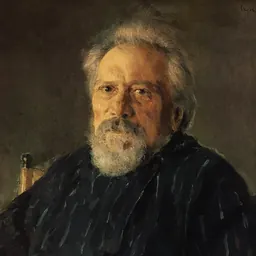
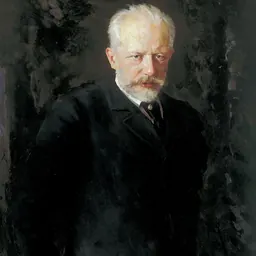
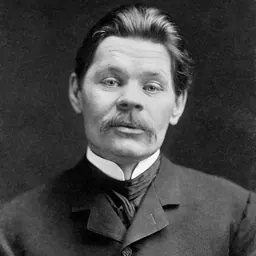


Related people
Same field, nearest in time

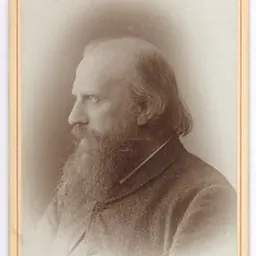
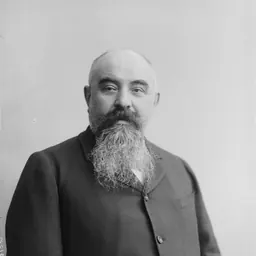
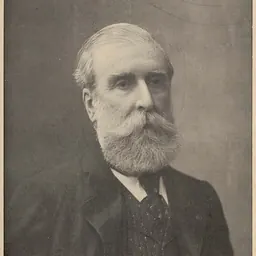

Contemporaries
People whose lives overlapped Victor Burenin's
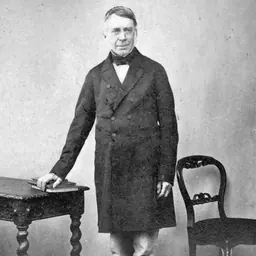
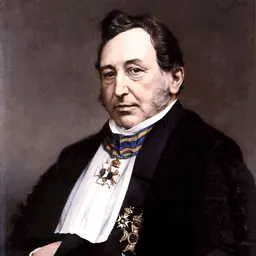
Frequently asked questions
Who was Victor Burenin?
Russian critic and satirist (1841-1926)
When was Victor Burenin born?
Victor Burenin was born on 7 March 1841 in Moscow.
When did Victor Burenin die?
Victor Burenin died on 15 August 1926 in Saint Petersburg.
What was Victor Burenin's occupation?
Victor Burenin was a librettist, theatre critic, poet, literary critic, journalist and playwright.
What nationality was Victor Burenin?
Victor Burenin was Russian.
Sources & further reading
Cite this page
APA: Biography.guide. (2026). Victor Burenin. https://biography.guide/victor-burenin/
MLA: "Victor Burenin." Biography.guide, https://biography.guide/victor-burenin/.
Chicago: "Victor Burenin." Biography.guide. https://biography.guide/victor-burenin/.
Data last updated: 2026-09-20 · Spot an error? Report a correction.
Page generated 2026-09-27 05:22 UTC