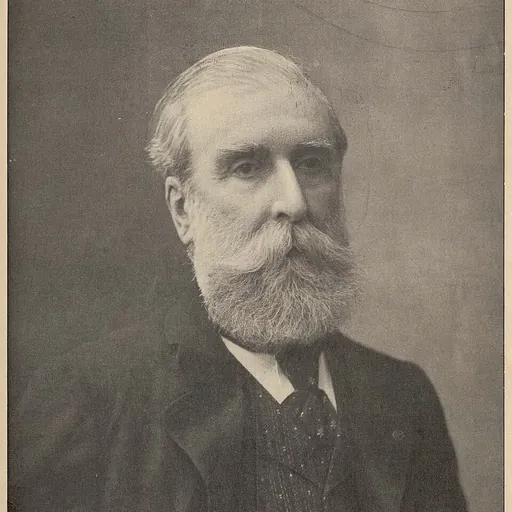
About Ludovic Halévy
Lived 1834 – 1908 (aged 73–74). Ludovic Halévy was a French librettist, playwright, lyricist, writer, cabaret performer and screenwriter.
Ludovic Halévy (1 January 1834 – 7 May 1908) was a French author and playwright, known for his collaborations with Henri Meilhac on the libretti for Georges Bizet's Carmen and comic operas by Jacques Offenbach, including La belle Hélène, La vie parisienne (1866), La Grande-Duchesse de Gérolstein (1867) and La Périchole (1868)
Born in Paris to a musical and artistic family, Halévy worked as a civil servant after leaving school, and continued to do so, while pursuing a parallel career as a playwright, librettist and novelist. He generally wrote with collaborators, including Hector Crémieux, and on two occasions, his father, but his partnership with Meilhac, an old schoolfriend, produced the works for which he is chiefly remembered.
Life and career Early years Ludovic Halévy was born in the 10th arrondissement of Paris on 1 January 1834, the son of Léon Halévy and his wife, Louise Alexandrine, Lebas. Léon was descended from a German Jewish family (originally Lévy) but converted to Roman Catholicism before his marriage; his wife was a member of a well-known and influential family, daughter of Louis-Hippolyte Lebas, architect of Notre-Dame-de-Lorette, Paris. Léon, whose elder brother was the composer Fromental Halévy, was a senior civil servant and a well-respected author.
In 1845 Halévy entered the Lycée Louis-le-Grand. He was an undistinguished scholar but he was well enough connected to secure admission to the French civil service after leaving school. His official career flourished but his chief interest was the theatre. Halévy abandoned the pseudonym the following January, when his real name was credited on bills for the duo's "chinoiserie musicale", Ba-ta-clan, but he returned to using it soon afterwards and did so for several years. The joint winners were Georges Bizet and Charles Lecocq, with both of whom Halévy was later to collaborate again.
Still cautious about the effect a reputation for writing operettas might have on his career, Halévy declined to have his name on the bills for his first outstanding success with Offenbach – Orphée aux enfers – and insisted that his co-librettist, Hector Crémieux, should receive all the credit and the royalties. The piece opened on 21 October 1858 and ran for 228 performances, at a time when a run of 100 nights was considered a success. 1860–1870 In 1860 Halévy collaborated with his father on the libretto for ("A Husband Without Knowing It") with music by "Monsieur de Saint-Rémy" – in reality by the Duc de Morny who dabbled in operetta both as a librettist and as a composer. Morny's patronage worked to Halévy's advantage in his official career, and soon after the première of Morny arranged for Halévy's appointment as secretary to the Corps législatif.
In 1864 Halévy began a collaboration with the author Henri Meilhac which was to last until the latter's death in 1897. The two had become friends when both at the , sharing a distaste for school life and a preference for escaping it. They were strikingly different – one biographer writes, "with Meilhac the more ebullient and fanciful, and Halévy the more staid and craftsmanlike" Accounts differ about how the partners divided the work between them. According to Siegfried Kracauer, it was always Meilhac who outlined the skeleton of the plot and sketched the big scenes and situations, which Halévy "filled in with witty comment and dialogue". Susan McClary writes, "In their collaborations, Meilhac wrote the prose dialogue, while Halévy provided the verse".
Grove's Dictionary of Music and Musicians says of Halévy and Meilhac: blockindent|Their achievement lay to a considerable extent in exploiting to the full the existing forms of opéra comique with its combination of music and speech, its transparently artificial plot and its topicality, which often found expression in irreverent parody. ... Situations are contrived for concerted numbers, especially at the ends of acts, and solos and ensembles are both energetic and varied. The versification of the lyrics is deft, rhyme and vocabulary are amusing, and sentiments are expressed clearly. The spoken dialogues are crisp and laconic, sometimes colloquial and never pompous except in jest. with these means Halévy and Meilhac mocked everything they observed around them in a Second Empire society that took itself too seriously. The three followed this hit with two more: La vie parisienne (1866) and La Grande-Duchesse de Gérolstein (1867). Le château à Toto (1868) did less well, but La Périchole (1868) was another success. It was based on Le carrosse du Saint-Sacrement, a comedy by Prosper Mérimée, who was to feature again in Halévy and Meilhac's work four years later. The Franco-Prussian War of 1870–71 and the downfall of the Second Empire caused a strong reaction against Offenbach from the public, who identified him with the fallen regime. He left the country for a time, taking refuge in London and Vienna.
Carmen and later
Although the two librettists were known for their comedies, in 1872 they undertook what was, for them, an unusual assignment. Halévy's cousin Geneviève (daughter of Fromental) was married to Bizet, whom the directors of the Opéra-Comique invited to write an opera in collaboration with Halévy and Meilhac. The librettists were enthusiastic about the composer's preference for a plot based on Prosper Mérimée's story Carmen; they provided a libretto with the requisite tragic ending. Nonetheless, they regarded the piece as a side venture. Just before the premiere, Halévy wrote:
The management of the Opera Comique was uneasy about presenting a tragedy, and Meilhac unsuccessfully urged Bizet to resist killing Carmen off at the end of the last act. Their predictions of a failure proved accurate: the piece completed its scheduled run of forty-eight performances, but played to small audiences.
This was the pair's only venture into tragedy. They wrote seven more libretti together, of which three were for Offenbach and four for Lecocq. They refused to allow the operetta to be produced in France. (Strauss's music was heard in Paris in 1877 with a completely new libretto by Alfred Delacour and Victor Wilder, retitled (The Gypsy), although, as Les Annales du théâtre et de la musique commented, the piece had "absolutely nothing gypsy, either in its melodies or in its costumes".) It was not until 1904 that the version based on the original Meilhac and Halévy comedy was seen in Paris. Halévy died in Paris on 8 May 1908.
Honours Halévy was elected as a member of the Académie française in 1881; he was appointed vice-president of the Society of Authors in 1882, and became an Officer of the Legion of Honour in 1890. 14 Jul 1864 La belle Hélène opéra bouffe 3 Meilhac Offenbach Variétés 17 Dec 1864 Le photographe comedy-vaudeville 1 Meilhac Palais-Royal 24 Dec 1864 Le singe de Nicolet (Nicolet's Monkey) comedy 1 Meilhac Variétés 29 Jan 1865 Les méprises de Lambinet (Lambinet at Cross-Purposes) vaudeville 1 Meilhac Variétés 3 Dec 1865 Barbe-bleue (Bluebeard) opéra bouffe 3 Meilhac Offenbach Variétés Feb 1866 La vie Parisienne opéra bouffe 5 Meilhac Offenbach Palais-Royal 31 Oct 1866 La Grande-Duchesse de Gérolstein opéra bouffe 3 Meilhac Offenbach Variétés 12 Apr 1867 Tout pour les Daines vaudeville 1 Meilhac Variétés 8 Sep 1867 Le château à Toto opéra bouffe 3 Meilhac Offenbach Palais-Royal 6 May 1868 Fanny Lear comedy 5 Meilhac Gymnase 15 Aug 1868 La Périchole opéra bouffe 2 Meilhac Offenbach Variétés 6 Oct 1868 Le bouquet comedy 1 Meilhac Palais-Royal 23 Oct 1868 La diva opéra bouffe 3 Meilhac Offenbach Bouffes 22 Mar 1869 L'homme à la clé (The Man with the Key) vaudeville 1 Variétés 11 Aug 1869 Froufrou comedy 5 Meilhac Gymnase 30 Oct 1869 Les brigands opéra bouffe 3 Meilhac Offenbach Variétés 10 Dec 1869 Tricoche and Cacolet vaudeville 5 Meilhac Palais-Royal 6 Dec 1871 Madame attend Monsieur(Madame Is Waiting For Monsieur) comedy 1 Meilhac Variétés 8 Feb 1872 Le réveillon (New Year's Eve) comedy 3 Meilhac Palais-Royal 10 Sep 1872 Les sonnettes (The Doorbells) comedy 1 Meilhac Variétés 15 Nov 1872 Le roi candaule vaudeville 1 Meilhac Palais-Royal 9 Apr 1873 L'été de la St-Martin (Indian Summer) comedy 1 Meilhac Comédie-Française 1 Jul 1873 Toto chez Tata comedy 1 Meilhac Variétés 25 Aug 1873 Pomme d'api opérette 1 Busnach Offenbach Théâtre de la Renaissance 4 Sep 1873 L'opéra aux italiens (Opera For Italians) à-propos 1 Meilhac and Busnach Variétés 12 Feb 1874 La petite marquise comedy 3 Meilhac Variétés 13 Feb 1874 La mi-carême (Mid-Lent) vaudeville 1 Meilhac Palais-Royal 2 Apr 1871 L'ingénue comedy 1 Meilhac Variétés 24 Sep 1874 Mme l'archiduc opéra bouffe 3 Millaud Offenbach Bouffes 31 Oct 1874 La veuve comedy 5 Meilhac Gymnase 5 Nov 1874 La boule comedy 4 Meilhac Palais-Royal 24 Nov 1873 Carmen opéra-comique 4 Meilhac (after Mérimée) Bizet Opéra-Comique 5 Mar 1875 Le passage de Vénus (The Transit of Venus) comedy 1 Meilhac Variétés 4 May 1875 La boulangère a des écus (The Baker has Money) opéra bouffe 5 Meilhac Offenbach Variétés 19 Oct 1875 La créole opéra comique 3 Meilhac and Albert Millaud Offenbach Bouffes 3 Nov 1875 Loulou comedy 1 Meilhac Palais-Royal 31 Mar 1876 Le prince comedy 4 Meilhac Palais-Royal 25 Nov 1876 La cigale (The Cricket) comedy 5 Meilhac Variétés 6 Oct 1877 Le fandango ballet 1 Meilhac and Louis Mérante Gaston Salvayre Opéra 26 Nov 1877 Le je ne sais quoi vaudeville 1 Meilhac Renaissance 21 Jan 1878 Le petit duc opéra-comique 5 Meilhac Lecocq Renaissance 25 Jan 1878 Le mari de la débutante (The Debutante's Husband) comedy 4 Meilhac Palais-Royal 5 Feb 1879 Le petit hôtel comedy 1 Meilhac Comédie-Française 21 Feb 1879 La petite mademoiselle opéra-comique 3 Meilhac Lecocq Renaissance 12 Apr 1879 Lolotte comedy 1 Meilhac Vaudeville 4 Oct 1879 La petite mère comedy 3 Meilhac Variétés 6 Mar 1880 Janot opéra comique 3 Meilhac Lecocq Renaissance 22 Jan 1881 La roussotte (The Redhead) vaudeville-opérette 3 Meilhac and Millaud Lecocq, Hervé and Marius Boullard Variétés 26 Jan 81
Source: Nos auteurs et compositeurs dramatiques.
Notes, references and sources
Don’t just read it —
keep it.
Full-length biographies made to live with: read them, listen on the way to work, watch them tonight.
- E-book
- Audio
- Video
Instant download · yours to keep · every purchase keeps this site free
Important facts
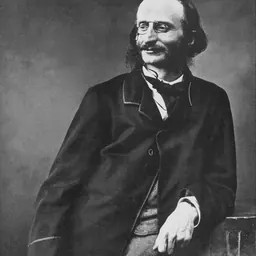
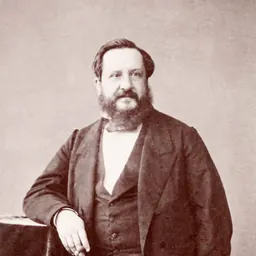
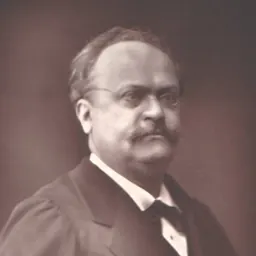
People in Ludovic Halévy's life
Named in this biography and alive at the same time

Related people
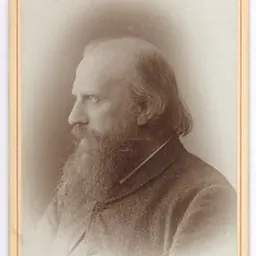
Same field, nearest in time



Contemporaries
People whose lives overlapped Ludovic Halévy's




Frequently asked questions
Who was Ludovic Halévy?
French writer (1834–1908)
When was Ludovic Halévy born?
Ludovic Halévy was born in 1834 in Paris.
When did Ludovic Halévy die?
Ludovic Halévy died on 7 May 1908 in Paris.
What was Ludovic Halévy's occupation?
Ludovic Halévy was a librettist, playwright, lyricist, writer, cabaret performer and screenwriter.
What nationality was Ludovic Halévy?
Ludovic Halévy was French.
Sources & further reading
Cite this page
APA: Biography.guide. (2026). Ludovic Halévy. https://biography.guide/ludovic-halevy/
MLA: "Ludovic Halévy." Biography.guide, https://biography.guide/ludovic-halevy/.
Chicago: "Ludovic Halévy." Biography.guide. https://biography.guide/ludovic-halevy/.
Data last updated: 2026-09-24 · Spot an error? Report a correction.
Portrait: Wikimedia Commons · author & licence
Page generated 2026-09-27 05:09 UTC