
About Vicente Fatrás
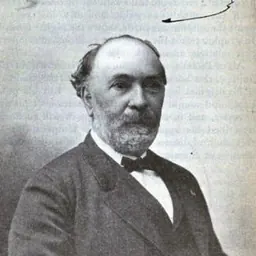
Lived 1872 – 1936 (aged 63–64). Vicente Fatrás was a Spanish politician.
Vicente Fatrás Neira (22 January 1872, Arrigorriaga - Miranda de Ebro, between 24 July and 7 September 1936) was a Spanish politician. In his younger years he was also one of Spain's first racing cyclists.
Biography
A historical Republican, he was a councilor in Bilbao at the beginning of the century and a provincial parliamentarian for Vizcaya in the 1910s. In 1918, he drafted a proposal for the autonomy statute for Biscay.
In 1929, Fatrás was one of the founders of the Biscayan wing of the Radical Socialist Party. In 1931 he was president of the Sociedad El Sitio de Bilbao, a member of the Biscayan executive committee of the Republican-Socialist Conjunction representing the radical socialists and candidate for Deputy for the Conjunction in the Spanish General elections of that year in Vizcaya. This was the only Basque-Navarre constituency where the Catholic-Fuerista Coalition did not win. As a result, Fatrás obtained a deputy seat (just like Indalecio Prieto, Luis Araquistáin and Ramón María de Aldasoro).
In the Cortes he starred in numerous confrontations against Basque traditionalists and nationalists. While he was in favor of a democratic Basque statute, he strongly opposed Estella's Statute, which he described as being supported by "clerical fanaticism." In May 1933 in the Cortes he publicly accused the Basque Nationalist Party for being responsible for the events of Usánsolo (Biscay), in which radical socialists returning from a rally in Amorebieta and Basque nationalists got into a gunshot confrontation, resulting in the death of a woman and a child.
Fatrás remained in the party after the departure of Marcelino Domingo's independents and was a candidate for the PRRS in the 1933 general elections, as well as for the provincial elections of Vizcaya, but did not get elected. He did not stand for the 1936 elections.
Although he was originally from Bilbao, he owned a summer house in Miranda de Ebro. The outbreak of the Spanish Civil War caught up with him there. Although he was not immediately arrested (on July 21 he received Ernesto Ercoreca, the Republican Mayor of Bilbao, who got trapped in Miranda when the railway line was cut on his way back from Madrid), Fatrás was eventually taken from his house by Franco's Nationalist rebels. They subsequently informed his wife that he had been shot, without it being known where or where his remains lie, and afterwards his family was expropriated of all his property.
Cycling career In the early years of Spanish cycling, before 1900, Fatrás was a well known rider. He was successful especially in his home region of Bilbao.
1892 1st Bilbao - Castrejana - Zorroza - Bilbao 1893 1st Bilbao - San Sebastián 3rd Bilbao - Balmaseda - Bilbao 1894 1st Bilbao - Balmaseda - Bilbao
Don’t just read it —
keep it.
Full-length biographies made to live with: read them, listen on the way to work, watch them tonight.
- E-book
- Audio
- Video
Instant download · yours to keep · every purchase keeps this site free
Important facts
People in Vicente Fatrás's life
Named in this biography and alive at the same time



Related people
Same field, nearest in time





Contemporaries
People whose lives overlapped Vicente Fatrás's

Frequently asked questions
Who was Vicente Fatrás?
Spanish politician
When was Vicente Fatrás born?
Vicente Fatrás was born on 22 January 1872 in Arrigorriaga.
When did Vicente Fatrás die?
Vicente Fatrás died in 1936 in Miranda de Ebro.
What was Vicente Fatrás's occupation?
Vicente Fatrás was a politician.
What nationality was Vicente Fatrás?
Vicente Fatrás was Spanish.
Sources & further reading
Cite this page
APA: Biography.guide. (2026). Vicente Fatrás. https://biography.guide/vicente-fatras/
MLA: "Vicente Fatrás." Biography.guide, https://biography.guide/vicente-fatras/.
Chicago: "Vicente Fatrás." Biography.guide. https://biography.guide/vicente-fatras/.
Data last updated: 2026-09-20 · Spot an error? Report a correction.
Page generated 2026-09-27 05:12 UTC