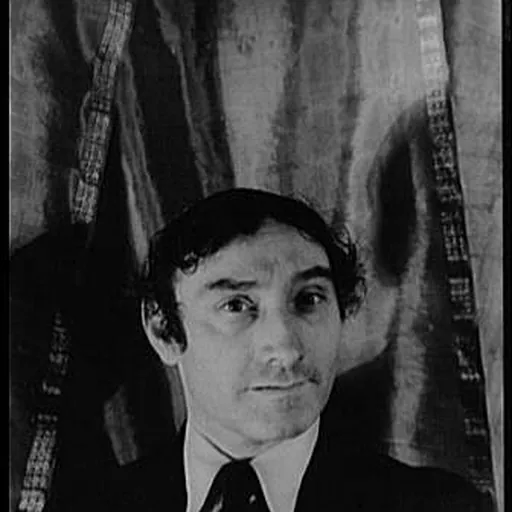
About Vicente Escudero
Lived 1892 – 1980 (aged 88). Vicente Escudero was a Spanish dancer, writer and choreographer.
Vicente Escudero (27 October 1888 in Valladolid, Spain – 4 December 1980 in Barcelona) was a Spanish flamenco dancer. He was closely associated with the avant-garde of his time and brought modernist aesthetics to bear on his theory of dance.
Escudero was one of the few theorists of his time to comment on the choreography and presentation of the male flamenco dance and his 'Decalogue' or ten rules for the male dancer are still respected today. As well as being the leading flamenco dancer of his era, he was a talented painter in the style, and his studies of flamenco are frequently exhibited. His work was admired by the Spanish modernist painter Joan Miró. Escudero also appeared in the films Castille On Fire (1960) and With the East Wind (1966).
His first official performance was in 1920 at the Olympia Theatre in Paris. He reached his maturity as a dancer between 1926 and 1936, during which time he toured extensively in Europe and the Americas. His most famous production was El amor brujo Escudero's style brought a new dignity and respect to the male flamenco dance, which had sometimes (though wrongly) been regarded as exaggerated and lacking in artistry.
Escudero's writing on the subject of flamenco dance and choreography was influential in forming the tastes of his own generation and the next, and he both worked with and influenced the legendary Antonio Gades. His style was based on a strong and expressive masculinity and clear and precise footwork and braceos (arm movements). Escudero's ten principles were as follows:
Dance in a masculine style. Sobriety. Turn the wrist with the fingers closed. Limited movement of the hips. Dance in a calm manner, without vanity. Harmony of feet, arms and head. Be beautiful, flexible and honest. Develop an individual style and emphasis. Dance in traditional costume. Keep a range of sounds in the mind, don't put nails in the boots, dance on a simple stage and don't use accessories.
His published writing includes:
Mi baile (My Dance) (1947); Pintura que baila (A Dancing Painter) (1950); Decálogo del buen bailarín (Ten Rules for a Male Dancer) (1951).
Don’t just read it —
keep it.
Full-length biographies made to live with: read them, listen on the way to work, watch them tonight.
- E-book
- Audio
- Video
Instant download · yours to keep · every purchase keeps this site free
Important facts
People in Vicente Escudero's life
Named in this biography and alive at the same time
Related people
Same field, nearest in time


Contemporaries
People whose lives overlapped Vicente Escudero's

Frequently asked questions
Who was Vicente Escudero?
Spanish dancer (1892–1980)
When was Vicente Escudero born?
Vicente Escudero was born on 27 October 1892 in Valladolid.
When did Vicente Escudero die?
Vicente Escudero died on 4 December 1980 in Barcelona.
What was Vicente Escudero's occupation?
Vicente Escudero was a dancer, writer and choreographer.
What nationality was Vicente Escudero?
Vicente Escudero was Spanish.
Sources & further reading
Cite this page
APA: Biography.guide. (2026). Vicente Escudero. https://biography.guide/vicente-escudero/
MLA: "Vicente Escudero." Biography.guide, https://biography.guide/vicente-escudero/.
Chicago: "Vicente Escudero." Biography.guide. https://biography.guide/vicente-escudero/.
Data last updated: 2026-09-23 · Spot an error? Report a correction.
Portrait: Wikimedia Commons · author & licence
Page generated 2026-09-27 05:05 UTC